Things You're Just Supposed to Know

Most of the time, Long-Forgotten assumes that readers are already familiar with basic facts
about the Haunted Mansion. If you wanna keep up with the big boys, I suggest you check out
first of all the website, Doombuggies.com. After that, the best place to go is Jason Surrell's book,
The Haunted Mansion: Imagineering a Disney Classic (NY: Disney Editions; 2015). That's the
re-named third edition of The Haunted Mansion: From the Magic Kingdom to the Movies (NY:
Disney Editions, 2003; 2nd ed. 2009). Also essential reading is Jeff Baham's The Unauthorized
Story of Walt Disney's Haunted Mansion (USA: Theme Park Press, 2014; 2nd ed. 2016).

This site is not affiliated in any way with any Walt Disney company. It is an independent
fan site dedicated to critical examination and historical review of the Haunted Mansions.
All images that are © Disney are posted under commonly understood guidelines of Fair Use.

________
.
Showing posts with label pet cemetery. Show all posts

Friday, August 27, 2010

Two Taboos

.
You don't often run into discussions about what isn't in the Haunted Mansion, and when you do, it's usually to note that there isn't any grue, or there aren't any big scares.  Otherwise, it's what's there that gets the ink or the bandwidth.

There are, however, two omissions that create openings for some interesting observations (interesting, at least, to Long-Forgottenistas, or whatever it is we call ourselves).

Children Not Admitted

There are no ghosts of children anywhere among the 999.  Nada.  Zip.  Zilch.  The closest we come is a mute admission that children exist within the imaginative world of the Haunted Mansion.  Amidst the junk in the attic have been prams and hobby-horses at one point or another, perhaps an acknowledgment that some of the Mansion residents were once children.  Not exactly news that will make you spill your coffee.
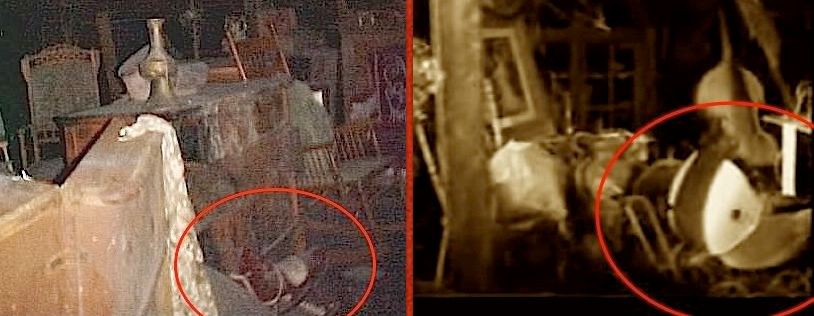

No child ghosts.  It's not as though anyone is pretending that no one under 18 ever dies, so...where are the kids?  At one point I argued that it isn't possible to make jokes about the death of a child.  Well, actually, you can, you know, if your name is Edward Gorey.
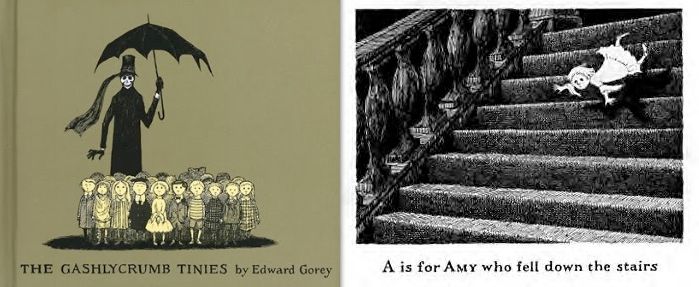

But that humor presupposes a very different world, and don't expect to work for Disney if that's your total bag.  Disney's offerings always have an upbeat ending.  They "celebrate the human spirit," to use a typical cliché, and to do so they imagine a cosmos that is essentially hospitable to humans and normally rewarding to anyone who dreams big and beautiful things.  If you hold a blacker, more bitter view of the cosmos, you can grin grimly at Gorey's perishing innocents and say with Gloucester:  "As flies to wanton boys, are we to th' gods, — they kill us for their sport."

If your view of things is not quite that bleak, then there are rules.  You can turn almost any adult's death into a jest, because by then we have all bitten the apple, we are all guilty creatures, and we all kind of know deep down that mortality is the fate we probably deserve.  You can even get away with a suicide joke.  But a child's death is Something Else entirely, and it's just never ha-ha funny to anyone who believes that there are—and should be—better things.

And No Crosses, Either

Considering how the Imagineers rifled though traditional material in search of ideas for the Haunted Mansion, it is striking that there are no nuns, no monks, no clergy of any kind.  It's not as if there is a gap in this area:  holy moly, ghost lore is chock full of nuns and monks, both "real" ghosts and literary ghosts.  Monks are especially prone to be caught by the camera, it seems.
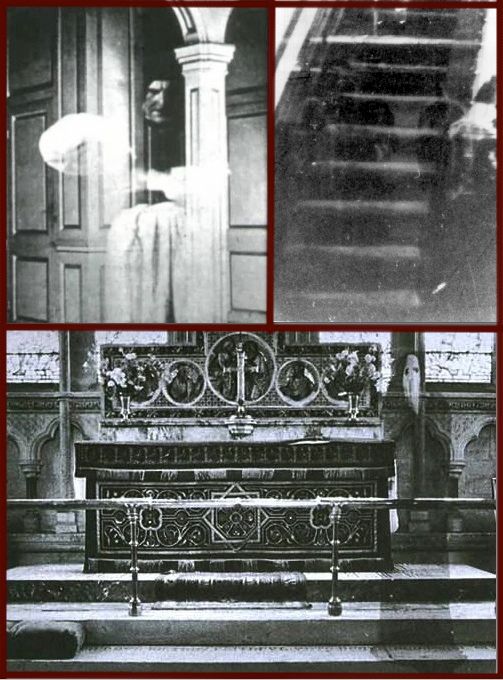


Some literary ghosts have left the pages and almost taken on a life of their own (or afterlife, I guess), like the Bleeding Nun, from the 18th c. Gothic novel, The Monk.  Here she is on an early 19th c. magic lantern slide:
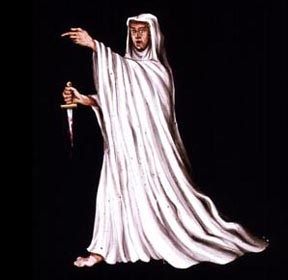


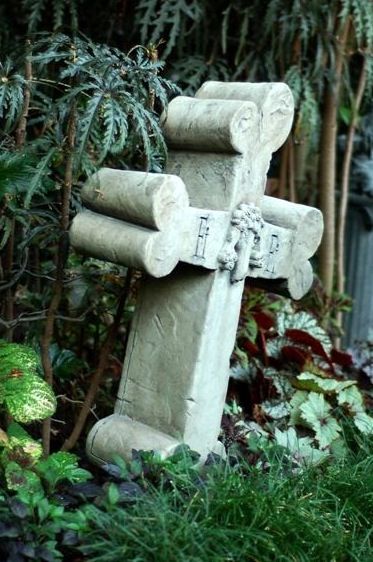
But the Mansion has steered clear of all of this.  It's part of a general taboo that includes any traces of Christian symbolism.  You will hunt in vain for a cross anywhere in the original HM cemeteries.  They aren't there.  It's pretty easy to figure out who was responsible for this, too:  Marc Davis.  Paintings and concept sketches by other HM Imagineers have an occasional cross, like Ken Anderson (Duane Alt)...
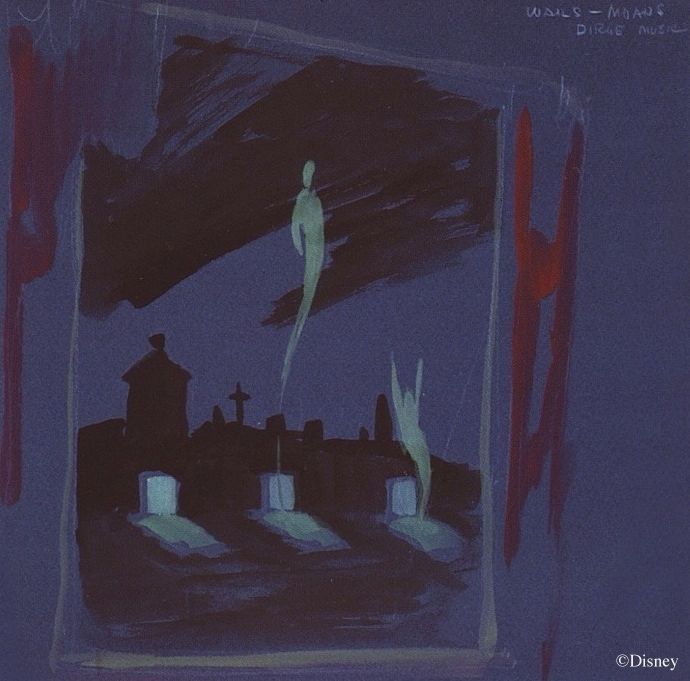

.                        . . . or Claude Coats . . .
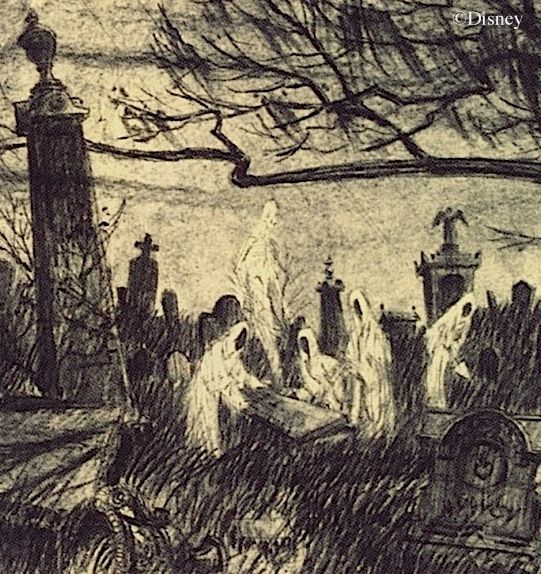


. . . but Davis?  I've never seen a single cross in any of his concept work for the HM, despite the number of graveyard scenes he sketched.
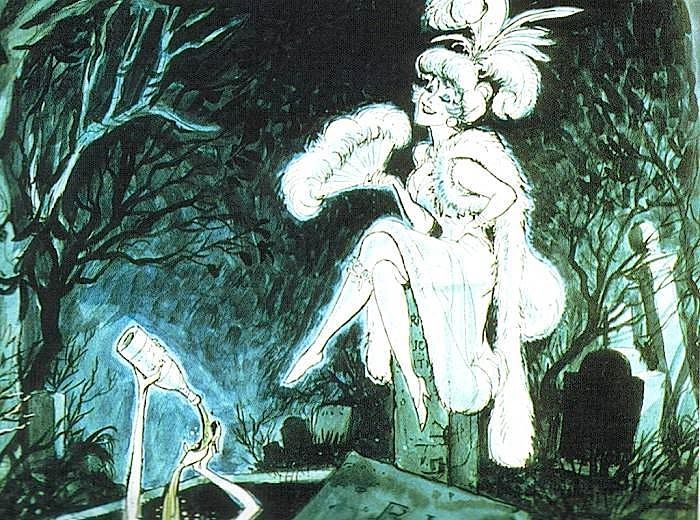

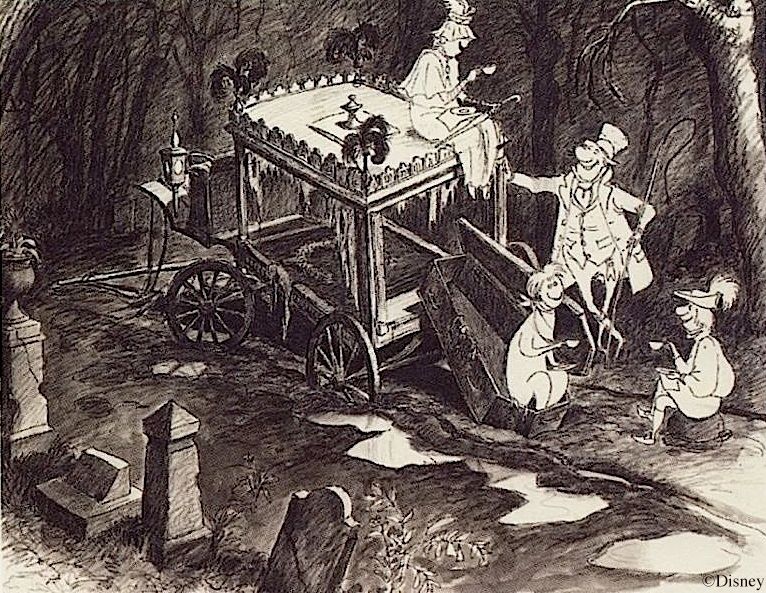
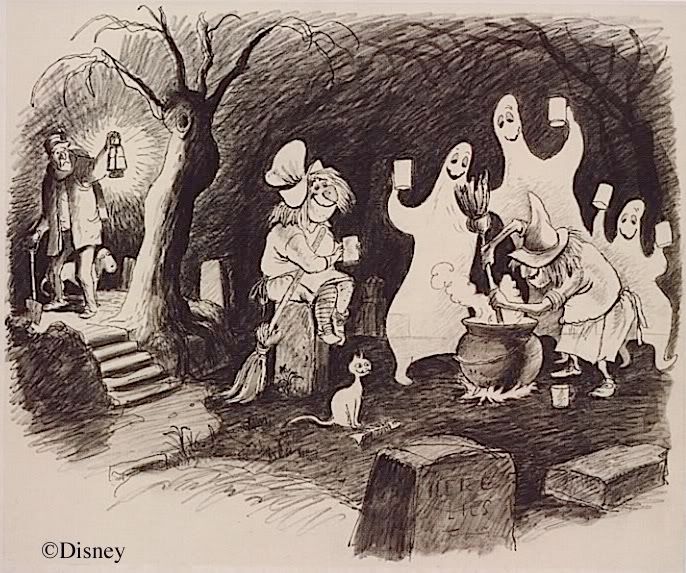
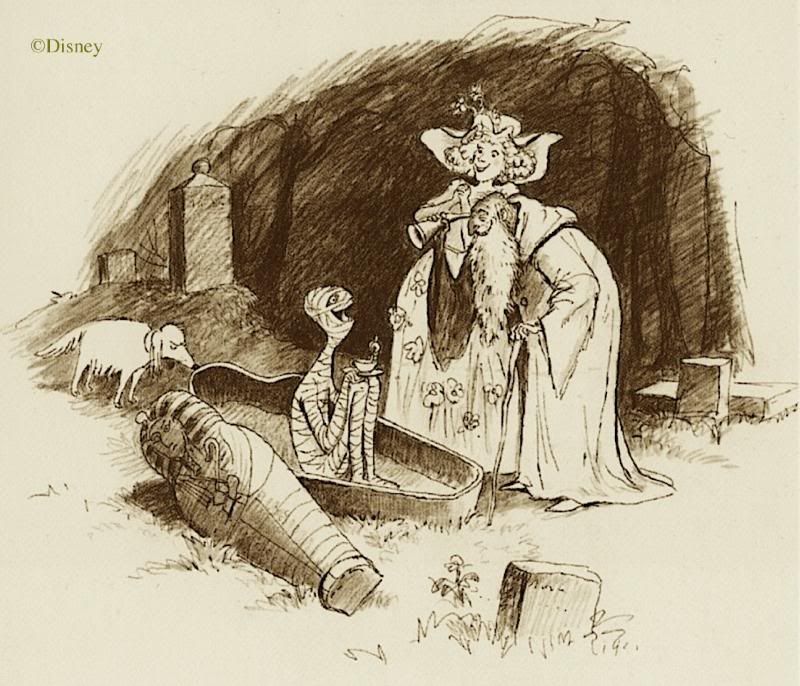
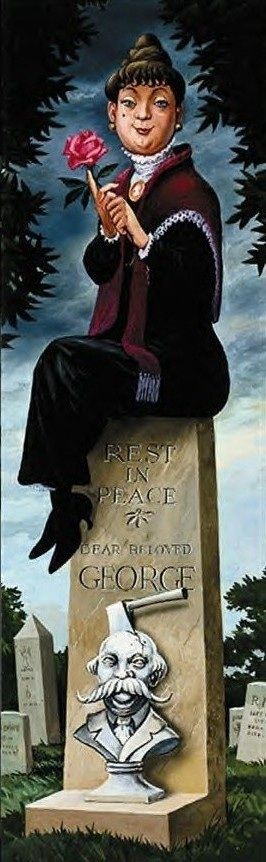

In 2019 a massive new book on Davis was published: Mark Davis in His Own Words (around here known as MDIHOW), and it includes a number of never-before-seen sketches by Davis, including HM artwork with graveyards and such, and again, there are no crosses anywhere in the new/old artwork.

If you look at photos of the scale model of the graveyard, here again there's not a cross in sight.
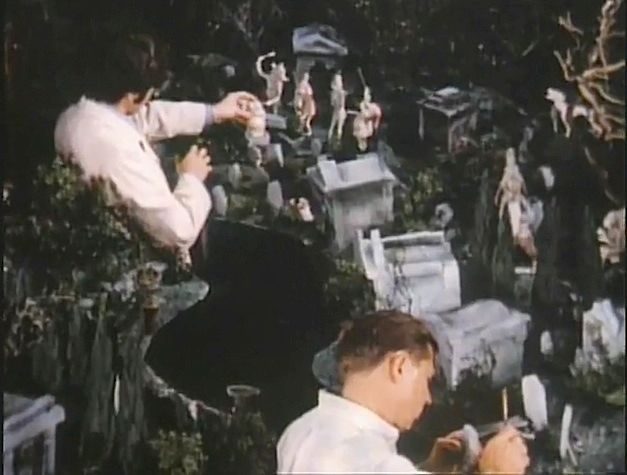
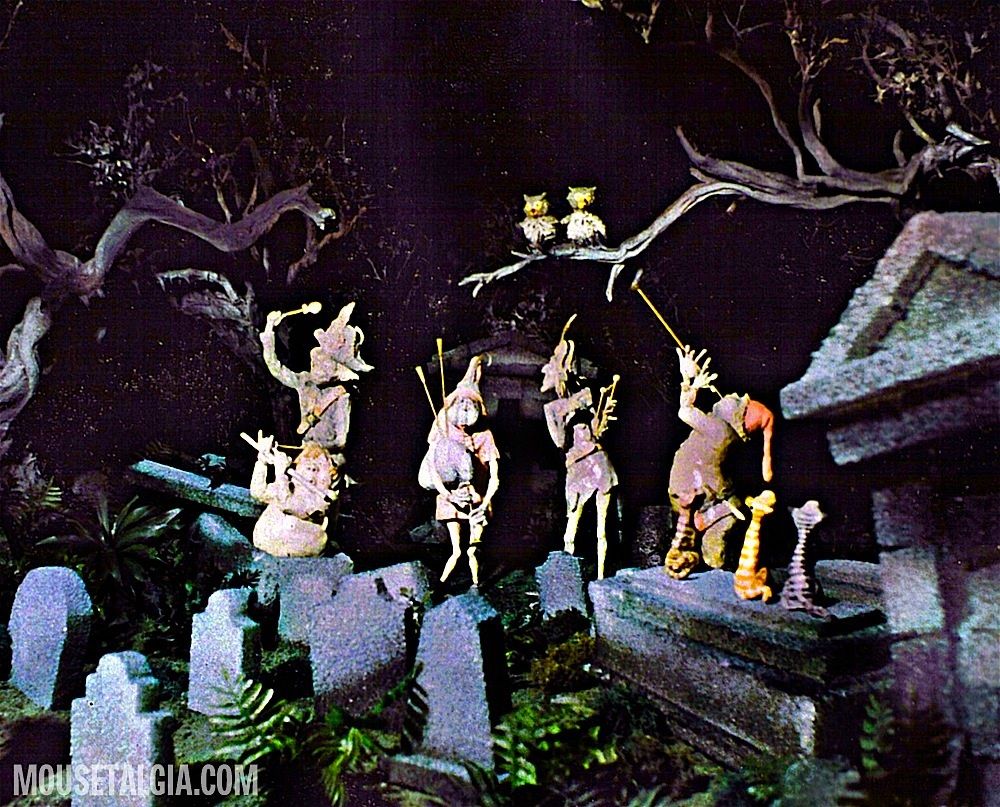
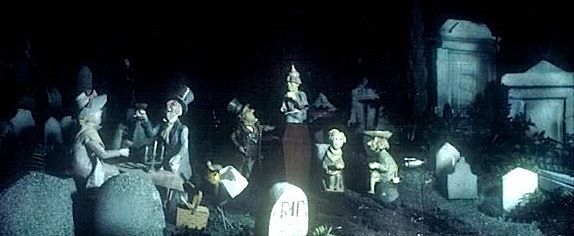


And the taboo is fully realized in the final attraction.  None of the headstones have a cruciform shape.  The winged head, frequently crowned, is extremely common on old New England headstones and represents the flight of the soul to heaven, but it's doubtful if many people know that, and few would consider it a Christian symbol per se since the idea it represents is scarcely unique to Christianity.
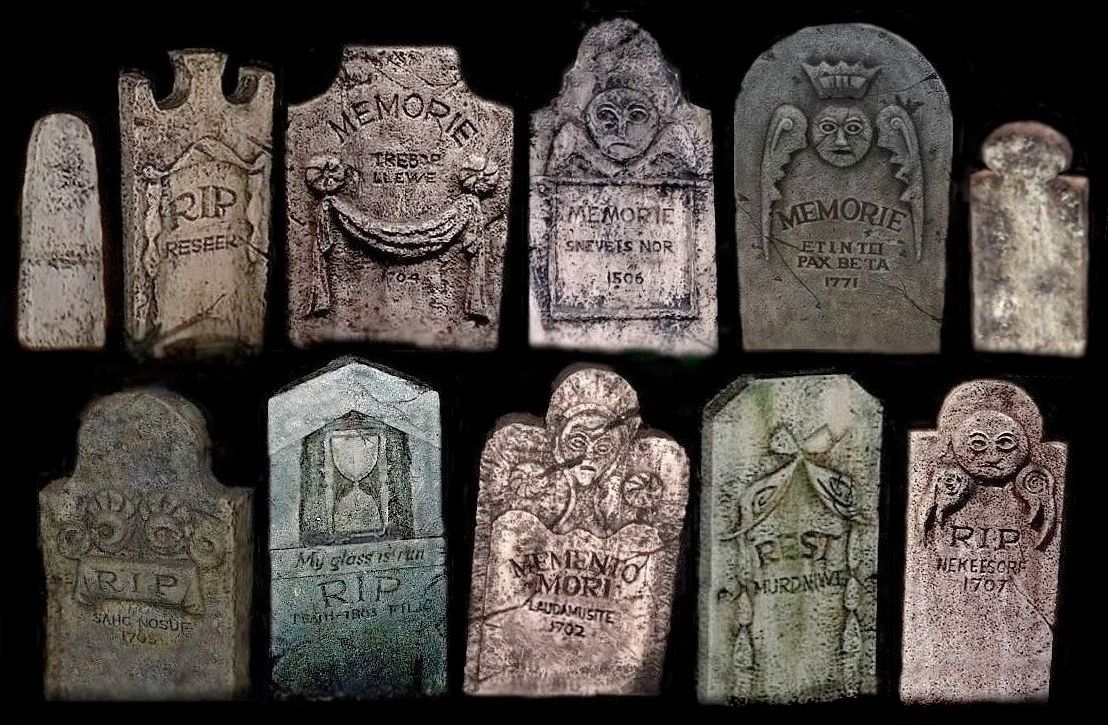

Davis was someone who had enough clout in this project to maintain a no-cross taboo all the way through, so all the evidence points to him.

But why this ban?  I rather doubt it was because Davis was so devout.  More likely it was because he was of the old school of thought that there was no reason to take any chance of offending religious sensibilities, especially Christian sensibilities, since that represents a mighty big chunk of the paying public.  I wouldn't be surprised if this was a dictum that came down to Marc from Walt himself.  Believe it or not, kids, in the early sixties it was still possible to worry that some people might think a haunted house was making fun of death, which might be okay so long as you didn't make it irreverent by bringing symbols of genuine, real-world faith into the mix.  It wouldn't be inconceivable at all that a Council of Bishops or a Sunday School association might write a letter of protest at the sight of serious Christian symbols being used as part of mere entertainment, especially with a subject as inherently serious as death.  Why stick your thumb in their eye when you don't need to?

Times change.  In an age in which deliberate and angry forms of literal blasphemy are common shock elements in art and in popular entertainment, it is hard to believe that someone might have worried about irreverence at a level this low (unless it's Islam we're talking about, but that's another story; don't get me started).  In fact, I would be surprised if anyone—including the Imagineers involved—even noticed that the first ever cruciform headstone at the Mansion made its debut in 1993.

If you're searching for the point where the 1969 Mansion comes closest to stepping over the line, I'm going to say it's the inscription on the MEMENTO MORI headstone, one of the nine main designs used in the graveyard scene:  "Laudamus Te" ("We glorify thee") occurs in the Latin Mass.  Ah, but on a headstone, the line can conceivably refer to the departed, so the sculptor gets off on a technicality.  ("If I had meant God, I would have used the equally common but less ambiguous 'Te Deum Laudamus.' ")

The lesson you draw from all of this is going to vary.  Some of you will breathe a sigh of relief that we've emerged from an oppressive cloud into an era of greater artistic freedom, while others will sigh too, but it will be a sigh of mourning over something valuable that has been lost.  Fifi's headstone is a tiny, eccentric milestone on some road or other.  We probably won't all know what kind of milestone until we're closer to the end of that road.
.

Monday, July 19, 2010

The Pet Cemeteries

.

Yes, there are two.  Imagineer Kim Irvine (daughter of "Madame Leota" Leota Toombs) came up with the idea for the first one in the early 1980's.  Not a lot of time and effort went into the project.  Kim just purchased off-the-shelf yard statues of a dog, cat, skunk, and frog (complete with mouth hole for squirting water) and had Imagineer Chris Goosman compose some macabre epitaphs for the pedestals.  They were put in the vacant yard on the north side of the HM, alongside the wheelchair access path, reportedly to give them something to look at over there.

(pic by Monstersgoboo)


BIG JAKE
Here lies my good dog Jake.
Chasing a toad down a well was his one mistake.


In memoriam MISS KITTY
After losing eight lives you still had no fear.
You caught a snake in your ninth and that's why you're here.


R.I.P. BULLY
You didn't drink, you didn't smoke.
I just can't figure what made you croak.


In loving memory of our pet STRIPEY
You may be departed,
But your presence will always linger on.

Everyone seemed to like this little HM secret, so in 1993 they put another one in the front yard.


It has proven so popular that they subsequently added similar pet cemeteries to the WDW and Tokyo HMs.

And so on.

Those are the well-known facts, familiar to most Mansionites, if not to the general public.  Beyond that basic history, no one has bothered to say much.  But Long-Forgotten readers are a tough and discriminating audience.  They ask, nay, demand more.  Pry up those rocks and see what's crawling around underneath.

A new addition came to the original pet cemetery in the summer of 2016. They needed to add another exhaust vent for the train tunnel going behind the HM and decided to make a virtue of necessity by disguising the vent as a crypt. So far so good, but the crypt is in the pet cemetery, and they made it up as a goofy, elephant grave. The crypt itself is tolerable, falling within the wide embrace of Victorian eccentricity (which, after all, gave us elephant foot umbrella stands), but that trunk looks absolutely awful. How can anyone over the age of eight, let alone Disney Imagineering, look at the exterior and landscaping of the Anaheim HM and conclude that it is an appropriate venue for this sort of zany kookiness? Barf. This looks like a refugee from the execrable queue in Orlando, disaffectionately known in these parts as PLQ:


Sometime around October a plaque appeared on the front:


More cutsie-wootsie stuff, ill-suited to the dignified exterior of the HM. And I hadn't noticed the mouse in previous photos, so I'll point to it now as part of the whole package. Anyway, bleahh. I'm only glad all of this is in a place generally unseen and easily ignored. I look forward to spending a lot of time forgetting it exists.

As I said in the last post, I'm not a huge fan of the PC.  I think most purists and traditionalists see it as an unwelcome intrusion of sheer fantasy before the attraction even begins and would happily see it gone.  That's more or less been my position too, and yet I can't get worked up about it.  Something about the pet cemetery is okay, and it's time to figure out why.  Let's take a closer look.

Much of the front yard version simply repeats the formula of the old one.  Once again you've got a lot of store-bought statuary sitting on pedestals with macabre epitaphs.  In fact, two of the statues (the frog and the skunk) are virtually identical to their back yard counterparts, although they have new names and texts.  The main difference out here is that some dates are attached.  The frog is "Old Flybait" ("He croaked, August 9 1869") and the skunk is "Beloved Lilac" ("Long on curiosity...Short on common scents, 1847").  There's also "Rosie" ("She was a poor little pig, but she bought the farm, 1849") and a dog named "Buddy" ("Our friend until the end"). The dating formula is obvious in the case of Old Flybait; it's exactly 100 years before the HM opening day, and this suggests that the other dates are really cryptic references to 1947 and 1949, probably the birth years of the Imagineers involved.

There's nothing terribly out of place in any of these examples.  They are all of a piece.  We can easily imagine one or several family members in the mansion's long history being animal lovers and burying their pets out front, complete with whimsical epitaphs.  Even if the choice of animals is eccentric in some cases, there is nothing surreal involved, not even anything supernatural.

In one case, however, these conventional statues are arranged in such a way as to suggest that the animals involved have business to conduct in the afterlife.


There is a clever thematic continuity between this cluster and some of the relationships you encounter inside the house.  Imagine the graveyard executioner, a man who in life wielded the power of death but who has now followed his victims into the grave.  It's called irony.  Better still, imagine the cat as Constance and the birds as her husbands, and you can feel the same chemistry at work.  No one forms a partnership with Death so powerful and so lasting as to avoid the same fate as Death's other victims.  It's a classic statement, made at least three times in the attraction, starting with this tableau.  I think the cat-and-bird set is perhaps the high water mark of the pet cemeteries.

There is, however, a whole other set of grave markers.  These are original WDI designs, and they have a more fantastical flavor.  I suspect that it is these that rub some fans the wrong way.  There's Fi Fi the dog, with her cruciform tombstone made of crossed bones and her portrait with crossed-X eyes (like in the funnies).  This piece is significant for reasons that have nothing to do with the intentions of the designers.  It represents a change in the general culture between 1969 and 1993, but that will be the topic of another post.  For the moment, I'll simply note that it is the only cross-shaped headstone in the entire attraction, including all of the scale models and all of Marc Davis's concept art.

The other weird monuments are for a snake, a bat, a rat, a fish, and a spider.  The pieces are nothing if not stylish.


It's a good deal harder to imagine these as simply the products of animal lovers in the Mansion's history.  The style of the monuments themselves is too bizarre.  Perhaps we are to imagine not merely animal lovers, but insane animal lovers, if we want to keep these within the imaginative realm of a real house with a history of real occupants—which is the starting point of the HM voyage. If imagining these pet monuments as items designed by crazy family members seems a stretch, then these freaky-deaky things simply don't belong here.  For me, there are enough tales of nutball Victorians to keep it all just barely within bounds.

As if to illustrate exactly that point, Craig Conley sent me in November of 2016 the following clipping from a 1913 edition of Popular Mechanics, noting an 1855 grave marker for a fish.


Edit October 2019: And did you know that the famous cemetery in London's Hyde Park has a hidden pet cemetery, closed to the public since 1903?

In short, pet cemeteries were a thing in Victorian times.


Okay, even if we are not necessarily in the realm of fantasy, you still wonder what the original Imagineers were shooting for.  In one of the Long-Forgotten threads at Micechat, someone argued that pieces like Freddie the Bat were inspired by Tim Burton's Nightmare Before Christmas, which would eventually take over the whole Mansion every Fall and Winter, of course.  If you compare concept art for Freddie with typical NBC artwork, the similar look and feel is indeed striking.


But the dating is against it.  NBC was released the same year the pet cemetery was installed: 1993.  Better to look elsewhere for inspiration for this fantastic and surreal streak.  [Edit: But see new evidence below.]  As a matter of fact, the original HM Imagineers did kick around some lunatic pet ideas for the HM.  Ken Anderson toyed with having a man-eating octopus in a pit in the middle of a room in his 1957 Ghost House.  Which is pretty . . . out there.


Then there's this delightful Marc Davis creation, which was added to the Corridor of Doors in 2025.


But if we're looking for justification for adding an element of the strange and fantastic to the Haunted Mansion, the obvious place to look is in Rolly Crump's unused "Museum of the Weird" designs.  Do I detect a whiff of the Museum in the pet cemetery? (Or *sniff* is that just a dead fish?)


Very, very few people know this, but Rolly actually designed some bizarre tombstones for the HM.  Where they would have been used, I can't imagine, but it must be admitted that Freddie the Bat has nothing on Velma Wingspan when it comes to eccentricity, and isn't the spidery lettering style used on the pet cemetery stones just a teeny weeny bit reminiscent of Rolly's "Museum" font?


"But even if Ken, Marc, and Rolly kicked these kinds of ideas around, they ultimately decided NOT to go in that direction, so even if the pet cemetery Imagineers were drawing inspiration from those guys, they also overrode their judgment by going ahead with this kind of thing."

Yeah, I hear that, and it's a good point, but I still take some comfort in the idea that the newer Imagineers respected and revered the original masters and sought to draw inspiration from their work.  And anyway, since the pet cemetery, even at its most surreal, can be placed within the imaginative orbit of the Mansion, I've decided to call a truce on this one.

New Evidence for Tim Burton's Influence

One of our "Anonymous" commenters directs our attention to a short 1984 film by Tim Burton, Frankenweenie, produced by Walt Disney pictures.  Reportedly, Disney fired Burton after making it, claiming he had wasted company resources and had produced a film too dark for Disney to use.  It later had video and DVD releases.

Well, SOMEONE at Disney liked the film.  There can be little doubt that it was a direct influence on the front yard pet cemetery. [Edit: According to "Anonymous," the imagineer who designed these Burtonesque grave markers was Jimmy Pickering. See the Comments.]  The film is a parody/homage to Frankenstein, so there are important graveyard scenes—in a pet graveyard.  It appears also in the film's opening titles.


Fifi's tombstone at Disneyland is obviously taken almost directly from this movie.


There are several bone-cruciform tombstones in the Frankenweenie 
cemetery, but "Sparky" is the main animal character in the film. 


 Even the shape of Fifi's head and the "X's" for her eyes may have
been inspired by various other tombstones seen in the film.


Then there's "Earl."


There are also tombstones for a goldfish and a snake in the Burton graveyard.

This raises the distinct possibility that Imagineers (or at least Kim Irvine) were aware of Burton's work on Nightmare while it was in production and saw some of the models, and so possibly that artwork was an additional influence on the style of the 1993 HM pet cemetery.

A big thanks goes to "Anonymous" for the tip.