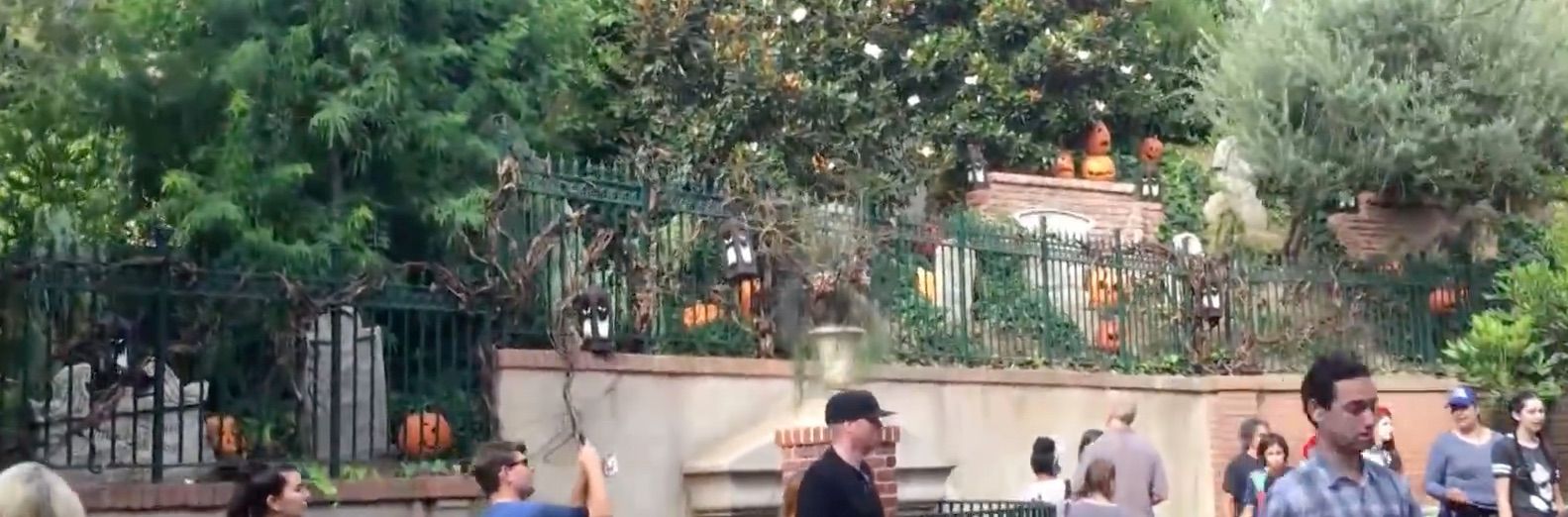
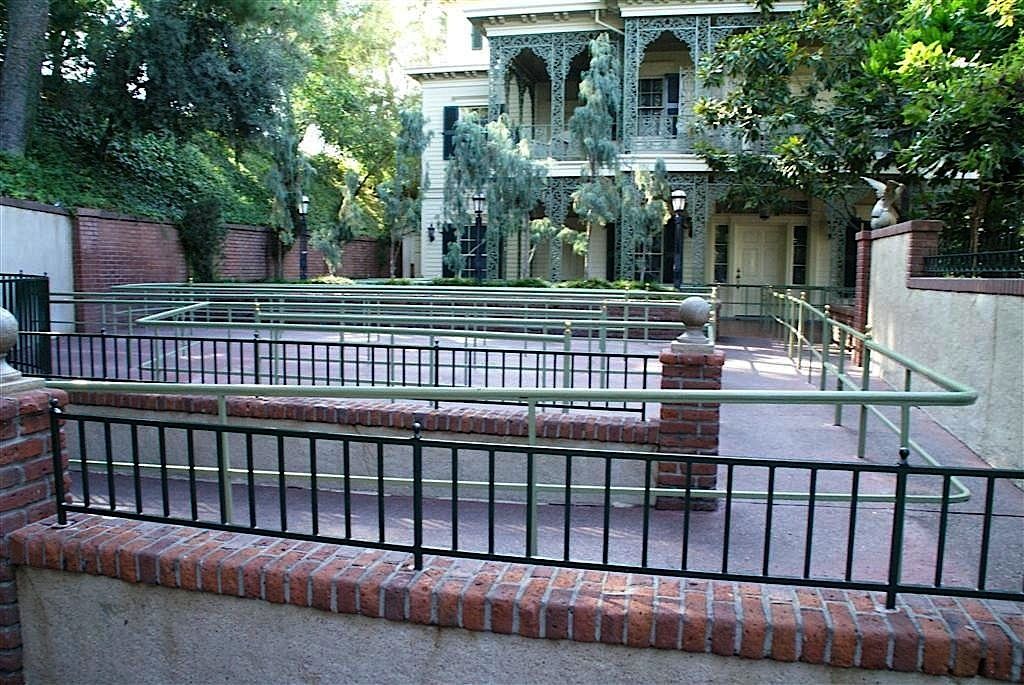
The back half of the queue area for the Disneyland Haunted Mansion has a long and curious history. Major additions to the berm took place in September of 2016...
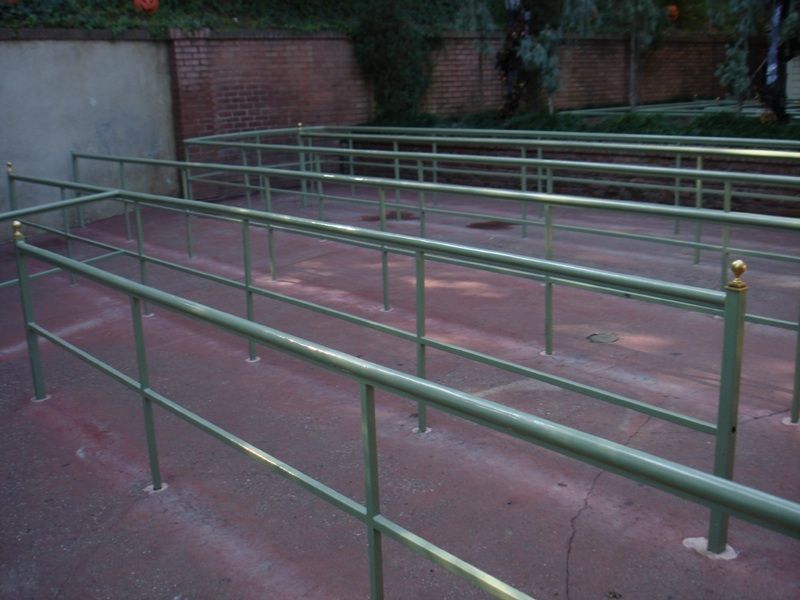
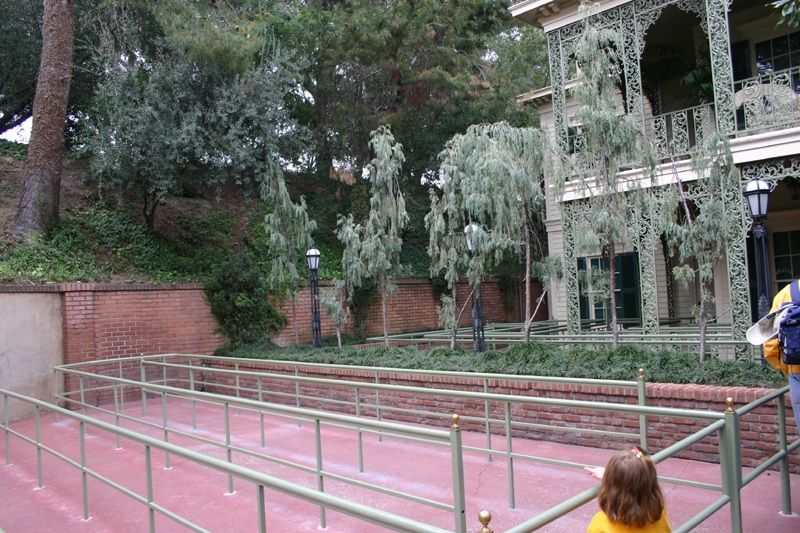
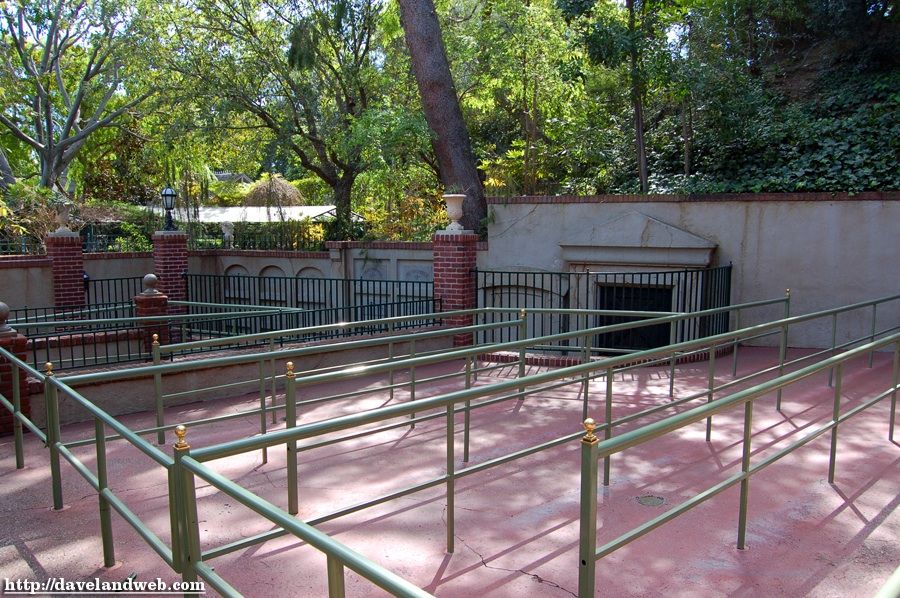
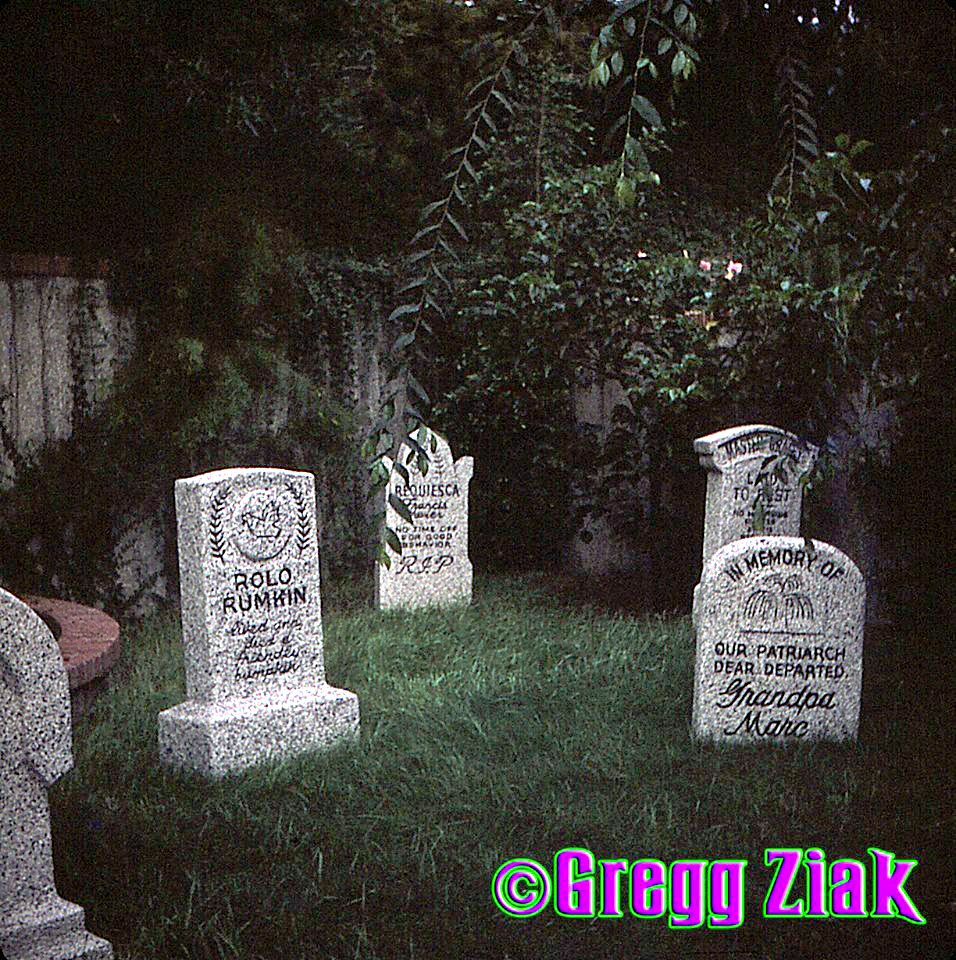
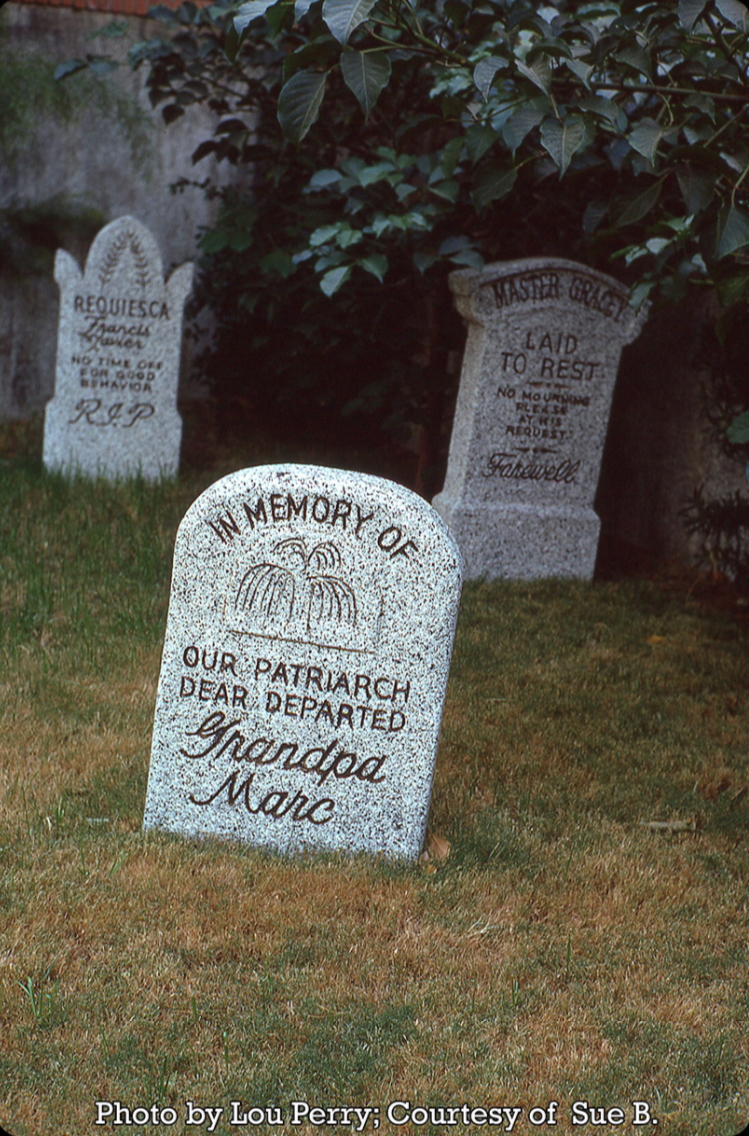
I'm old enough to remember this section when it hosted the family plot graveyard, a short-lived minor masterpiece remembered today by few. In the beginning, when a much higher percentage of riders had no idea what lay in store for them, the queue graveyard was virtually the only clue you had as to the tone of the attraction. Plus, the lines were longer and slower back then, so you had plenty of time to contemplate the epitaphs (and if you were a geek, to memorize them). If you're a Mansion fan, you really ought to know about this long-forgotten gem.
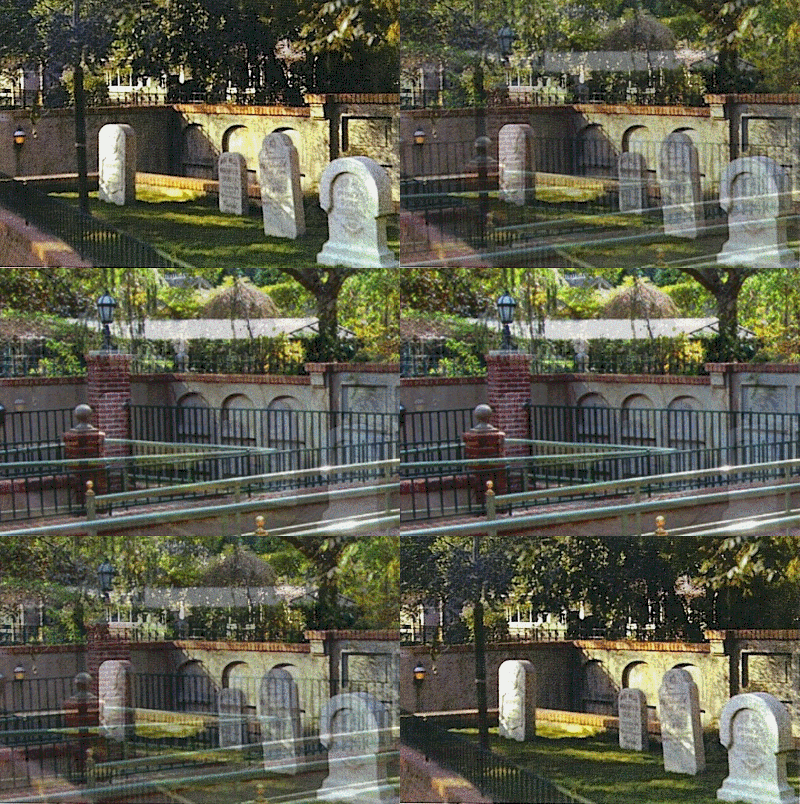
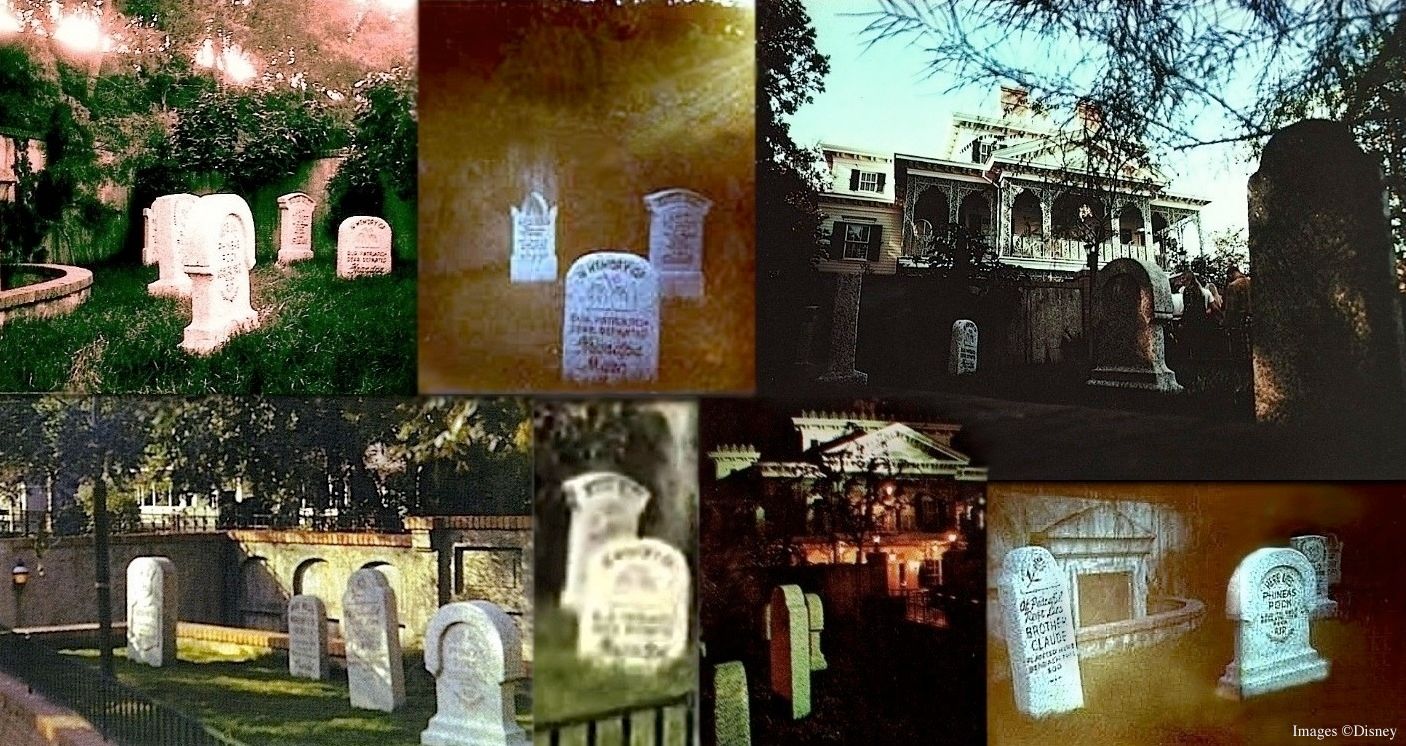
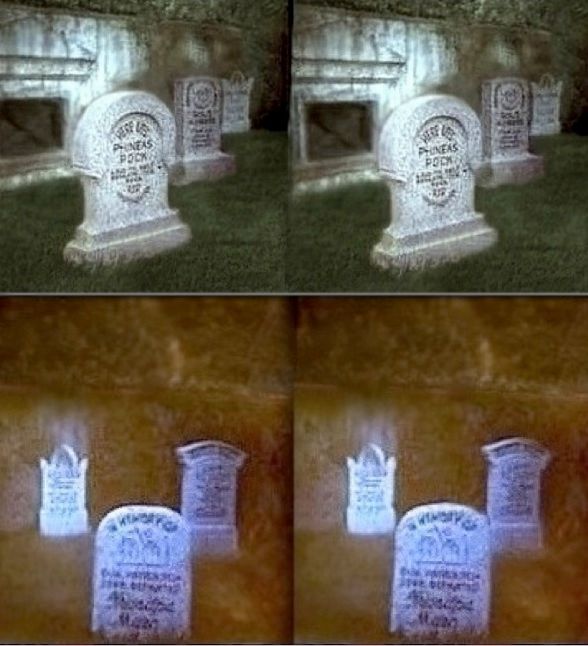
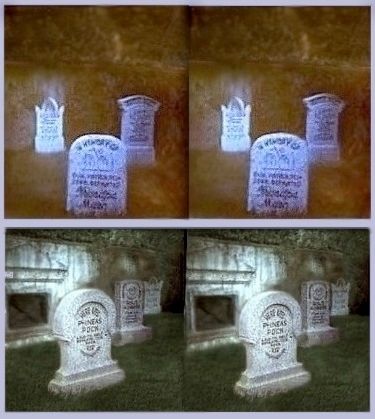
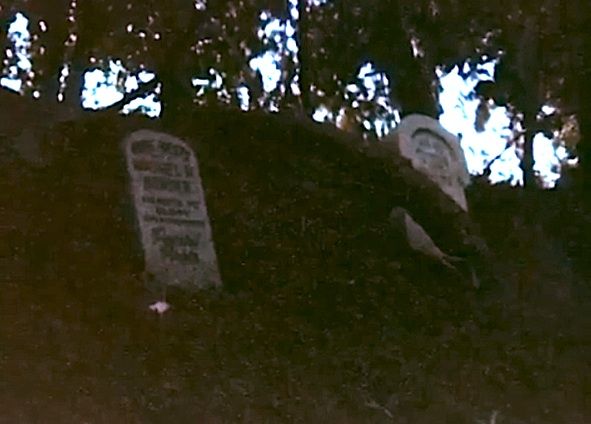
In the original version of this post (which has been rewritten umpteen times as new material has come to light), I was content at this point to simply remark that there aren't many photographs of the little cemetery, and I threw this meager montage at you before continuing:
I also mentioned that you could get a glimpse of the old graveyard in the 1970 Osmonds Disneyland Showtime episode, which featured the HM.
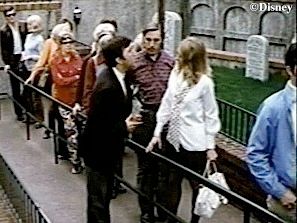



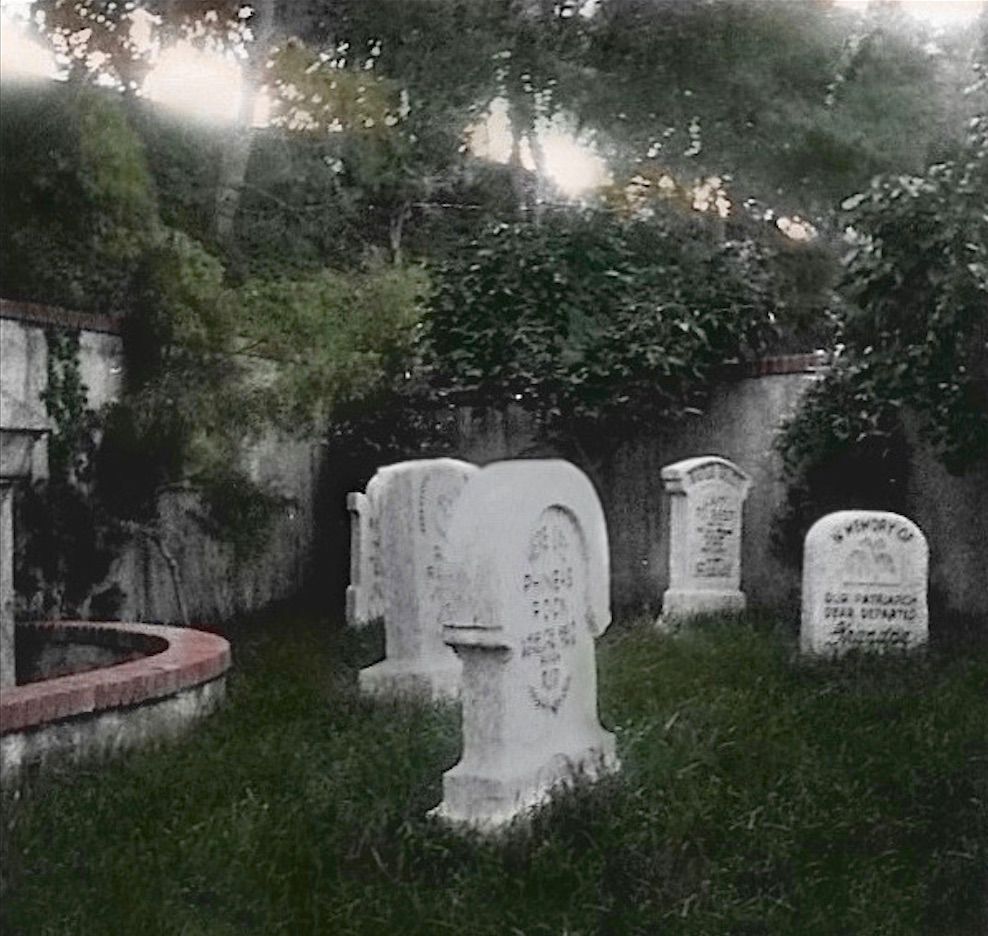
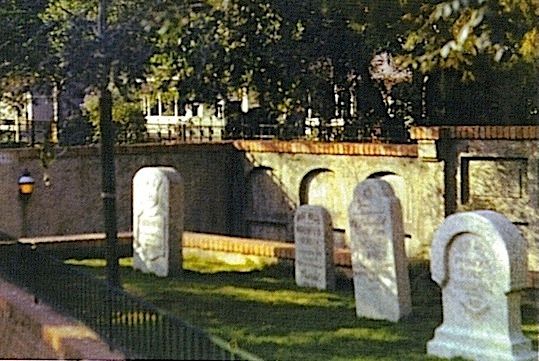

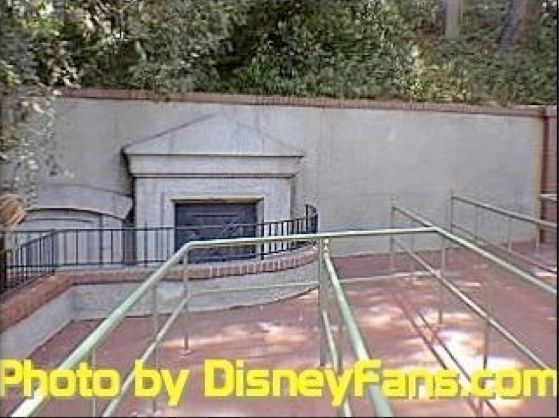
...was taken from almost the same spot as a publicity shot of the Osmonds in the old cemetery, one of several pubbies released to the papers before their March 1970 TV program...
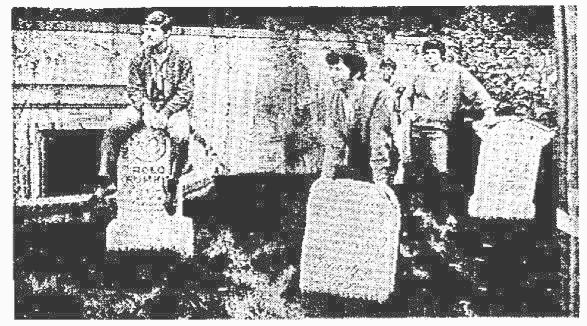
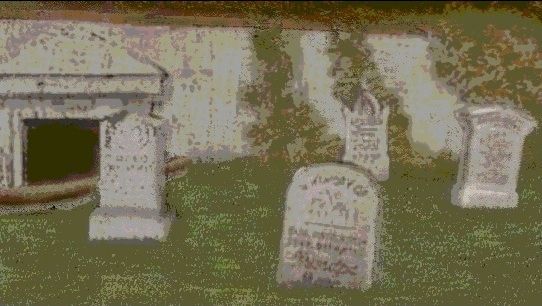
And since Long Forgotten is all about cunningly-crafted, here y'go (with our thanks to Captain Halfbeard for the gifs).


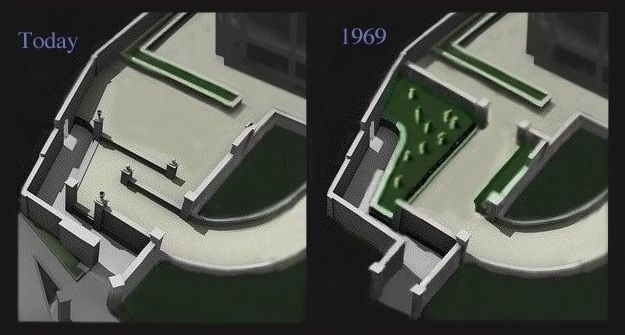
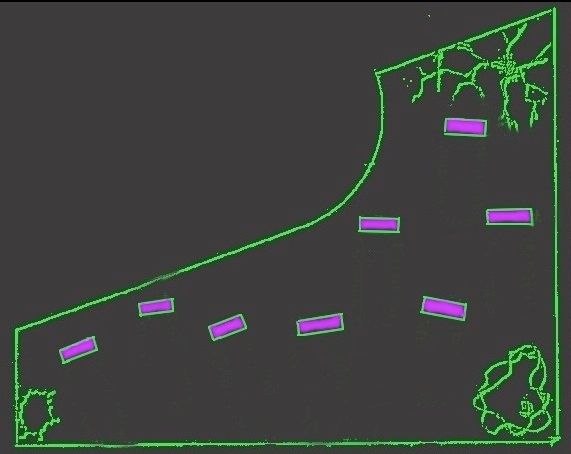
versions in the post on that topic, so there is no longer any need for a miserable montage here. Check 'em out.
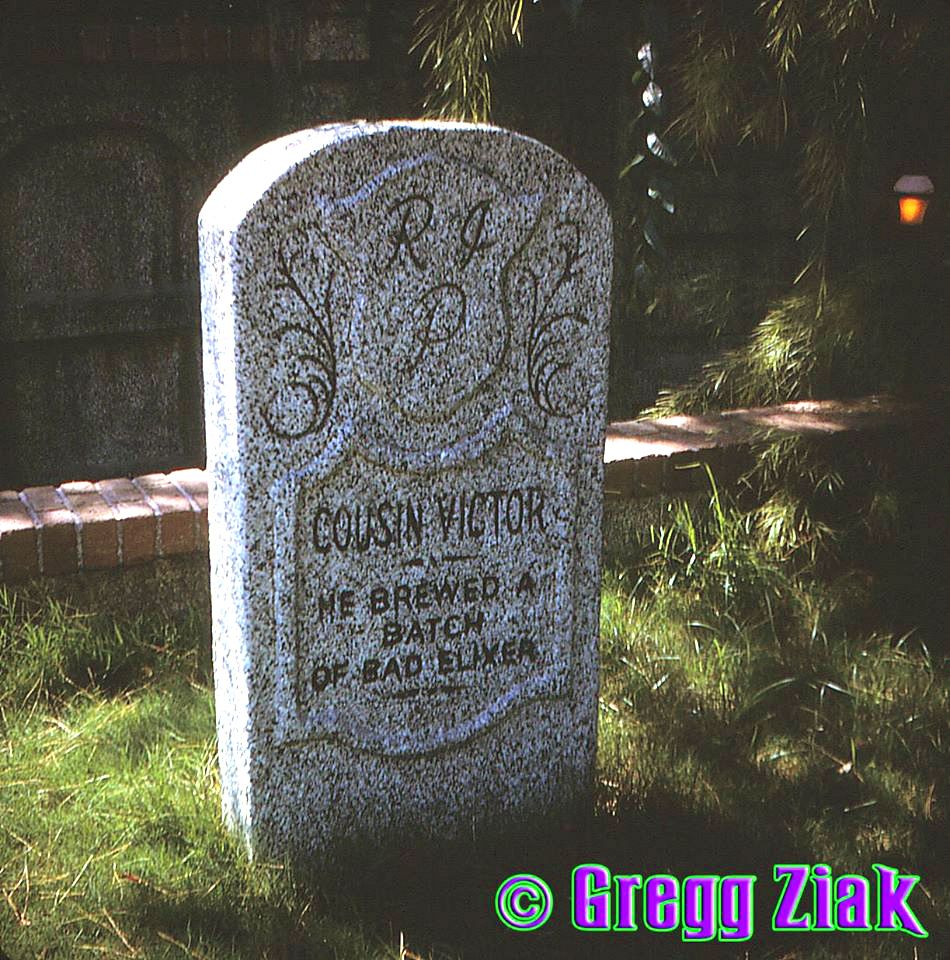
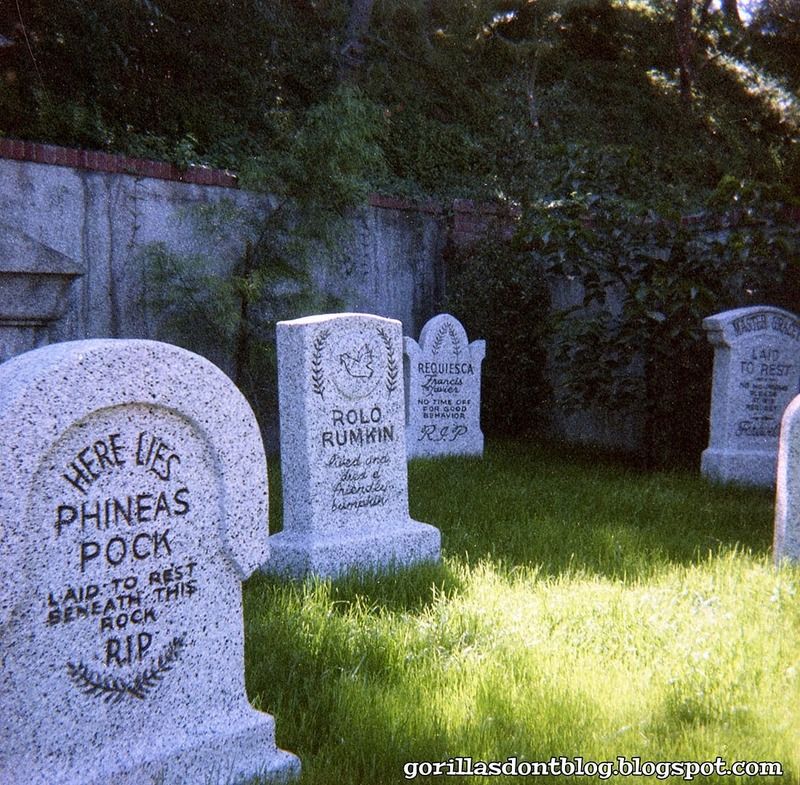
As many of you know, the epitaphs were composed by show writer X. Atencio as wry tributes to various Imagineers who worked on the Haunted Mansion. Here are the original Disneyland eight, left to right in the layout above, with the Imagineer thus honored:
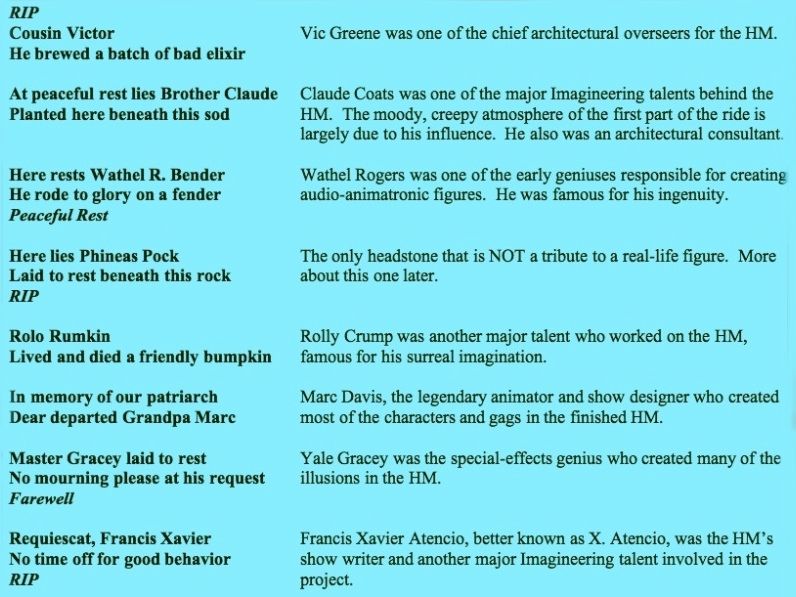
RIP Good friend Gordon
Now you've crossed the river Jordan
Here lies a man named Martin
The lights went out on this old Spartan
Rest in peace, Cousin Huet
We all know you didn't do it
RIP In memorium [sic], Uncle Myall
Here you'll lie for quite a while
Here lies good old Fred
A great big rock fell on his head
RIP
RIP Mr. Sewell
The victim of a dirty duel
Peaceful Rest
Dear departed Brother Dave
He chased a bear into a cave
In 2002 a new animated tombstone was added at WDW:
Dear sweet Leota, beloved by all
In regions beyond now, but having a ball
The Imagineers being honored in these WDW epitaphs are listed here, if you're interested. I'm too lazy to duplicate all that info now, and we've got other ground to cover. (I do give some special attention to the Martin stone HERE, because it's often misattributed.)
You hear these epitaphs described as "witty" and even "frightfully funny," an example of Boot Hill-type gallows humor ("Here lies Lester Moore. Four slugs from a .44. No Les. No Moore."). Okay, many of them are, but let's face it: in others the whimsy is so subtle as to be practically non-existent. "In memory of our patriarch, dear departed Grandpa Marc." "Master Gracey laid to rest, no mourning please at his request." I have to stop here as my laughter becomes uncontrollable. No, really, if there's humor in there, it's so dry that even an Englishman might miss it. Don't get me wrong; I love it. It's the comedic equivalent of watching someone trying to see how slowly he can ride a bike without falling over.
Doomed From Birth
The family plot was actually constructed in June of 1969, and so it was there by opening day in August, but it was doomed from birth, as the Imagineers were fully aware that they would need more room for crowd control. The current arrangement of back-and-forth queueing was already blueprinted in June of 1969, two months before the Mansion had even opened and the same month the family plot was constructed! Sometimes, however, there is a considerable delay between a blueprint and the actual project. There is good evidence that the queue renovation did not occur until 1972. At this point, the best evidence suggests a latest possible date for its removal in the first part of 1973.
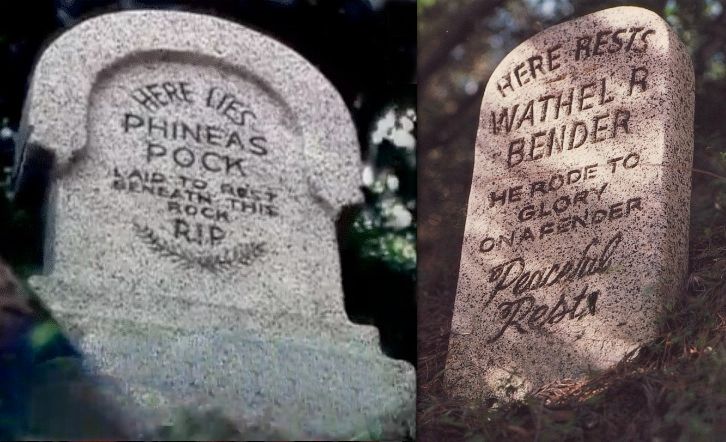
X wanted to award the stones to the Imagineers to whom they paid tribute, and so they ordered up a fresh batch of headstones for installation up on the berm. As it turns out, the only guy who took his tombstone home (as far as we know) was X himself. It's still sitting in his backyard today. Marc's sat by his desk for a time, until he finally couldn't stand having his own tombstone staring at him while he was trying to work, and he got rid of it. Rolly's stone ended up inside the ride, in the graveyard scene, not far from the singing bust that also goes by the name of Rollo Rumkin [sic]. Wathel Rogers' and Vic Greene's stones went onto the berm, along with Phineas Pock, which wasn't a tribute to anyone. The fates of "Master Gracey" and "Brother Claude" are unknown.
I'll devote a whole post to the berm graveyard one of these days.
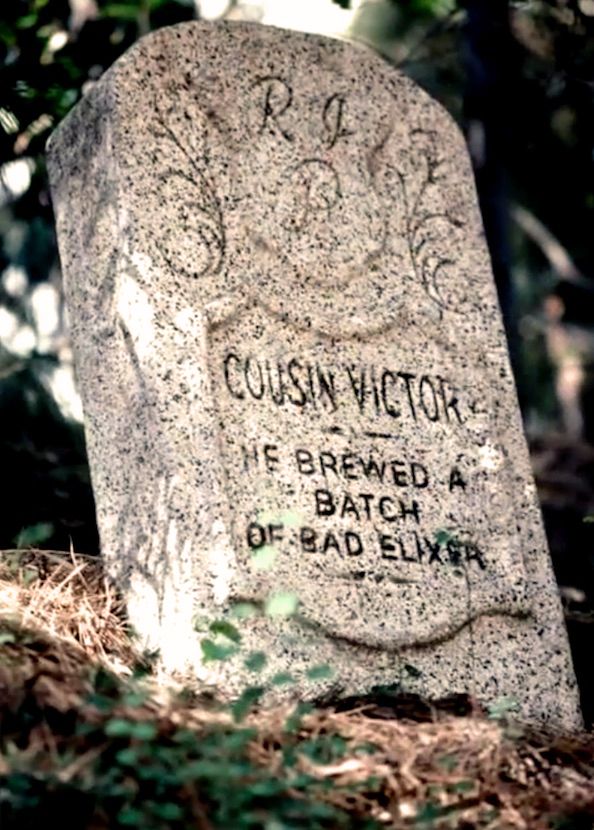
Pock Marked
"Phineas Pock" may have originally been the name they were going to give to the Ghost Host. Reportedly, there's a blueprint around of an unused WDW tombstone reading "Phineas Pock, Lord and Master." Be that as it may, they got a lot of mileage out of the name. One of the singing busts is "Phineas P. Pock." It's on the blueprints and on the leaders for the film strips they used to use for the effect, so that one is as official as it can possibly be.

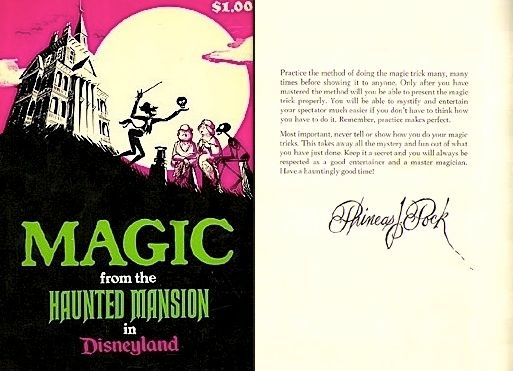
And then there's the "Phineas Pock" who died in 1720 and starred in a radio ad when the Mansion first opened in 1969:
Phineas Pock Radio Ad
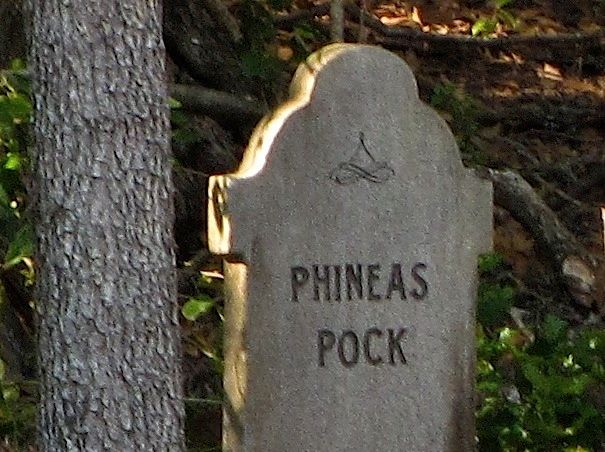
For the sake of completeness, I suppose I should mention that one of the new crypts in the WDW queue is for "Prudence Pock."
No doubt some people associate Mr. Pock with the rotund hitchhiker, who is also known as "Phineas," but that name actually originated with a cast member who probably was influenced by the plethora of Pocks already there. If you want to try to sort out this peck of Pocks, feel free. It's just a funny name.

Plots That Follow The Plots
In your imagination, the queue graveyard—in either its ground level or its original berm incarnations—was not to be confused with the graveyard scene that provides the ride's climax. That graveyard is a very old public cemetery, next to which the Mansion was built sometime during the 19th c. It's "out back" in some vague sense, behind the berm and the trees, not visible from the front. The Caretaker is not connected with the HM but is a public employee, caring for that old municipal cemetery. That's why you go through that big iron gate to get into it, and that's why Collin Campbell put a sign on the gatepost in his painting of it.
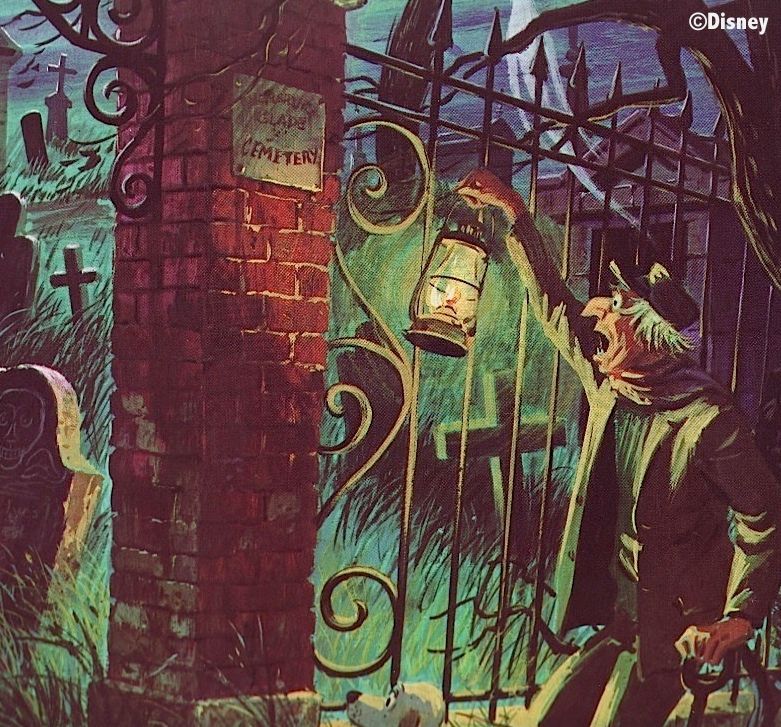
The headstones back there are uniformly in the style of 16th-18th century New England grave markers, and many of them are dated accordingly. They're much older than the house, in other words.

In contrast, the boneyard out front was, as I've already called it several times, the family plot, the private family burial grounds. That explains the relatively modern (i.e., 19th c.) tombstone designs, and that explains the familial terminology: "Grandpa," "Brother," "Cousin." How carefully all of this was thought out—like I say, I can't tell. But the coherence in details like this, even when it isn't strictly necessary, is one of the things that embolden me to reach for the word "art" without embarrassment. There is an unexpected imaginative unity in the whole presentation.
Whether or not the new (2016) berm graveyard follows suit is debatable. The stones are, for the first time, made to look old. They're worn and cracked. That, together with the wall-top fencing, might encourage guests to assume that the berm graveyard is simply the "back there" graveyard spilling over the hilltop and down to the wall. Be that as it may, our little tour of the short-lived, original, long-forgotten, front yard cemetery is now completed.
.