.
You don't often run into discussions about what isn't in the Haunted Mansion, and when you do, it's usually to note that there isn't any grue, or there aren't any big scares. Otherwise, it's what's there that gets the ink or the bandwidth.
You don't often run into discussions about what isn't in the Haunted Mansion, and when you do, it's usually to note that there isn't any grue, or there aren't any big scares. Otherwise, it's what's there that gets the ink or the bandwidth.
There are, however, two omissions that create openings for some interesting observations (interesting, at least, to Long-Forgottenistas, or whatever it is we call ourselves).
Children Not Admitted
There are no ghosts of children anywhere among the 999. Nada. Zip. Zilch. The closest we come is a mute admission that children exist within the imaginative world of the Haunted Mansion. Amidst the junk in the attic have been prams and hobby-horses at one point or another, perhaps an acknowledgment that some of the Mansion residents were once children. Not exactly news that will make you spill your coffee.
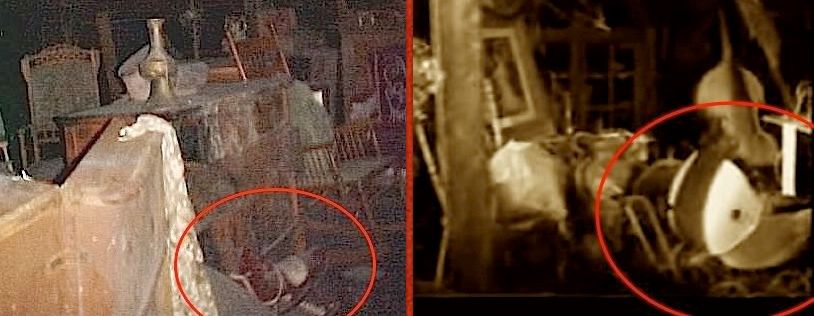
No child ghosts. It's not as though anyone is pretending that no one under 18 ever dies, so...where are the kids? At one point I argued that it isn't possible to make jokes about the death of a child. Well, actually, you can, you know, if your name is Edward Gorey.
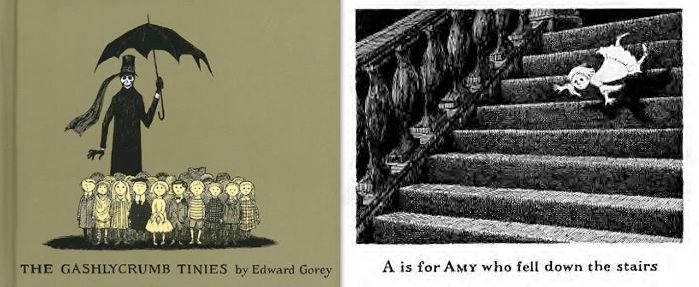
But that humor presupposes a very different world, and don't expect to work for Disney if that's your total bag. Disney's offerings always have an upbeat ending. They "celebrate the human spirit," to use a typical cliché, and to do so they imagine a cosmos that is essentially hospitable to humans and normally rewarding to anyone who dreams big and beautiful things. If you hold a blacker, more bitter view of the cosmos, you can grin grimly at Gorey's perishing innocents and say with Gloucester: "As flies to wanton boys, are we to th' gods, — they kill us for their sport."
If your view of things is not quite that bleak, then there are rules. You can turn almost any adult's death into a jest, because by then we have all bitten the apple, we are all guilty creatures, and we all kind of know deep down that mortality is the fate we probably deserve. You can even get away with a suicide joke. But a child's death is Something Else entirely, and it's just never ha-ha funny to anyone who believes that there are—and should be—better things.
And No Crosses, Either
Considering how the Imagineers rifled though traditional material in search of ideas for the Haunted Mansion, it is striking that there are no nuns, no monks, no clergy of any kind. It's not as if there is a gap in this area: holy moly, ghost lore is chock full of nuns and monks, both "real" ghosts and literary ghosts. Monks are especially prone to be caught by the camera, it seems.
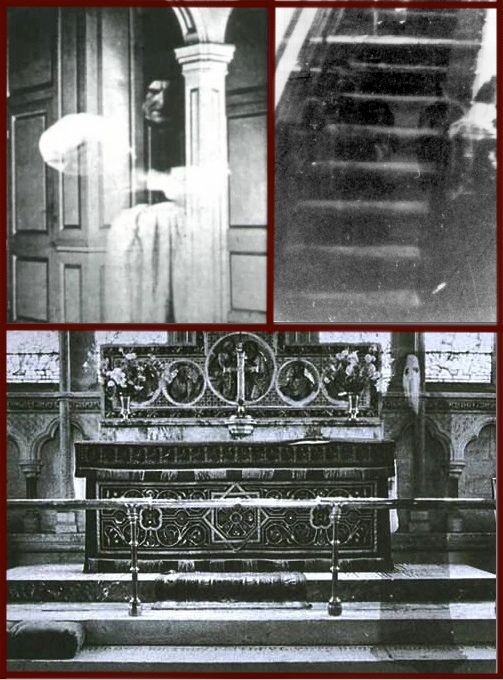
Some literary ghosts have left the pages and almost taken on a life of their own (or afterlife, I guess), like the Bleeding Nun, from the 18th c. Gothic novel, The Monk. Here she is on an early 19th c. magic lantern slide:
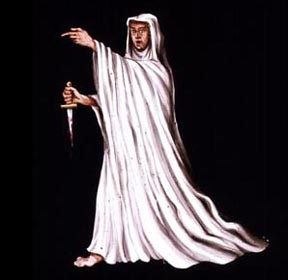
But the Mansion has steered clear of all of this. It's part of a general taboo that includes any traces of Christian symbolism. You will hunt in vain for a cross anywhere in the original HM cemeteries. They aren't there. It's pretty easy to figure out who was responsible for this, too: Marc Davis. Paintings and concept sketches by other HM Imagineers have an occasional cross, like Ken Anderson (Duane Alt)...
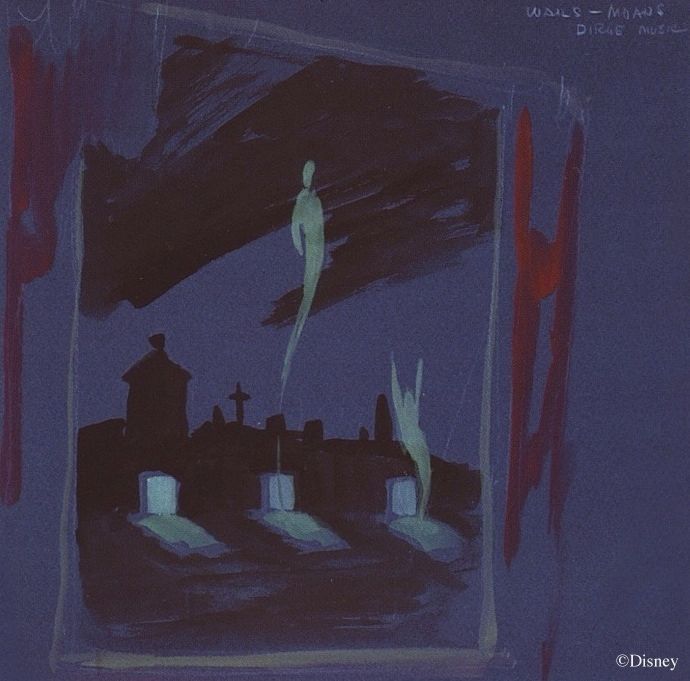
. . . . or Claude Coats . . .
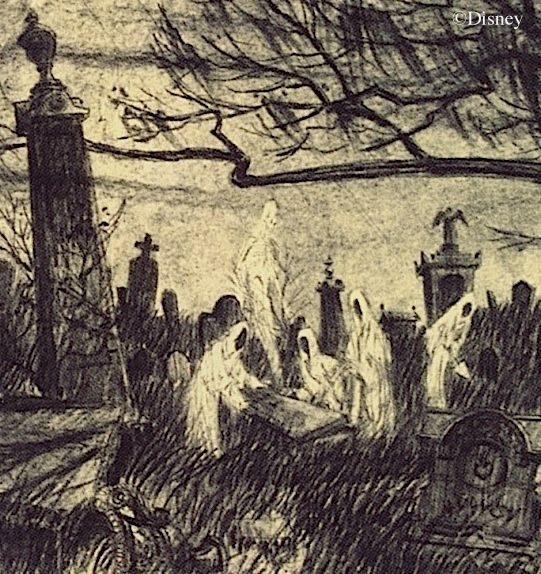
. . . but Davis? I've never seen a single cross in any of his concept work for the HM, despite the number of graveyard scenes he sketched.
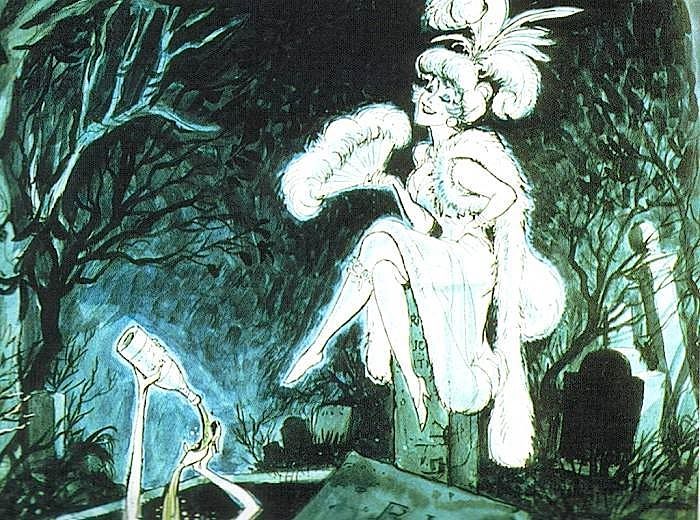

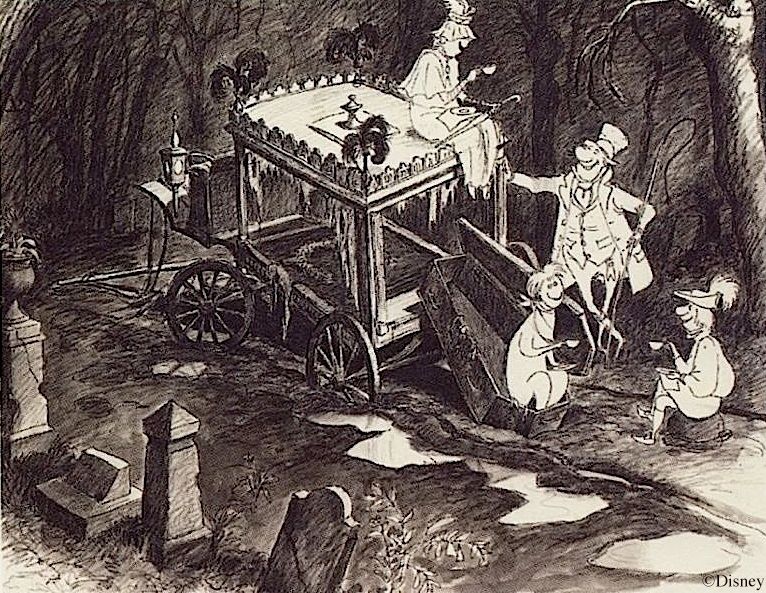
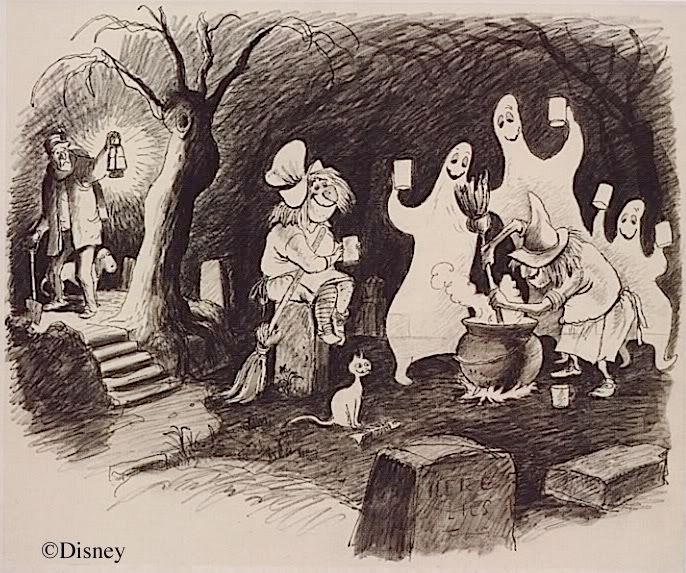
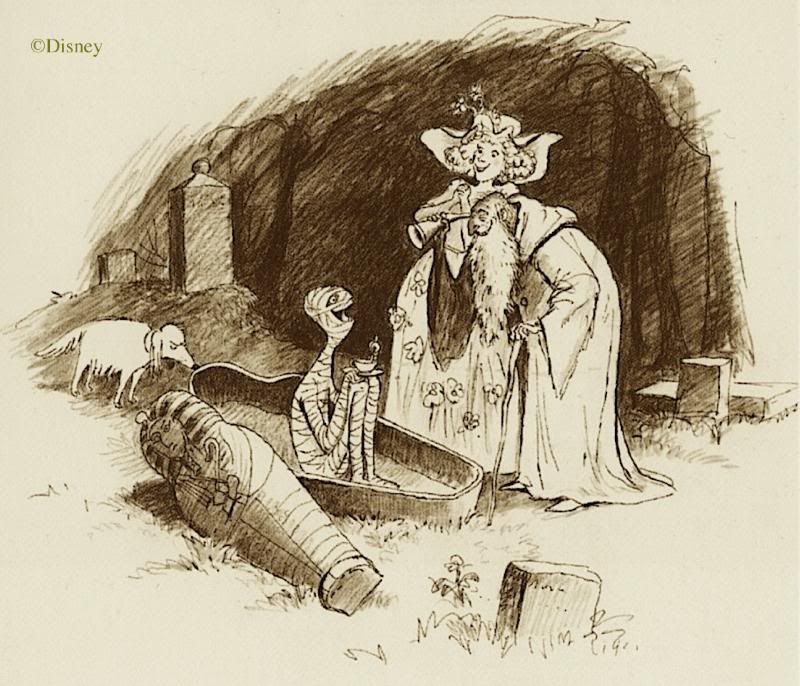
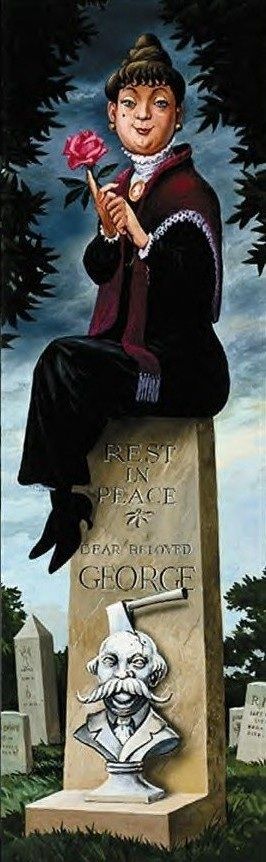
In 2019 a massive new book on Davis was published: Mark Davis in His Own Words (around here known as MDIHOW), and it includes a number of never-before-seen sketches by Davis, including HM artwork with graveyards and such, and again, there are no crosses anywhere in the new/old artwork.
If you look at photos of the scale model of the graveyard, here again there's not a cross in sight.
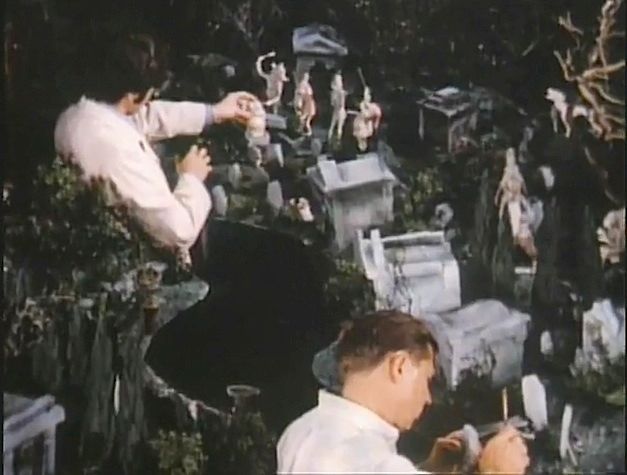
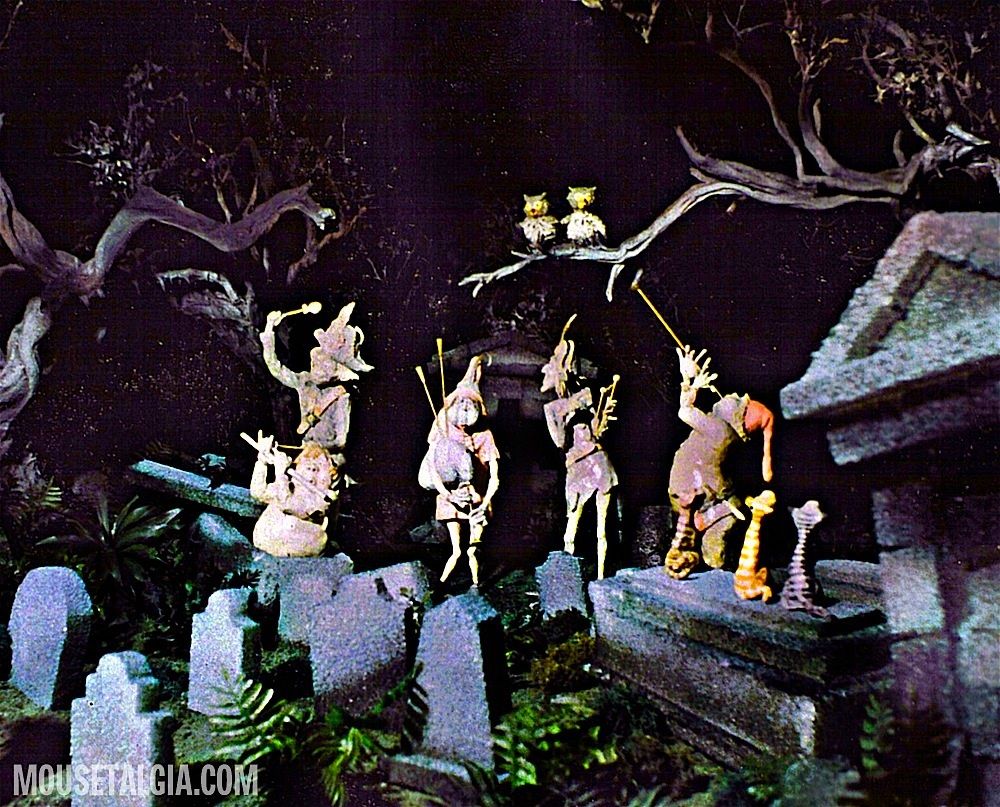
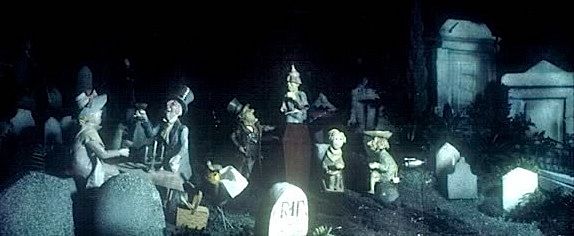
And the taboo is fully realized in the final attraction. None of the headstones have a cruciform shape. The winged head, frequently crowned, is extremely common on old New England headstones and represents the flight of the soul to heaven, but it's doubtful if many people know that, and few would consider it a Christian symbol per se since the idea it represents is scarcely unique to Christianity.
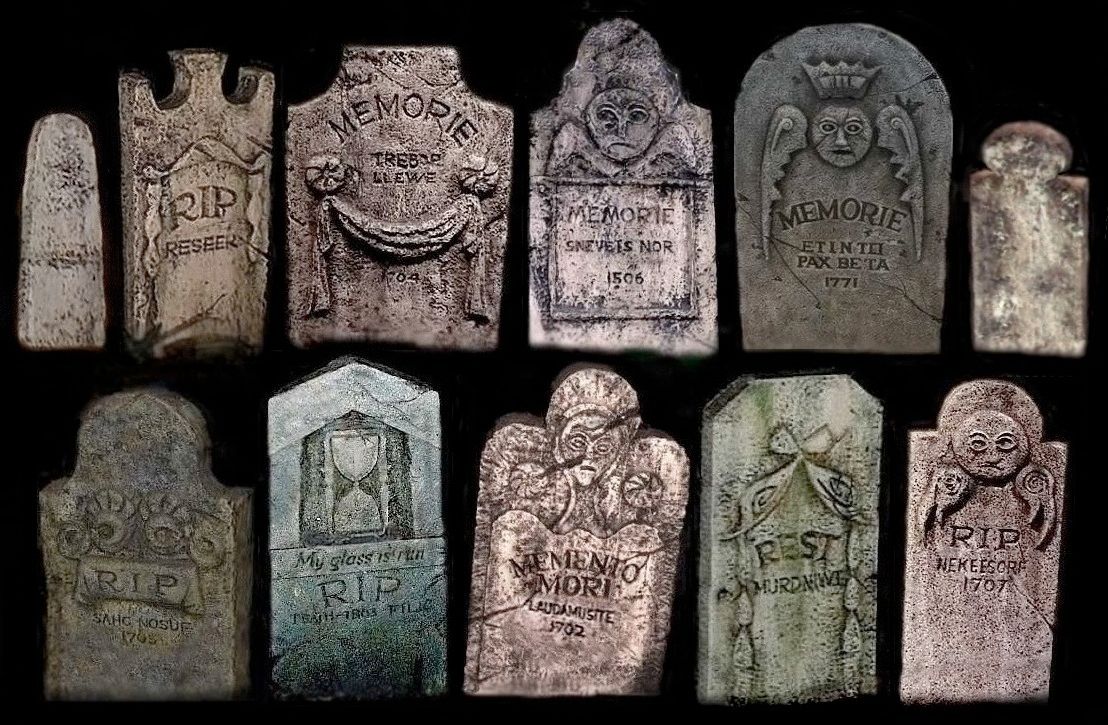
Davis was someone who had enough clout in this project to maintain a no-cross taboo all the way through, so all the evidence points to him.
But why this ban? I rather doubt it was because Davis was so devout. More likely it was because he was of the old school of thought that there was no reason to take any chance of offending religious sensibilities, especially Christian sensibilities, since that represents a mighty big chunk of the paying public. I wouldn't be surprised if this was a dictum that came down to Marc from Walt himself. Believe it or not, kids, in the early sixties it was still possible to worry that some people might think a haunted house was making fun of death, which might be okay so long as you didn't make it irreverent by bringing symbols of genuine, real-world faith into the mix. It wouldn't be inconceivable at all that a Council of Bishops or a Sunday School association might write a letter of protest at the sight of serious Christian symbols being used as part of mere entertainment, especially with a subject as inherently serious as death. Why stick your thumb in their eye when you don't need to?
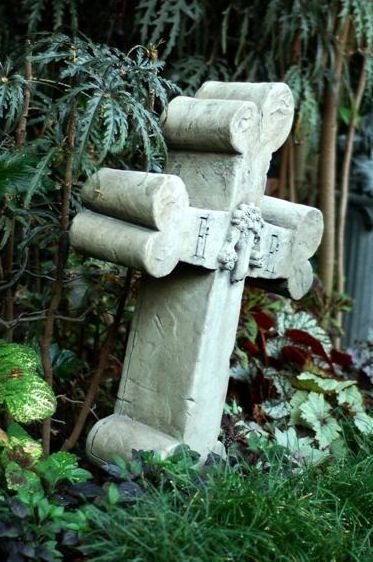
Times change. In an age in which deliberate and angry forms of literal blasphemy are common shock elements in art and in popular entertainment, it is hard to believe that someone might have worried about irreverence at a level this low (unless it's Islam we're talking about, but that's another story; don't get me started). In fact, I would be surprised if anyone—including the Imagineers involved—even noticed that the first ever cruciform headstone at the Mansion made its debut in 1993.
If you're searching for the point where the 1969 Mansion comes closest to stepping over the line, I'm going to say it's the inscription on the MEMENTO MORI headstone, one of the nine main designs used in the graveyard scene: "Laudamus Te" ("We glorify thee") occurs in the Latin Mass. Ah, but on a headstone, the line can conceivably refer to the departed, so the sculptor gets off on a technicality. ("If I had meant God, I would have used the equally common but less ambiguous 'Te Deum Laudamus.' ")
The lesson you draw from all of this is going to vary. Some of you will breathe a sigh of relief that we've emerged from an oppressive cloud into an era of greater artistic freedom, while others will sigh too, but it will be a sigh of mourning over something valuable that has been lost. Fifi's headstone is a tiny, eccentric milestone on some road or other. We probably won't all know what kind of milestone until we're closer to the end of that road.
.