Things You're Just Supposed to Know

Most of the time, Long-Forgotten assumes that readers are already familiar with basic facts
about the Haunted Mansion. If you wanna keep up with the big boys, I suggest you check out
first of all the website, Doombuggies.com. After that, the best place to go is Jason Surrell's book,
The Haunted Mansion: Imagineering a Disney Classic (NY: Disney Editions; 2015). That's the
re-named third edition of The Haunted Mansion: From the Magic Kingdom to the Movies (NY:
Disney Editions, 2003; 2nd ed. 2009). Also essential reading is Jeff Baham's The Unauthorized
Story of Walt Disney's Haunted Mansion (USA: Theme Park Press, 2014; 2nd ed. 2016).

This site is not affiliated in any way with any Walt Disney company. It is an independent
fan site dedicated to critical examination and historical review of the Haunted Mansions.
All images that are © Disney are posted under commonly understood guidelines of Fair Use.

________
.
Showing posts with label Frances Lichten. Show all posts

Tuesday, October 19, 2021

Needlepoint, Ironwork, and Dead Snow Balls (Once Again, the Lichten Book)

Forgottenistas know that Frances Lichten's Decorative Art of Victoria's Era (1950) is one of the few books one may point to and claim with absolute certainty that it had a direct influence on the Haunted Mansion's Imagineers. We highlighted this book several years ago, on the occasion of our seventh anniversary, so go there first if you need to refresh your memory and want to see a lot of really neat pictures. I'll wait right here until you get back.

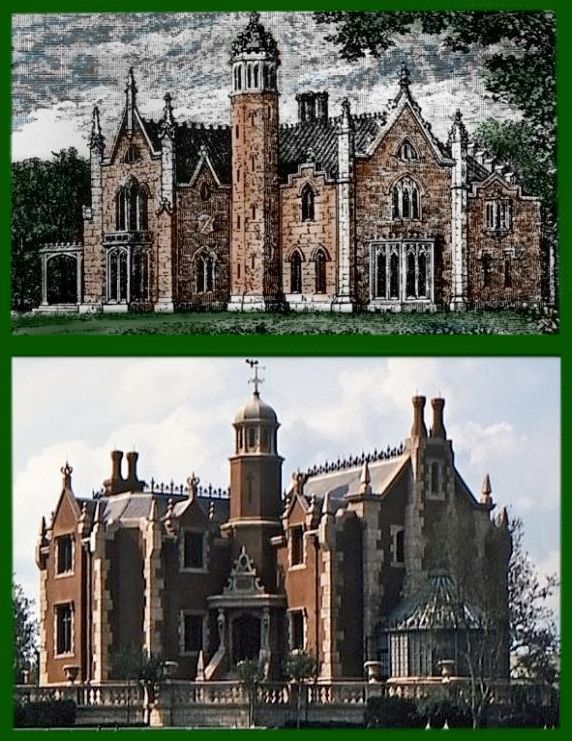
  • Lichten is where Ken Anderson got the exterior design for the Anaheim Mansion.
  • Lichten is where Claude Coats got the exterior design for the Orlando Mansion.
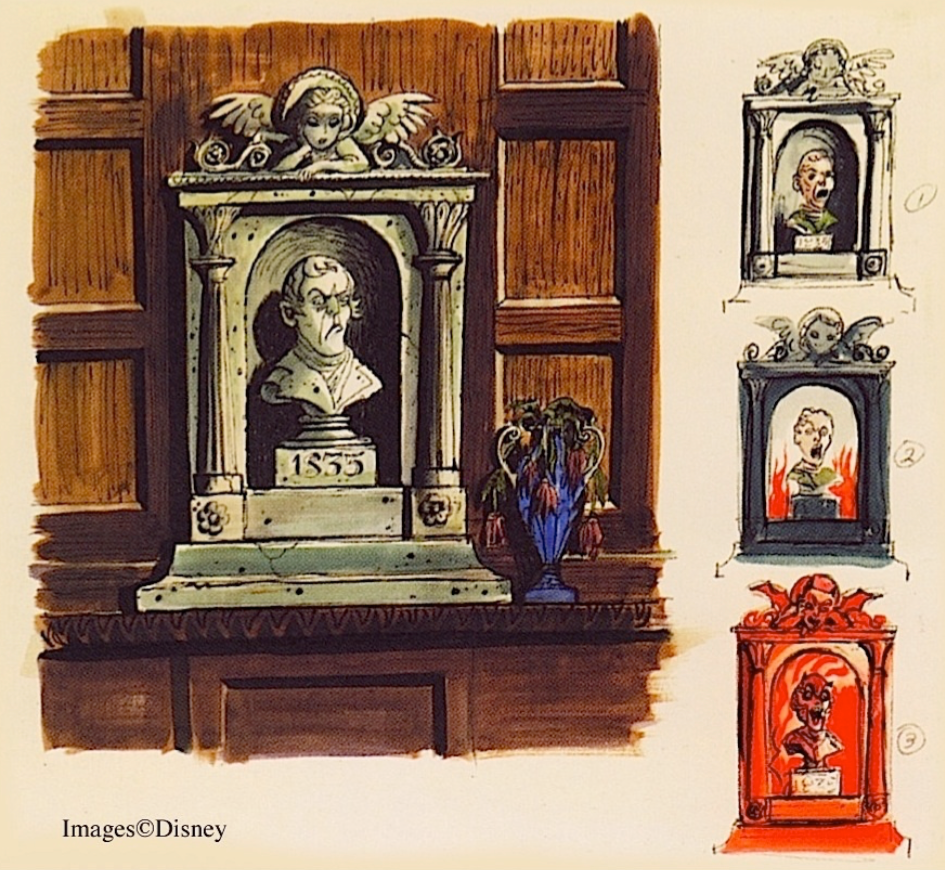
  • Lichten is where Marc Davis got design ideas for a concept intended for the foyer.

I ended that earlier post with a promise to comb through the book again for any additional points of contact, and like Captain Hook, your humble blog administrator always keeps his promises, even if it takes five years.

I've come back with four more items to talk about.

Only one of them represents a clear and convincing case of direct influence, but I can't take credit for that one. It had already been noticed by Foxx Nolte several years before our earlier post. However, Foxxy only mentions it more or less in passing, and it's buried deep in the bowels of a long post, without pictures or page numbers, so I suspect that relatively few Mansionites have noticed it, and even fewer have followed up on it to see if it's legit.

It is.  And it's high time it received the full LF treatment.  Everyone got their magnifying glass?


(1) Stop and Snag the Roses

The TOMB SWEET TOMB cross-stitch sampler in the Corridor of Doors sports an authentically Victorian rose-and-violet border design. You have to look close, but if you do you'll see that the floral design is the same in the DL and the WDW versions, even though the specific coloration of the flowers is quite different:

Walt Disney World

Disneyland


This exact needlepoint design is found in Decorative Art (p. 122). The fact that the photo is black and white might explain
why the coloration in the two Mansion versions doesn't match. Each could be a free attempt to colorize the b&w original.


Side by side, to satisfy the skeptics among you:


It is possible that the design seen in the Lichten book was (or became) so popular that the designer of the TOMB SWEET TOMB needlepoint copied it from somewhere else, but my own online snooping around suggests that the design is not a common one. In fact, I haven't seen it anywhere but in Decorative Art and in the Mansion samplers. And since Lichten was in the WDI (then WED) library and was certainly made use of by at least three different HM Imagineers, the simplest assumption is that it was the source of the needlepoint design. So I think Foxxy is correct, and we can safely add a fourth bullet-point to our list:

  • Lichten supplied the needlepoint design for the TOMB SWEET TOMB floral borders.


(2) The Coalbrookdale Benches

There is another suspected Lichten connection that didn't really pan out as hoped. It involved some outdoor benches at WDW:


The bench in Lichten's book (p. 34) is part of a grotesque furniture set from Hamburg made with stag horns,
dated 1851. Note that it and the WDW benches not only have doggy armrests, but dog's paw feet as well.


(Incidentally, I'm told that a guest put the red eyes on the dogs with some nail polish, 
and the park liked the result so much that they've kept them red ever since!)

pics by Jack Spence

pic by Joe Penniston

But hold!  This bench end is not a Disney creation. It is a fairly common variety of Victorian-era,
COALBROOKDALE cast iron bench end, and authentic antique examples are not hard to come by.


But before you walk away in disgust, you might pause and consider the fact that those ghastly and Gaston-ish staghorn furnishings we see in Lichten were popular in early Victorian England, so it's possible that the original designers of the Coalbrookdale bench ends, coming a little later in the Victorian age, were inspired in part by precisely the sort of thing we see reproduced in Decorative Art, possibly even by that very same illustration, found by them in the same source book where Lichten discovered it. In that case the WDW bench ends would still share a link with Lichten, if only in a derivative and roundabout way.

But even if there is no connection, this whole thing hasn't been a total waste: You
Floridian Mansionites now know how to correctly identify those über-cool benches.
 
"I just love the Coalbrookdale ironwork on these benches, don't you?"
( And boom, she's all impressed. Works every time. )


(3) Further Ironic Comments

Our third Lichten item is the pair of photos of the wrought ironwork on the porches of the Shipley-Leydecker house. Foxxy was sufficiently impressed with the resemblance to suggest that these photos directly inspired the ironwork of the Mansion.


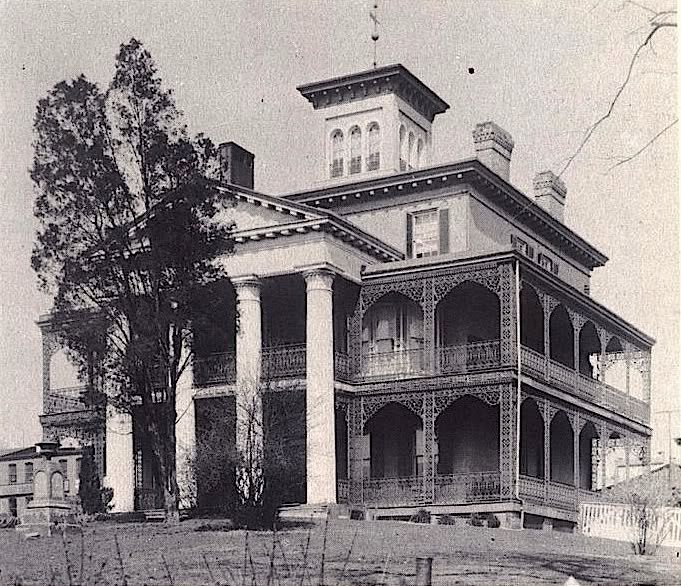
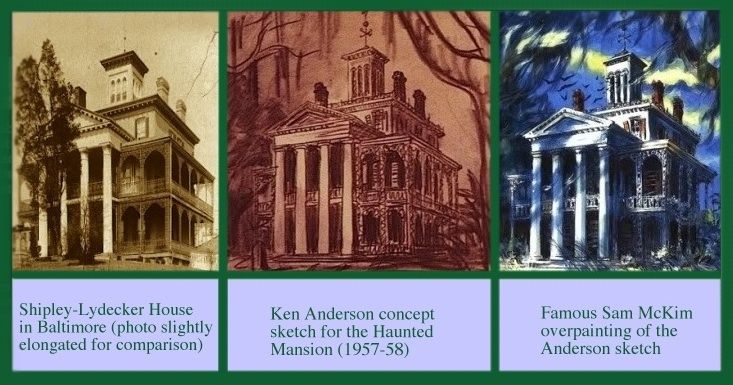
I'm not so sure. We already know that the Mansion's look was directly inspired by this photo
of the Shipley house, and you can see the basic design of the ironwork in it clearly enough:


But up close the design is noticeably different from the Mansion's ironwork, so why would you suppose that in addition to the long shot, the close-up Lichten photos inspired the specific wrought iron design of the HM?  Side by side, the differences are as striking as the general similarity.


But then again, perhaps there is something to the theory after all.
  As we know, the Mansion ironwork is an off-the-shelf design known as "Bird-of-Paradise."


After looking more closely, I'm thinking it's not altogether impossible that the selection of Bird-of-Paradise over other choices may have been
inspired by one of the Lichten photos, which shows a somewhat similar zoomorphic shape at the Shipley house, unless it's just a trick of the light:


I think it's a coincidence.  But who knows?  Add it to the long list of Mansion mysteries we will never solve.

Lichten also has a photo of the veranda of another house, in Philadelphia (p. 106), and it's hard to deny that it has a similar feel to
the lovely south porch of the Anaheim Mansion. Whether that translates to "direct influence," you'll have to decide for yourselves.


Allen Huffmann

(4) Last, if Not Leashed

One more, and then I think we can let Lichten rest in peace for awhile. In this case there's no suggestion of influence, but I think it's worth pointing out that Decorative Art furnishes us with a particularly good example of Victorian fondness for pet cemeteries. Someone grieved enough over poor Snow Ball to erect an impressive little monument. 


It's tiny and tucked into the corner of page 223, and no mention is made in the text
of the obvious fact that the decedent is a dog or a cat, so this one is easy to overlook.

It's also easy to imagine Snow Ball in one of the Haunted Mansion pet cemeteries; in fact, this could almost
pass for a concept sketch for one of the animal grave markers, don't you think?  Note the leash/collar on
the ground. This is definitely the closest real-world parallel to the pet cemetery markers I've ever seen.


*******************


Saturday, April 8, 2017

Seven Years (plus: Davis and Decorative Art)

.
Updated April 23, 2017 (the ACTUAL anniversary date!), with a link to new information about a house illustration discussed below.

Okay, we're a couple of weeks early, but yep, Long-Forgotten is celebrating its seventh anniversary this month. What can one say? I can only shake my head in amazement (as opposed to a certain ghost who shakes his head in a hatbox). It's true that new posts these days are as rare as 1909-S VDB Lincoln pennies (I've been messing around with my coin collection lately), but have no fear: the critter ain't dead until I say it is. Speaking of collections, I am still gathering HM materials as I find them and may do an "anthology" post or two in future, dealing with topics of interest that are too short for a full post. And as long as they keep fiddling around with the rides, your favorite reviewer will be there with his magnifying glass and big mouth. Looking down the road, you can be sure that there will be a lot of hoopla over the 50th anniversary of the original DL Mansion in 2019, and yours truly is planning on a trip to the park that year, maybe on the exact date I was there the first time.


As always on these our anniversaries, we party down for a paragraph or two, and then tired but happy Forgottenistas are sent home with a piece of Mansionalia maybe a little too weak for a full post but a little too strong for the trivia basket.

This one is really fun.

A few months ago, gerG, a Disney guy who is a fan of the blog, sent me a copy of Frances Lichten's Decorative Art of Victoria's Era (Scribners, 1950). It was previously owned by a friend and colleague of gerG but was on its way to the dumpster when gerG rescued it and kindly mailed it to me, figuring I'd like to have the book. It's an old, library discard, and it's seen better days, but with a little tape on the cover it's good to go.

Mansion fans already know about the book. It came to prominence several years ago when it was discovered that the façades of both the Anaheim and Orlando Mansions were directly inspired by pictures in it. A copy must have been available in the WDI (then WED) library. We've discussed Ken Anderson and the Shipley-Leydecker house many ... many ... times, so a few pictures are all we need at this point.

Lichten p 105


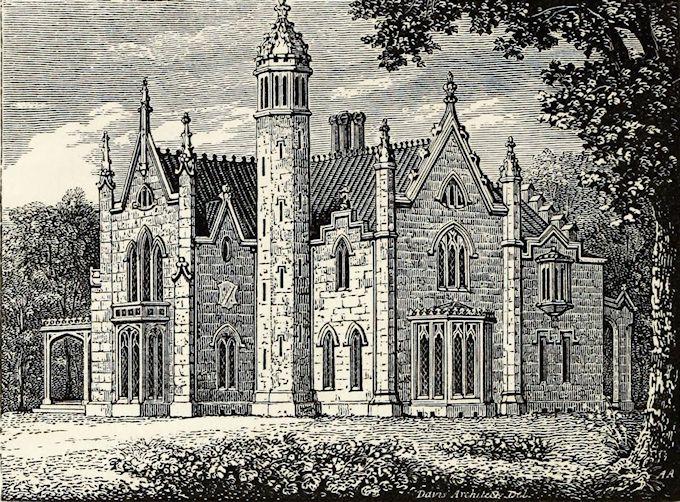
Almost as well-known is the etching of a Neo-Gothic, New England house that
probably served as inspiration for the WDW HM. Once again, pictures say it all:

Lichten p 59

If you have any doubts, just color it and stretch it out a bit, then lay it alongside the Disney version. It is believed that Claude Coats was
most responsible for the look of the WDW Mansion, so that's two of the most important Mansion Imagineers making use of Decorative Art.


Foxxy has already given the book more serious consideration than just calling attention to a few random photos in it, and you do well to read her take. (As for the house itself, a flood of new information about it came to light last October and can be accessed HERE.) As for me, once I had a copy of Lichten in my hands, my natural inclination was to wonder if there were still more examples of Mansionistic influence in it not yet noticed. Sure enough, it wasn't difficult to see that a third Imagineer, Marc Davis no less, also drew direct inspiration from the book. That's our topic for today.


Busted Once Again!

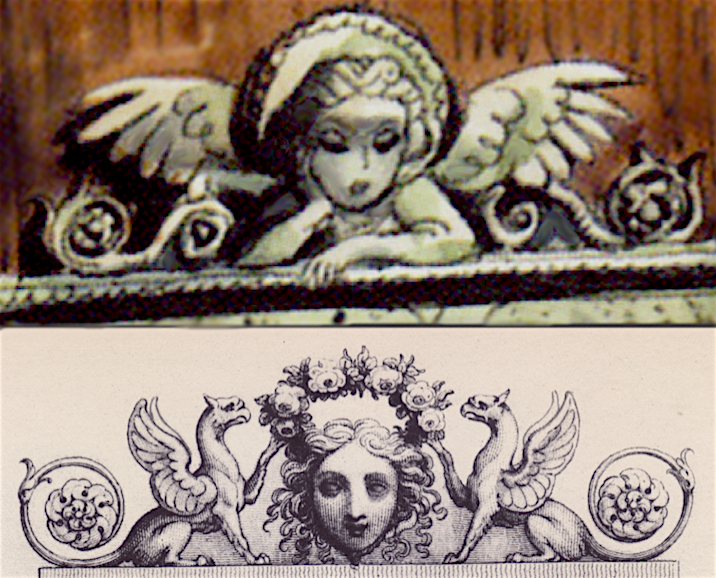
In our earlier discussion of original plans for the Mansion foyer, we learned that a talking bust was long
planned for the corner. You will remember Marc Davis's concept art for this effect, which dates to 1964:


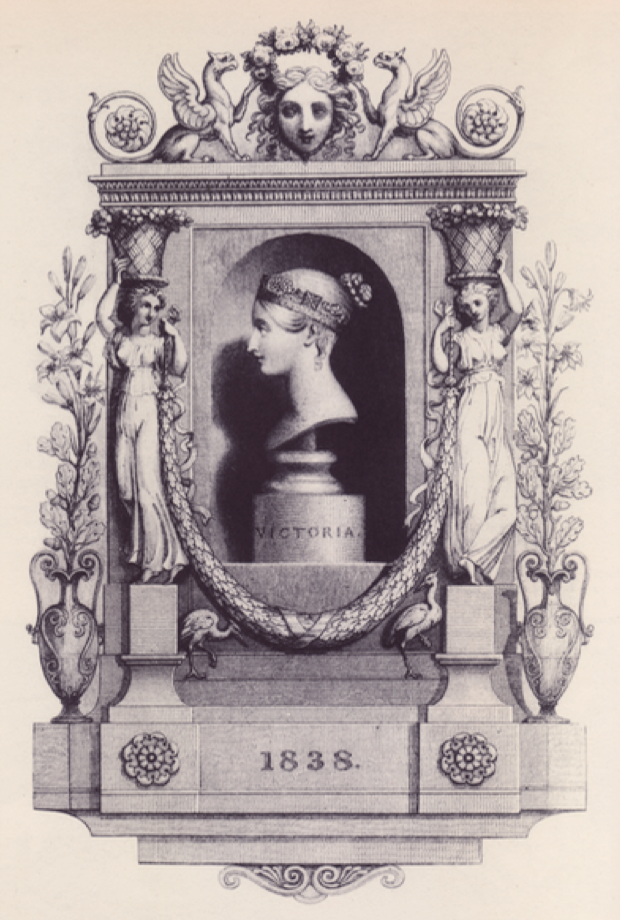
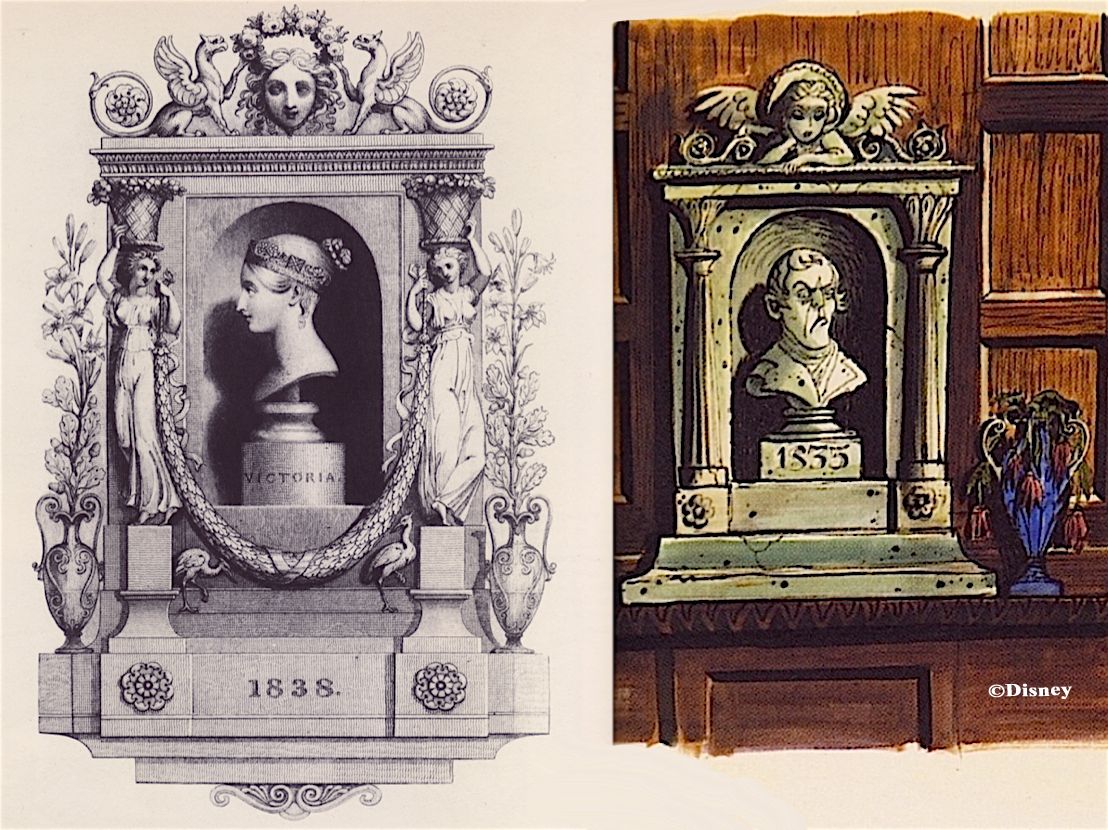
Well sir, the immediate inspiration for this artwork can be found on page 18 of Decorative Art:


What's delightful is that you can almost see the wheels turning in Marc's mind. The gryphons disappeared, but their surrealistically botanical tails remained. They also left their wings behind. Those were useful for transforming the female face into a full angel, which made for a good beginning to a devilish gag Marc cooked up. Note how even the barbs on Marc's curling vines have their reflex in the original tails. And look at the woman's hair. You can see right here how Mr. Davis creatively turned one thing into another, which is, as I said, kinda fun.


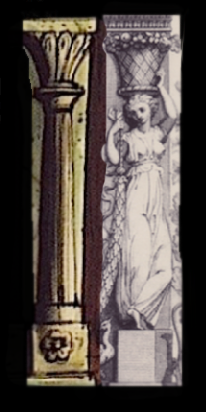
The flanking columns, anthropomorphized as women in the original, became more traditional columns,
but Marc's unusual double capitals are best explained by the very similarly shaped baskets on the women's heads:


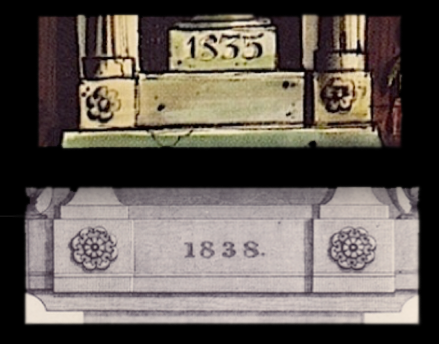
Then there are the rosettes on the pedestals and the 1830's date...


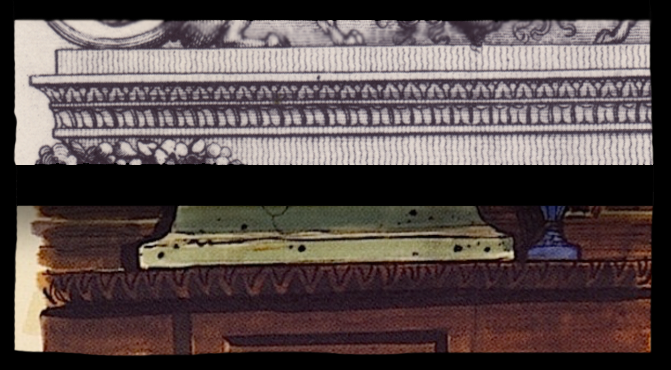
I don't want to push this thing too hard, but for what it's worth, that dogtooth design
along the edge of the mantelpiece could possibly be another takeaway from Lichten.


For me, a particularly amusing discovery is that even the vase on the mantel in the Davis sketch, which seems like an independent and unrelated compositional element, looks like it might in fact have been inspired by the vases in the same Lichten illustration. Since we're pretty sure by now that page 18 was laying right there in front of him, it's hard to resist that conclusion. "Nice vase. I can use that. Put some wilted flowers in it."


Although I've sometimes made exceptions, I have usually avoided devoting whole posts to background inspiration for things that never made it into the finished Mansion, but in this case there is enough going on to make you feel like you're looking over Marc's shoulder and observing the creative process, and that's pretty cool. It also means that Lichten's Decorative Art of Victoria's Age rightfully takes its place alongside de Givry's Illustrated Anthology of Magic, Sorcery, and Alchemy as a volume known to have supplied visual inspiration for several different Disney artisans who gave us the Haunted Mansion.

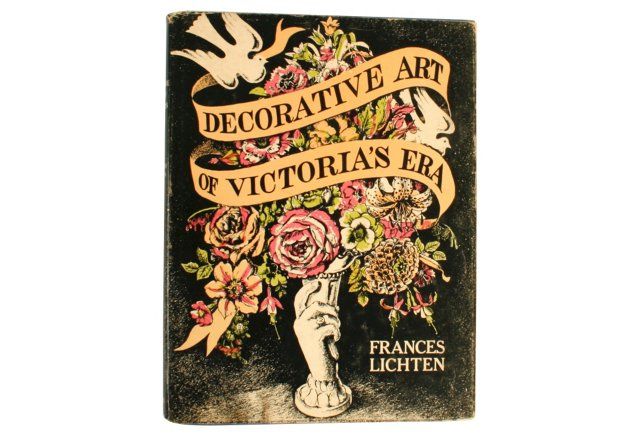
As a final note, I might add that Lichten is (or was) an attractive book. Bear in mind that it was only seven years old when Ken Anderson was looking through it, only fourteen when Marc Davis did the same, and when it was new, it looked like this:


With a jacket like this (featuring a somewhat Crumpish vase!):


Before you ask, yes, I've looked closely, and no, I haven't found any more HM goodies in Lichten, but I'll look again, just to be sure.