.
New artwork added in October 2019
It's not too hard to visualize what the Haunted Mansion would have looked like if Ken Anderson's pioneering labors had been realized. We have an abundance of concept art, plus show scripts and interviews. We even have a floor plan and storyboard sketches. Likewise, for the final phase, with Marc Davis, Claude Coats, and X. Atencio at the controls, we have artwork to admire, interviews to read, history to discuss, and the actual product to look at. When it comes to the middle crew, however, things are a bit murkier. That would be Rolly Crump and Yale Gracey, in charge of the Haunted Mansion project from 1959 until 1963. We've talked about them before, and no doubt we'll talk about them again. Very important team.
The purpose of this post is to make the Crump-Gracey interlude a little less obscure. The raw data for that chapter falls into two categories, with the New York World's Fair dividing the two. Both sets leave unanswered questions. First, we have the colorful recollections of Rolly Crump about those pre-Fair years. We hear, for example, about a spectacular tableau featuring a ghostly sea captain haunted by his murdered wife, made wondrous through a sophisticated application of Pepper's Ghost. Everyone who saw this thing was blown away by it.
Rolly Crump on the "Sea Captain" Tableau
(from "The Haunted Mansion Story volume one" Extinct Attractions DVD)
We now have Rolly's own concept art for the illusion:
Merritt: Happiest Place on Earth
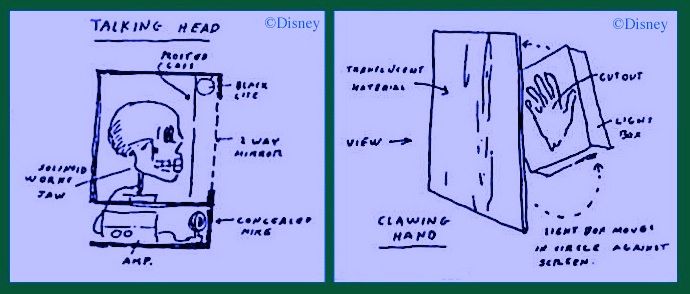
Rolly also talks frequently about how it happened that Yale invented such things as the Leota effect and the follow-you busts, how they read ghost stories and experimented with Pepper's Ghost and other ways of creating ghostly illusions, and so on. The surprising thing is that there seems to be no concept artwork to show. That's very strange. Rolly's artwork from the '59-'63 period, if it exists, has either gone unpublished or has been unrecognized as stemming from those early years. Yale was an artist, but what we have from him are things like
notebook sketches for gags.
(sketches published in E-Ticket Magazine #9, summer 1990)
We also have a wonderful working model of what would eventually be the Grand Ballroom scene; however, it's not clear when Yale built this model. It could come from the post-Fair years, when Davis-Coats-Atencio were running the show. So in the end, it's hard to tell just what the Mansion would have looked like inside if Rolly and Yale had had their way and it had opened in 1963, as originally planned when they took charge. What kind of show would you have seen, step by step? We know it would have been a walk-thru. In fact, the reason there are two stretching rooms is that in the Crump-Gracey years they were planning two complete walk-thru attractions, exact duplicates, side by side, in order to handle the crowds. Between the sea captain character and the guided walk-thru format, it also sounds like they were planning to continue using
Ken Anderson's basic template. Beyond that, it's sketchy. This 1962 brochure, announcing a 1963 opening, isn't much help.
"Gathering the 'world's greatest collection of ghosts' is no easy task...most people are kind of reluctant to admit they know any! But Walt Disney has had his 'talent scouts' searching for several years...and in 1963, the HAUNTED MANSION will be filled with famous and infamous residents."
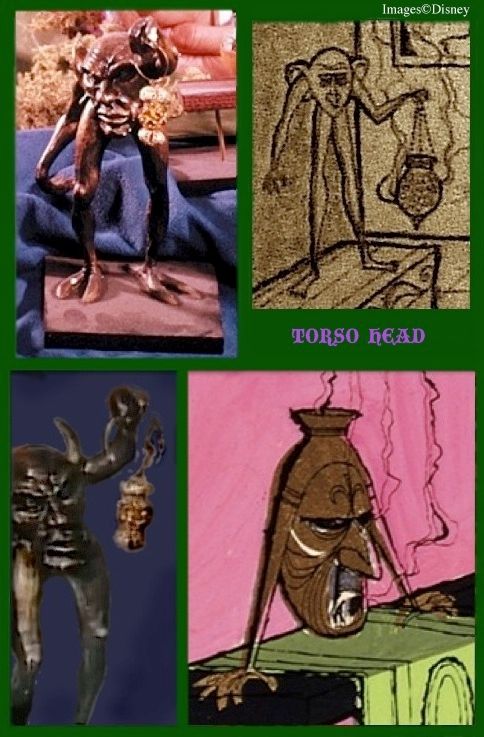
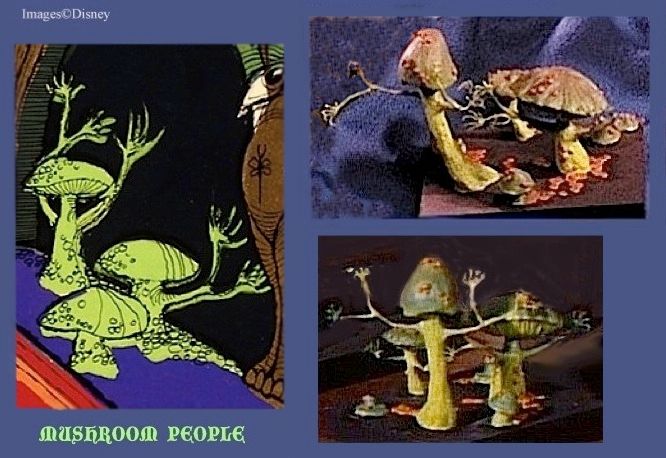
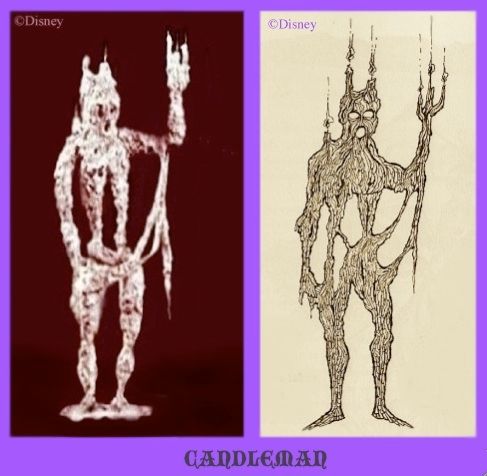
Our second batch of data for the middle team is the abundance of Rolly's "Museum of the Weird" artwork, which—according to Rolly—comes from
after the World's Fair, when many Imagineers found that they now had time on their hands. Rolly returned to the HM project and turned out 20 or 30 imaginative but extremely strange sketches. Fellow Imagineer Jack Ferges also had some extra time, so he helped Rolly make maquettes of some of these.


Wowzers. Suddenly we've got concept artwork out the wazoo. (That's where the other Imagineers thought it came from, too.) By this point, Walt had added Davis, Coats, and Atencio to the team. All of them had their individual ideas to pitch to Walt. Then came that infamous episode in late fall, 1964 (
summarized two posts ago), in which Walt made it crystal clear to everyone working on the attraction that
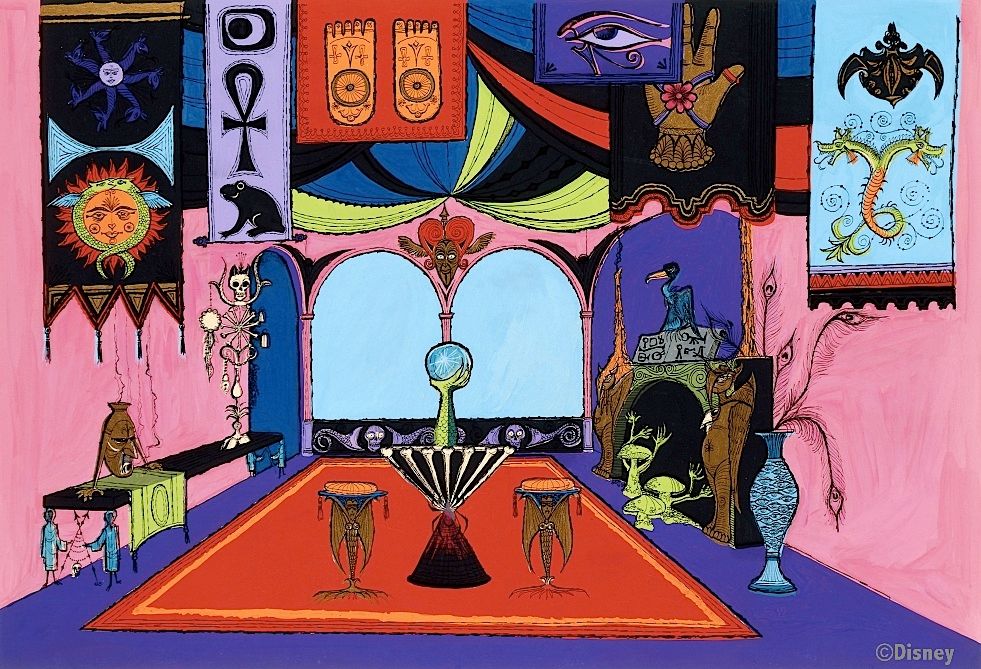
he really liked Rolly's nightmarish creations and wanted them incorporated into the finished project in the form of a "Museum of the Weird." The Museum never happened, of course, and it's difficult to know exactly how all of this surreal material was going to be used in the house itself. Heck, Rolly freely admits that he himself didn't know, which is why Walt had to find a solution to the problem. So you wonder, would a 1963 Mansion have included things like this? Or did these 1964 creations represent a fresh departure after the Fair? Or . . . well, it's not clear.
Recall that the Museum was Walt's idea, but it really wasn't what Rolly had wanted. Rolly wanted a weirder
Haunted Mansion, not just a spill area before or after the main attraction. He has repeatedly said that he wanted to avoid the usual haunted house clichés ("corny") and to go for something more fantastical. As discussed in an
earlier post, he was particularly intrigued by the castle in the Jean Cocteau 1946 film,
La belle et la bête, and he wanted something similar for the HM, with the entire building enchanted and alive, and with things like
human body parts merged into the very architecture, as in the Cocteau film.
It's interesting that some of Rolly's artwork does
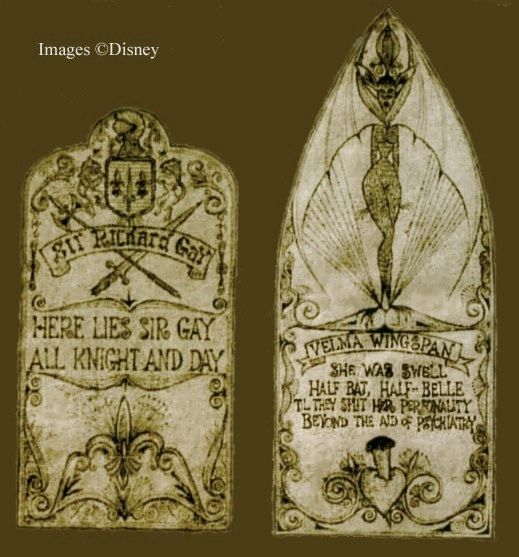
not seem to reflect a museum setting but was probably intended to be used in the Mansion proper (or its grounds), such as these very rarely seen tombstone sketches, one of which I've posted before:
These would not have been destined for the Museum but for the out of doors, much like the
tombstones actually used in the various graveyards that eventually graced the queue areas.
Things to Think About
Okay, with all of that as a rambling preamble (or an ambling preramble—take your pick), here are five points to ponder as we try to imagine a Crump-Gracey version of the Haunted Mansion.
Point One. The Victorian "spirit theater" atmosphere would probably have been even stronger and more obvious than it is today. In an
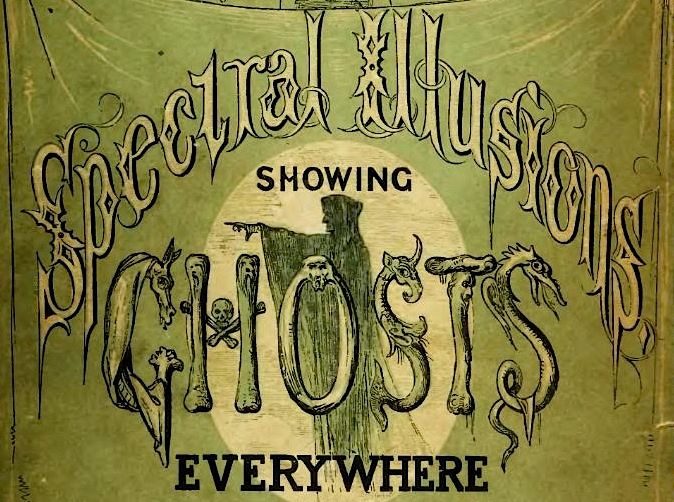
earlier post, I argued that it was the Gracey-Crump team who gave the Haunted Mansion the unique feel of a 19th-century magic show or house of illusions, using tricks and gimmicks taken from that era. Judging by the feedback I've received, this "magic show" analysis seems to have set well with some veteran Imagineers. Also, in looking through the materials, I keep finding things that confirm that Rolly and Yale did indeed conceive of the HM in this way. Jason Surrell says that "many of the gags Rolly and Yale developed were inspired by some of the grand illusions and stage magic created by 19th-century magicians," citing Rolly in this regard: "The illusions Yale and I were perfecting were based on the 'black art boxes' and 'spirit cabinets' that had been used for many years by magicians" (Surrell,
The Haunted Mansion, p. 20). Don't know how I missed that quote the first time around.
(from the cover of an 1864 book, Spectropia)
Elsewhere, Rolly speaks of testing their illusions on magicians to see if they were fooled (they were). Rolly has also made it clear that as far as he's concerned, Yale's tricks are the heart and soul of the HM: "[I
]f it hadn't had been for Yale Gracey, well, his illusions made the Mansion what it is. [...] I think he should have gotten more credit, because if you take out those illusions, it's dumb."
Point Two. There would have been a lot more influence from La belle et la bête than the one unmistakable item that made it into the final attraction (viz, the arm-sconce).
You can spot other things in Rolly's concept artwork that betray the influence of the Cocteau film.
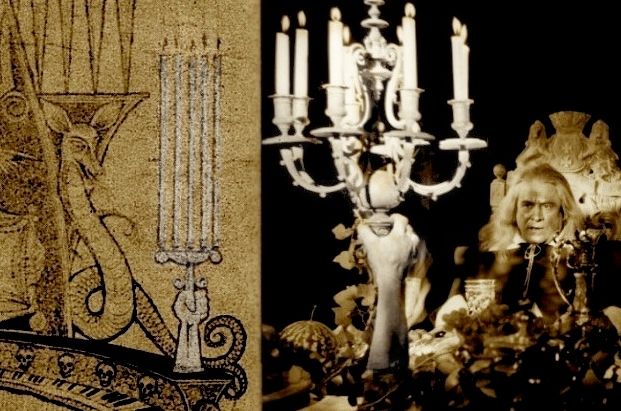
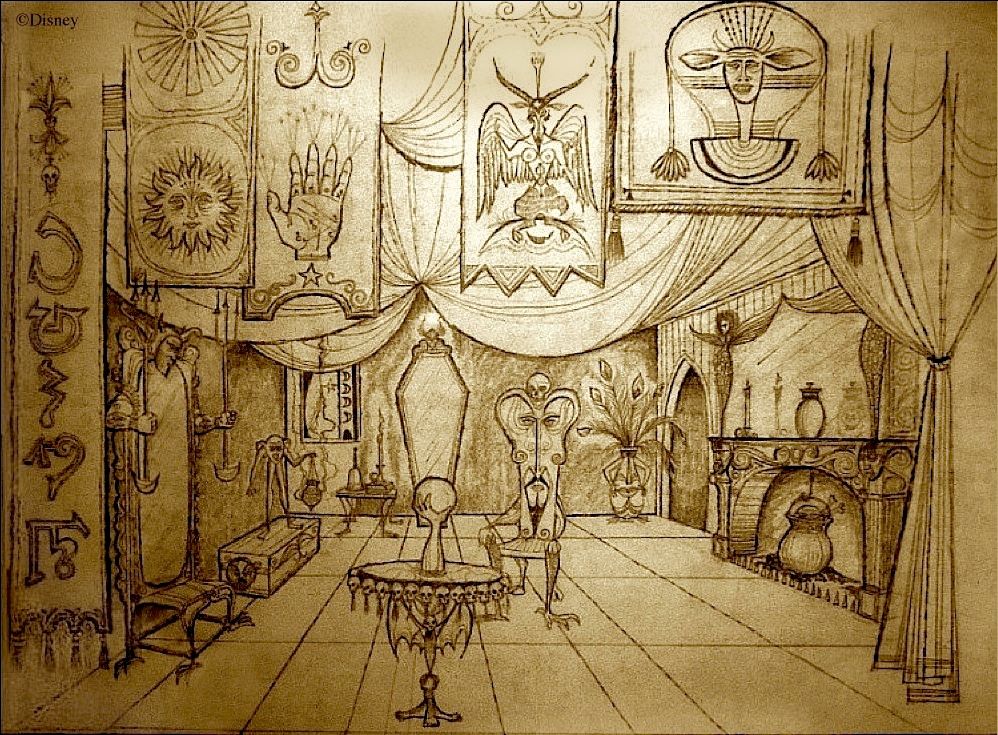
As a matter of fact, the two well-known sketches of the Museum of the Weird are both inspired
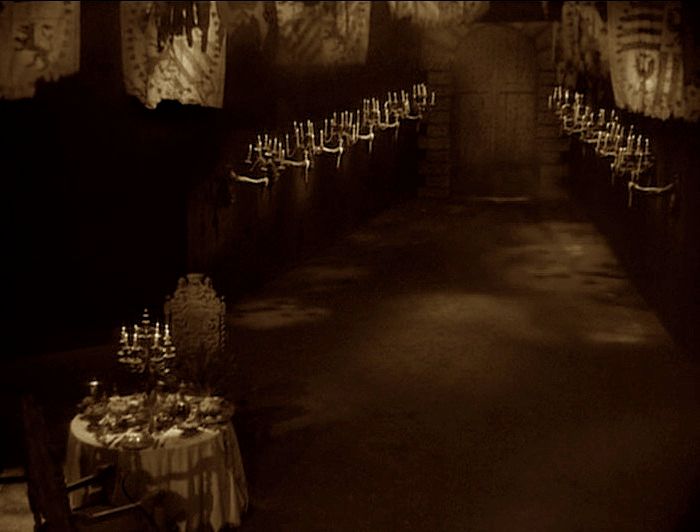
by a striking set shot that appears late in La belle. I don't think anyone has noticed this before.
Compare those two sketches with this:
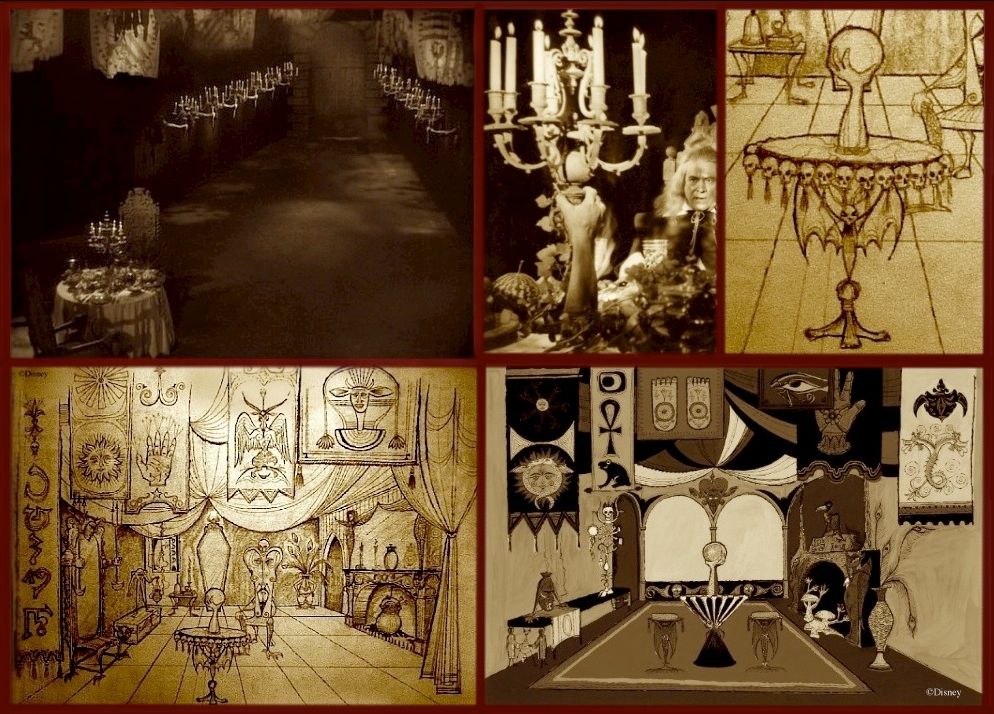
You can't see it in this long shot, but the candelabrum on the round table is the one that is held by a human hand. There is
a similar gag in the Crump sketches. Here's a montage, with the color element taken out for easier comparison all around.
Point Three. If we're trying to imagine a Crump-Gracey Haunted Mansion, then obviously we shouldn't overlook the few items that actually
did make it into the final product. Besides the Cocteau arm-sconces in the exit crypt, there are at least three other places where you can see Rolly's influence clearly enough.
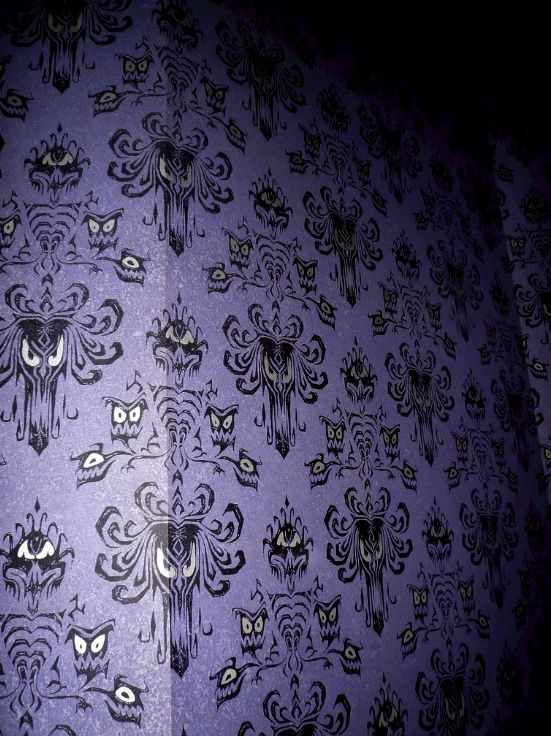
There is of course the "demon-eye" wallpaper in the Corridor of Doors, featuring a
Tania Norris/Claude Coats design partially inspired by one of Rolly's drawings:
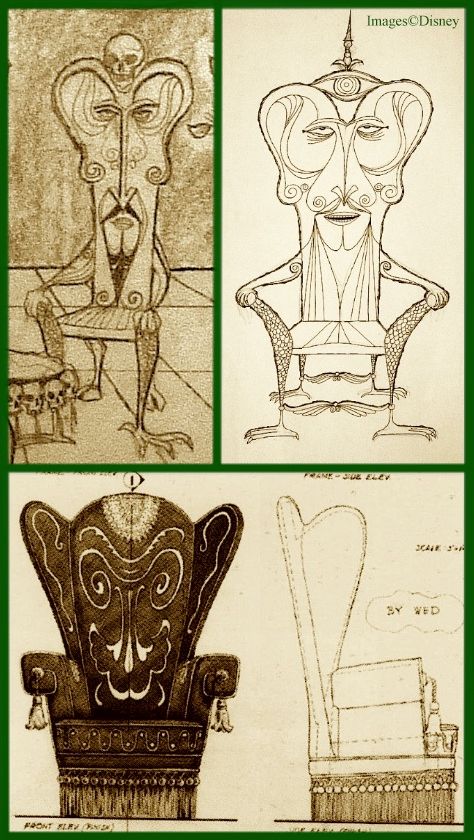
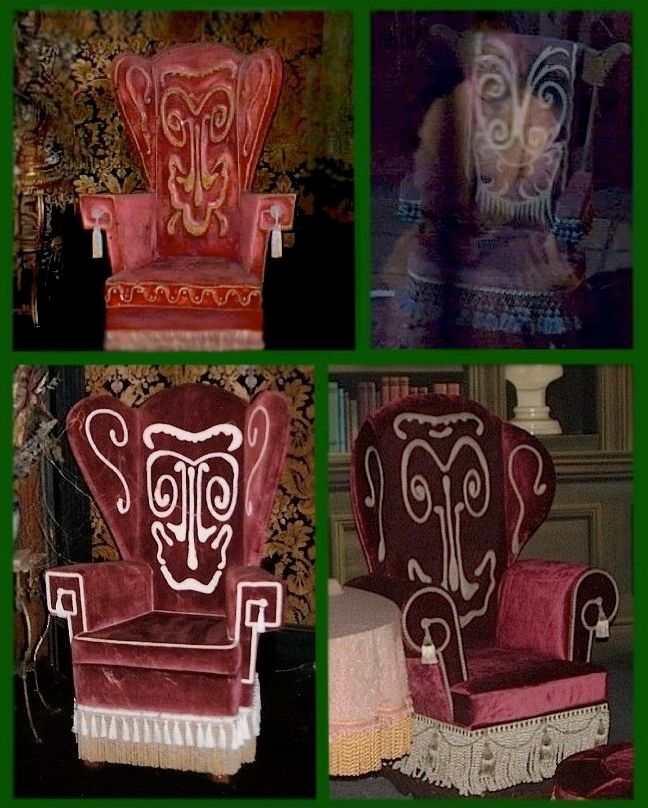
Then there's the "Donald Duck" chair, widely thought to be inspired by a MotW chair that was going to stand up and talk to you. The Donald chair has picked up that dumb nickname because a lot of people evidently detect an abstract image of Donald Duck in it. Uh huh. Right. Whatever.
Actually, if we are going to speak of a Donald chair, then we need to recognize a Huey chair, a Dewey chair, and a Louie chair as
well, inasmuch as there are at least four different designs in use. Or didn't you know? As long as we're here, let's look. Have a seat.
The one at Disneyland (upper left) is closest to the blueprint, but it's not absolutely identical, if you look closely. Still, it's got the charmingly sinister quality of the blueprint drawing. Very nice. The WDW version (lower left) is brighter and friendlier. Boo, hiss. And the one in the WDW library (lower right) is friendlier still. Double boo, double hiss. It almost looks like something you'd see in Alice in Wonderland. Ah, but the granny chair in the ballroom (upper right; identical in DL and WDW) puts a stop to this alarming drift toward princess-meet-n'-greet harmlessness. That sucker's got teeth. Nasssty. (In case you were wondering, Tokyo doesn't use these chairs so far as I know.) Enough with the chairs.
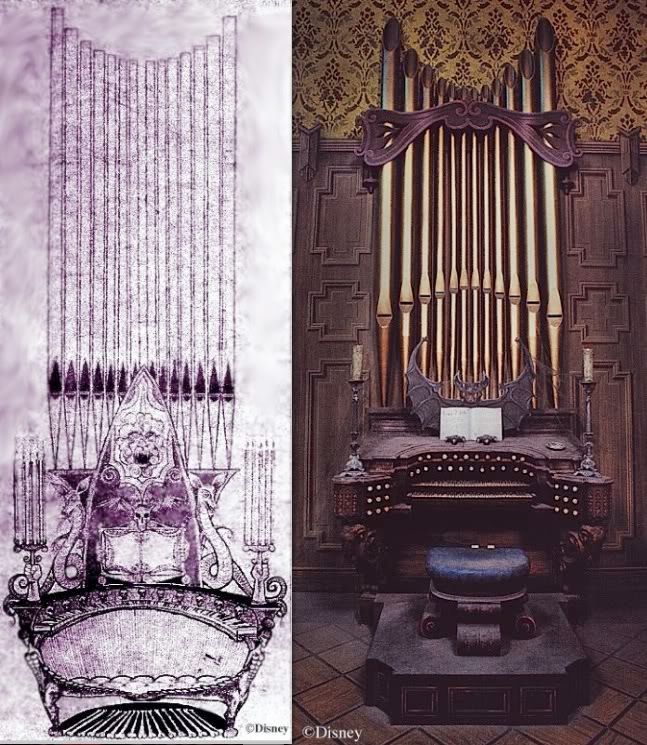
And then finally, I think we can safely add to this short list the design for the ballroom organ pipes (as pointed out
previously).

These adaptations from the Museum of the Weird were usable because they represent designs, not entities. You couldn't have Torsohead walking around swinging his censer in the real-world simulation of the Haunted Mansion, but you could have a wallpaper design of something almost that weird. You wouldn't find a chair that stood up and talked in the real world, but you might encounter a chair with eerie and eccentric embroidery. The ghosts of the HM do demonstrate that they have the ability to manipulate (or appear to manipulate) the physical fabric of the building and its furnishings, but there are limits to what they can do. Creating weird, impossible creatures would be a bit much.
It's pitifully piddly, this list, but at least some of Rolly's interior design met with the approval of the other guys and is there today. Yale Gracey fared better. The Davis-Coats-Atencio team loved Yale's stuff almost as much as Rolly did, and they continued to make good use of his talents, so Yale's special effects would be another point of continuity between the middle and final imagineering teams. Whatever else a Crump-Gracey house would have looked like, it would have had follow-you busts, the Leota effect, ghostly projections, changing portraits, and Pepper's Ghost.
Ah yes, Yale Gracey's masterful illusions. (Oh, this is
Point Four if any of you are still bothering with the outline.) Everyone always thinks of the Grand Ballroom and its mammoth Pepper's Ghost effect in this regard, and rightly so. But the
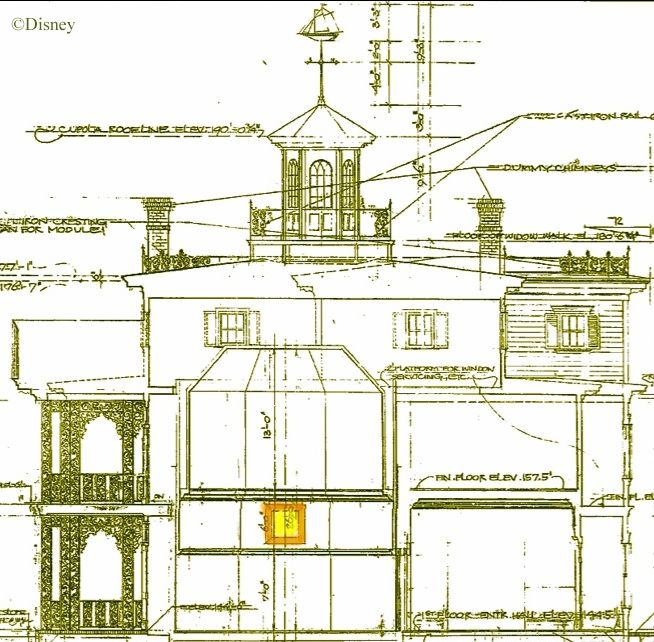
second most amazing of the big displays in the Mansion is also 100% Yale and Rolly, yet for some reason this fact has not penetrated the consciousness of many Mansion fans. It's really a more original effect than the Ballroom. I am speaking of the Stretching Galleries. Maybe the problem is that there seems to be some confusion as to when these were built. Jason Surrell speaks of the Haunted Mansion façade that went up in 1962 as "just the shell of a building with nothing inside" (Surrell, 1st-2nd eds., p. 22; 3rd ed. p. 20). You hear that "empty shell" stuff a lot. Surrell also seems to give credit for the elongating room to Davis, who refers to it in a 1964 show script (Surrell, 2nd ed. p. 25; 3rd ed. p. 23). This is all rubbish. The stretching rooms were built into the façade when it went up. They are
plainly visible in 1962 blueprints. Not only that, but even the specific illusion of stretching portraits was part of the package. They too are visible in the '62 blueprints:

While we're on the topic, are there any other unrecognized triumphs by the Gracey-Crump team in the Mansion? There is possibly another small one, a
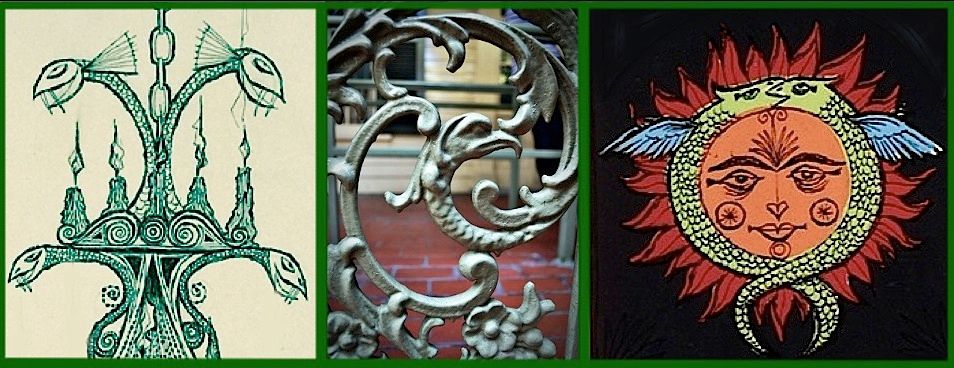
very small one. More than likely, it's a coincidence. It depends on whether Rolly had anything to do with choosing the wrought iron pattern for the Mansion exterior. It's a standard, off-the-shelf style known as "Bird of Paradise." It has a little bird's head woven into the pattern, easily missed. A bird's head, that is,
on a reptilian neck snaking out of a plant. Like I said, probably coincidental, but that thing reminds me of the Museum of the Weird. He even has the Look. He's got attitude, his thoughts are elsewhere, he's in his own world, and he's a little sinister.
(middle pic by RegionsBeyond)
If it's a coincidence, it's a very happy one.
Point Five. One of our best glimpses into the Mansion as Rolly might have designed it comes not from Rolly's artwork, nor from little things that are actually in there today, nor from Yale's bag of tricks, but from what might seem an unlikely source: Marc Davis.
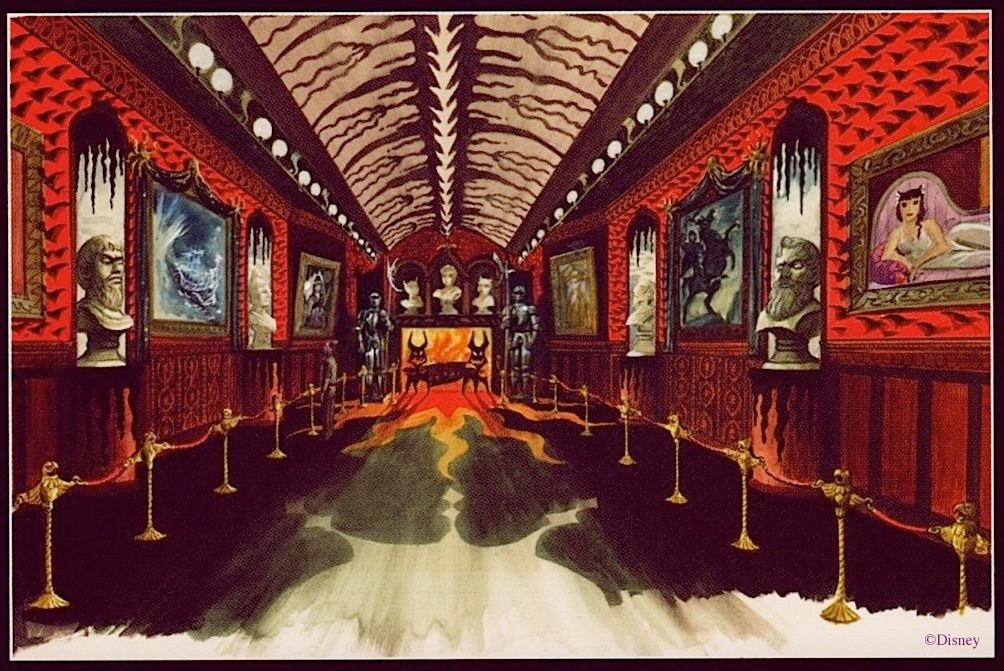
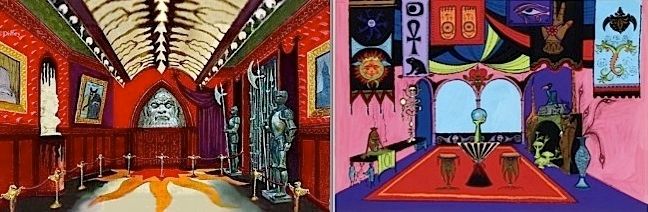
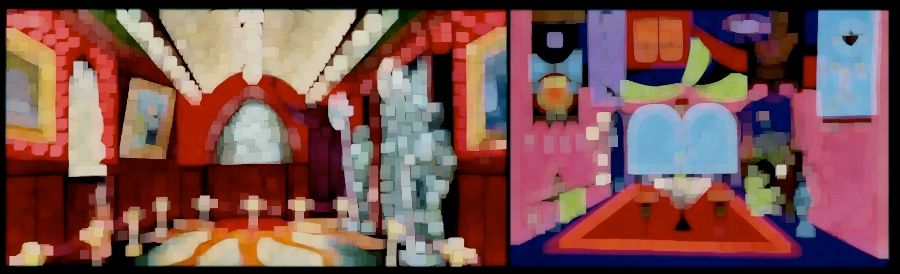
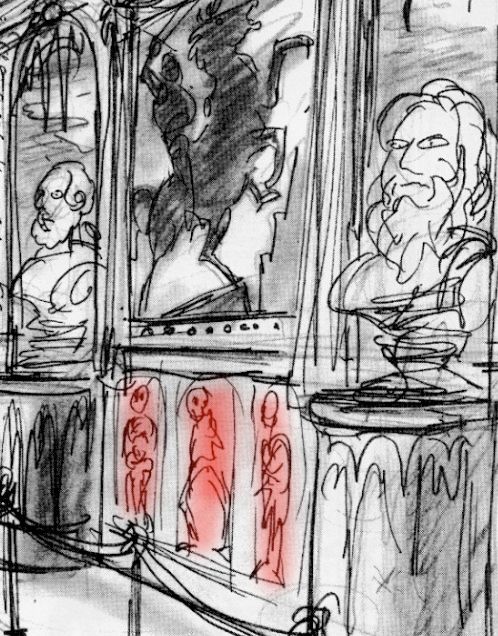
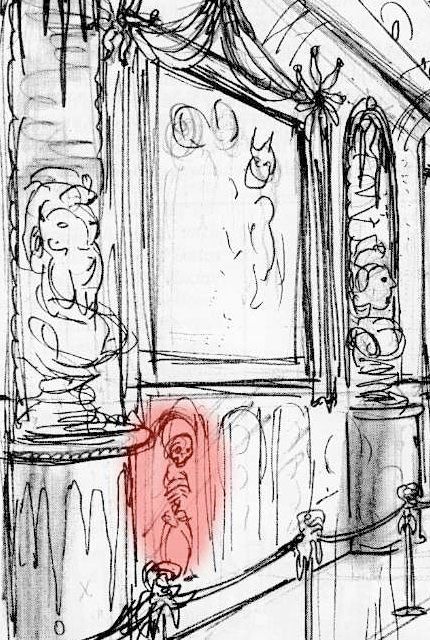
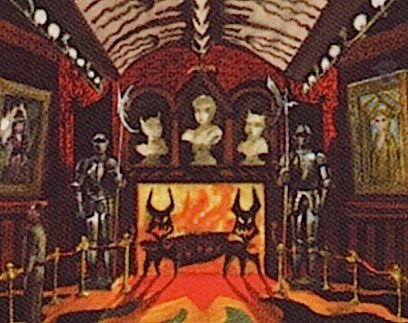
It seems to me that when Davis came on board, he was for a time quite agreeable to Rolly's approach, whether he would have admitted it or not (and from what I've heard about Marc, "not" is the better bet). Maybe this was because Walt was enthusiastic about Rolly's stuff and Davis wasn't stupid, but I suspect that Marc genuinely knew Rolly was on to something. Whatever the reason, it looks to me like Marc took some of Rolly's concepts as a given, a starting point for his own ideas. Consider these Davis sketches of the "Great Hall" (as it was called then), the forerunner of the changing portrait hall. The two sketches are intended to be taken together, as they represent the two ends of the same room:
Marc Davis has here mounted his changing portraits (all of which are identifiable in the sketches)
within a suspiciously Crumpish interior. It's not just the bizarre details: look at the use of color.
Compare one of these sketches with Rolly's full-color concept sketch of the Museum.

There is a jarring, almost disturbing quality in the way impossibly vivid colors are violently juxtaposed in both paintings. And there are other Crumpian elements in Marc's Great Hall sketches. Things like, well...
body parts merged into the very architecture. The walls have teeth. Or something. There are things in there that look like veins. Or something. And hair. Or something. The rough sketch for the first painting showed life-sized (yes they are) skeletal figures emerging from (or visible in) the woodwork. Weird.
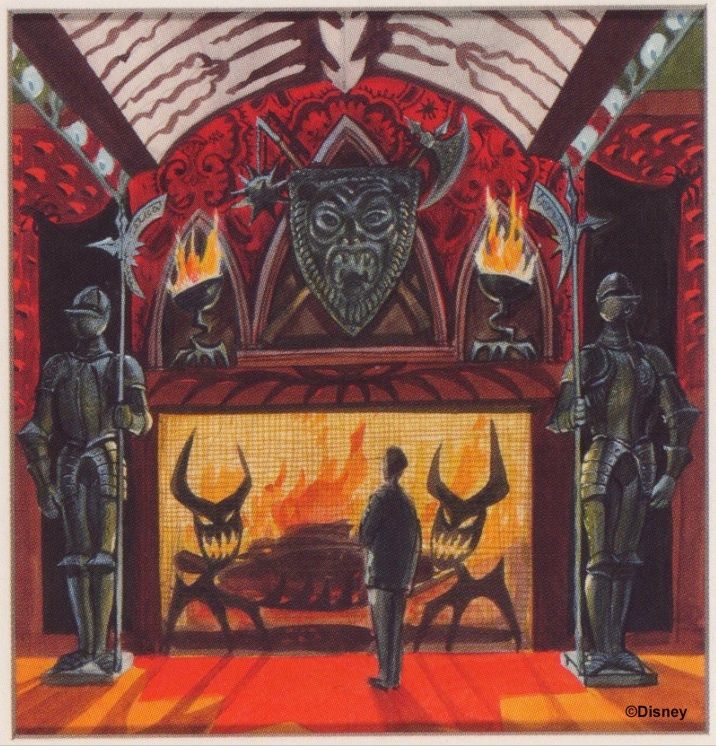
A specific idea that Rolly has mentioned more than once is having faces over the fireplace that watch you and have smoke coming out of their noses and mouths (another idea lifted directly from Cocteau). It's interesting that Davis sketched an alternate version of the fireplace as seen in the first sketch. You have to wonder if Rolly's ideas were a stimulus here. Maybe, maybe not.
Instead of that, this:
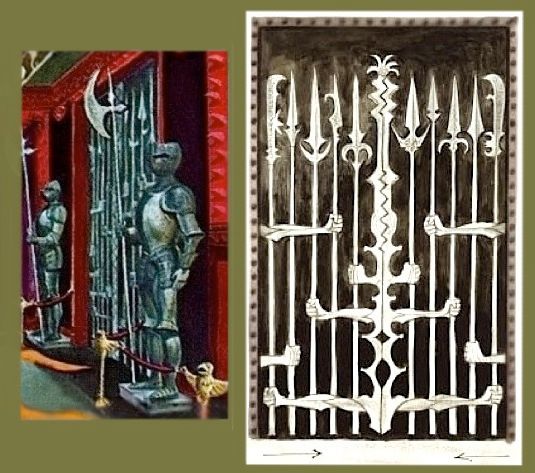
The doorway into Marc's Great Hall had an odd gate in it. More human
body parts in the architecture. Marc did a separate drawing of it as well:
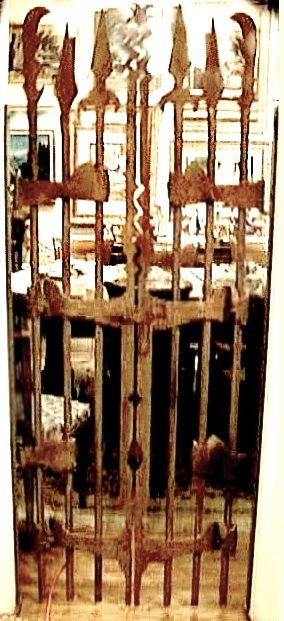
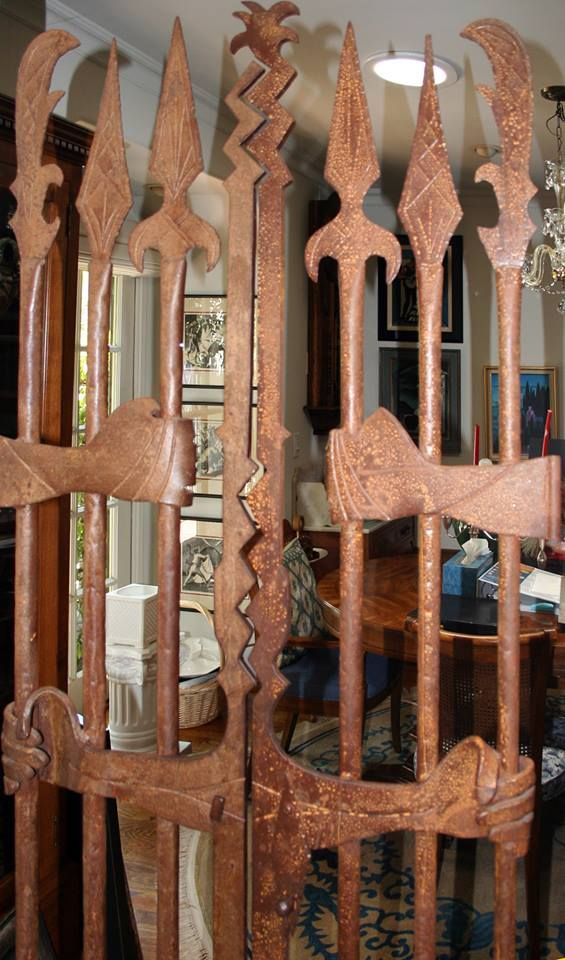
First time I ever saw that I just assumed it was done by Rolly. Incidentally, Davis liked these gates so well that he had a set
made, and to this day they may be found doing service in the Davis home. That may be as good an indication as any that
Davis truly liked this approach. Whether or not he would have been willing to credit Rolly for any of it is a different question.
pic by Jeff Baham
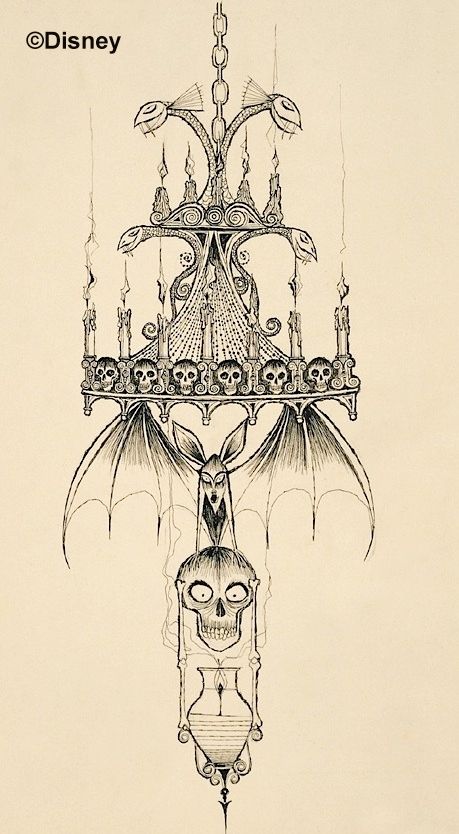
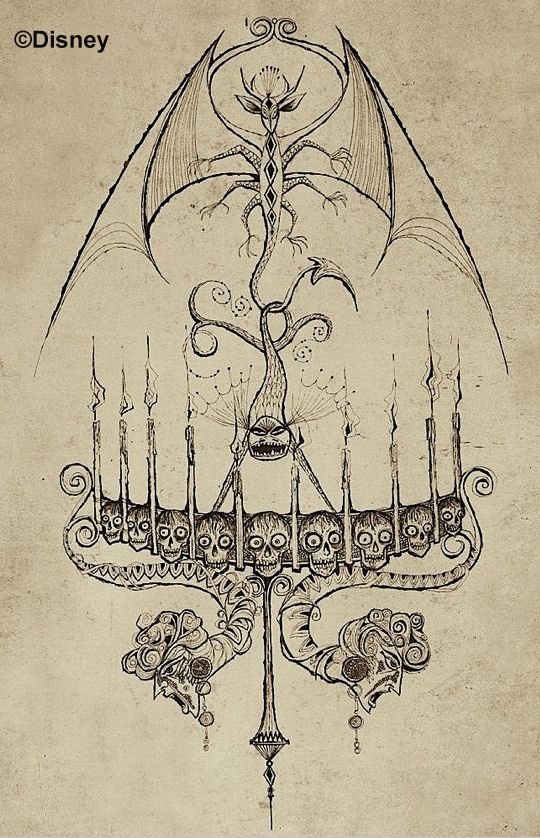
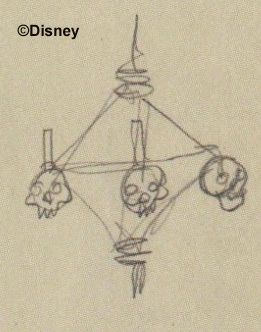
As "interior decorator" of the house (Walt's language), Rolly wanted chandeliers like these he drew in 1964:
Around the same time we find this quick sketch by Davis. I'm jus' sayin'...
It shouldn't really be a surprise that Marc and Rolly could sometimes be found on the same wavelength. They had successfully worked together on the Enchanted Tiki Room, which has a lot in common with Rolly's notions about the Haunted Mansion if you think about it. Flowers that act like people. Faces that come to life sculpted right into the architecture. The whole room comes to life, really. Davis
knew that Rolly's essential idea of a strange, living, enchanted house could work because it
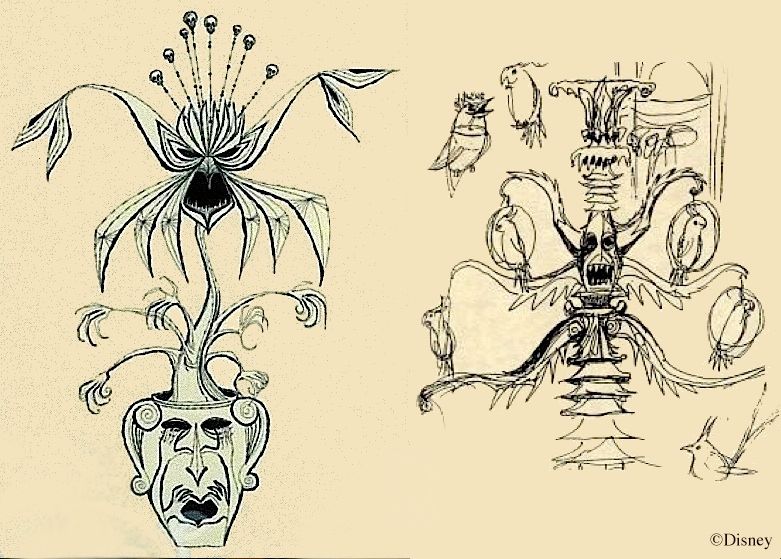
did work, not just in the Cocteau film but right over there in Adventureland. Just substitute "ghosts" for "tiki god magic" and you're there. You can even find details in Marc's artwork for the Tiki Room once in awhile that look awfully Crumpish. Check out this Davis sketch of a surprisingly angry birdmobile. That's Rolly's poison plant for the MotW on the left. Of course, Davis's Tiki Room sketch is older, and the point is not to suggest direct, conscious influence in either direction. The point is that these guys sometimes explored the same alleyways of the imagination, and surprisingly similar results can be glimpsed from time to time. We'll probably never nail it down any more precisely than that.
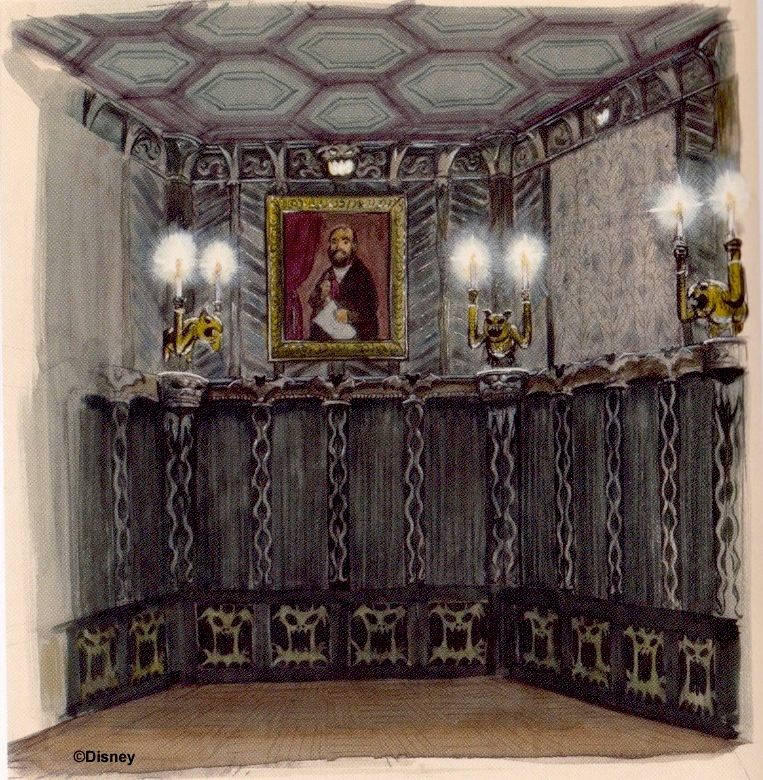
Once we recognize that Davis at some early stage was evidently sympathetic to Rolly's offbeat interior design, we may be able to go back and visualize, at least a
little bit, what the Stretching Gallery masterpiece might have looked like. Yale built a half-inch scale model of the elongating room and suggested to Rolly that he design the stretching portraits. Rolly did produce some sketches, but later on Marc wasn't satisfied with them and replaced them with his own. Despite that loss, I think that Davis's beautiful concept artwork
[which we now know dates to 1964] may give us a hint of what might have been. It's certainly weirder than what we ended up with. In fact, if you ask me, the one item in the sketch that looks slightly out of place is the Davis portrait! Is that because the essentials of this design came from elsewhere?
You can find faces all over the place in the woodwork. Some of them remind me of the Tiki Room chanters
("In the freaky freaky freaky freaky freaky room, oh the bats fling turds in the foulest gloom..."). Shut up. My blog.
Those faces across the bottom would have looked right at home in the Museum. They remind me of the demon-eye wallpaper:
A Less Weird Haunted Mansion
One thing we learn from all this is that the "normalization" of the HM interior was probably not Davis's idea but should be attributed more to the influence of Claude Coats. It is he, after all, who always gets credit for the spooky atmosphere of the first part of the attraction. And much as I'd like to have seen some of these weirder interiors, in the end, what Coats had in mind worked very well indeed. With the Coats approach, the place
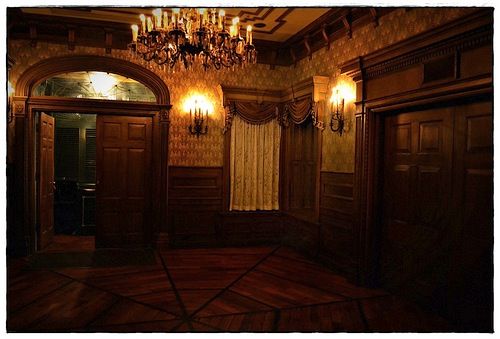
looks normal enough, if a bit dark and ominous:
(pic by RegionsBeyond)
The notion that you are entering a supernatural vortex, a portal into another realm, is something that dawns on you slowly, as you are led to doubt whether what you see is real or a hallucination. That creepy progression only works because things
look real and normal enough. It gives the show a flow. In contrast, if the original Crump concepts had prevailed, you would have known you weren't in Kansas any more the moment you stepped through the door. That would have been a very different experience.
So I'm glad it went the way it did. We can today enjoy the Stretching Gallery as a fine amalgam of creative minds. It's a piece of hallucinatory strangeness courtesy of Rolly Crump, made possible by the mechanical genius of Yale Gracey, dressed up in the elegant but slow and sombre woodwork of Claude Coats. Then there's a display of wicked Marc Davis humor just as X. Atencio's script sets before you THE classic
dilemma of this haunted house—real or imagined? Plus, you get the finest scare of the ride in the form of a gag that would NEVER be approved today. How nice. Forbidden fruit for dessert.