Things You're Just Supposed to Know

Most of the time, Long-Forgotten assumes that readers are already familiar with basic facts
about the Haunted Mansion. If you wanna keep up with the big boys, I suggest you check out
first of all the website, Doombuggies.com. After that, the best place to go is Jason Surrell's book,
The Haunted Mansion: Imagineering a Disney Classic (NY: Disney Editions; 2015). That's the
re-named third edition of The Haunted Mansion: From the Magic Kingdom to the Movies (NY:
Disney Editions, 2003; 2nd ed. 2009). Also essential reading is Jeff Baham's The Unauthorized
Story of Walt Disney's Haunted Mansion (USA: Theme Park Press, 2014; 2nd ed. 2016).

This site is not affiliated in any way with any Walt Disney company. It is an independent
fan site dedicated to critical examination and historical review of the Haunted Mansions.
All images that are © Disney are posted under commonly understood guidelines of Fair Use.

________
.
Showing posts with label Cabaret du Néant. Show all posts

Saturday, October 5, 2019

The 50th Year

.
And just like that . . . we're back.
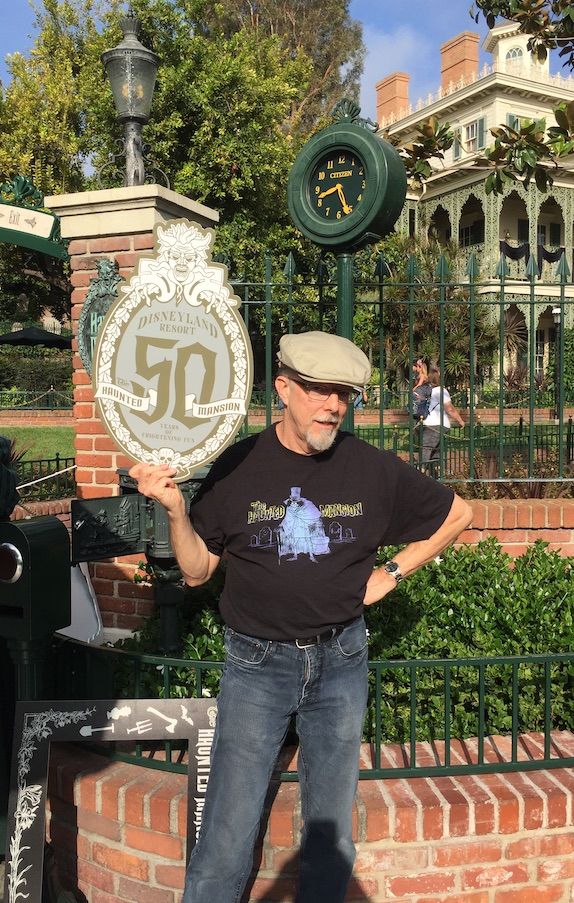

The 50th has been quite a year for Mansionites. Among other things, it has brought to us at LF a treasure trove of new goodies, coming from no less than four different sources, given here in no particular order.

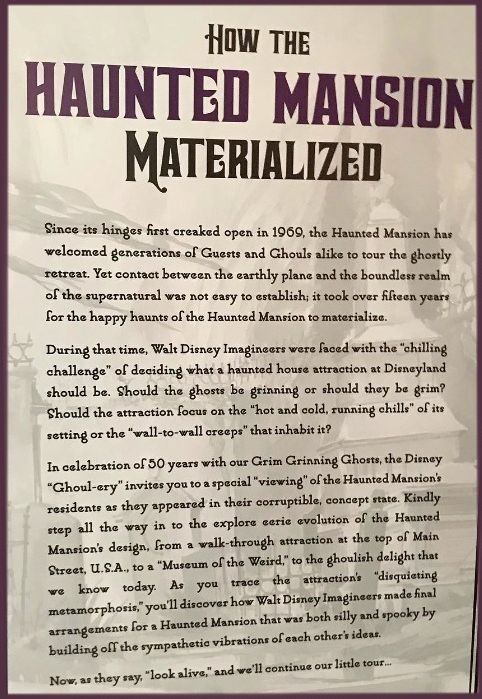
First, there is the "Happy Haunts Materialize"exhibit at the Opera House (where Lincoln is). All in all, it's a relatively modest affair, with just 11 maquettes and 28 graphic artworks on display, along with some informational posters. Much of this art has been seen before, but many of the maquettes have never been put on display previously; likewise, six of the graphic works have never been published and were unknown until now.
Regions Beyond via FB

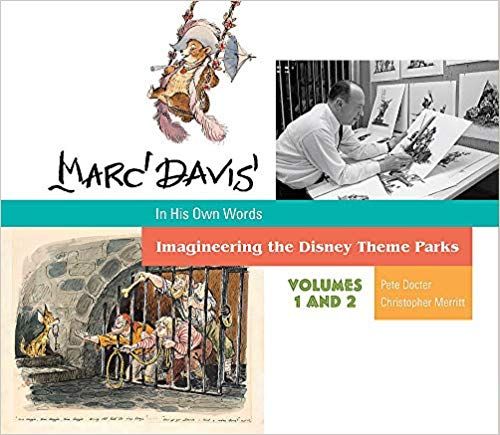
Second, Chris Merritt and Pete Docter's magnum opus on Marc Davis has finally been published, Marc Davis in His Own Words: Imagineering the Disney Parks (= "MDIHOW").Well worth the 100 bucks or so it'll set you back, consisting of two volumes that total about 750 pages. There is a wealth of Haunted Mansion material in the book. As you might expect, the vast majority of it is Marc Davis artwork, but there is also art from other Imagineers. Much of this has never been seen before. Some has, but only as blurry, washed out photos that often looked like poor quality screen grabs from poor quality videos (for the very good reason that that has frequently been what they were). Anyway, aside from the artwork, the text of MDIHOW requires a rewriting of many a Haunted Mansion meme, including some in circulation here at LF.  More on that later.

Third, Imagineer and Disney historian Tom Morris has been on the lecture circuit, telling tales and showing slides that overturn not a few notions about HM history and providing some fascinating new material. Mansion archaeology?? No wonder we're smiling!
me and he
Fourth, my friend Jeff Baham has finally been able to make good on his promise to give his Doombuggies.com website a complete overhaul, and the results are impressive. There is much that is new and different, so be sure to drop by DB dot C and check it out.

he and me

What to do with this embarrassment of riches? Well sir, there are so many posts here at LF that will be enriched with new or improved artwork that at this point it almost seems easier to name the posts that will not be disturbed than the other way around!

[Scratch the idea I originally described here. Won't work.]

What I'm going to do is continue to use the Refurbished Posts listing on the right but highlight the many 50th Anny changes by coloring the date bright green. That way y'all can see at a glance what posts have been affected by all this new stuff.

Friends, all of this is going to take some time. Which I'll have more of now, since I'm retiring! [Edit: It's November, and I've finished updating old posts with the new information, 30 posts altogether. I've also fixed bad links and malfunctioning GIFs and the like.]

The remainder of the present post has a modest goal. Since a great many of you will never get to see the 50th Anny exhibit in the Opera House, it seemed worthwhile to show you those artworks on display that have never been seen before. Photographing these things was a bear because the glass of the picture frames reflects light fixtures and—well, almost everything else in the room. My brother and I reduced the effects as best we could by having one of us stand behind the other to block some of the glare, and I also made liberal use of Youtube video footage of the same works shot by others in order to eliminate the reflected light fixtures and other noise via photoshop tricks. You can and should, of course, see some of the many Youtube videos of the whole exhibit, especially for the maquettes, but quite possibly you are not going to find any pictures of the six never-before-seen artworks as clean as you see here.

Three From Ken (and Duane)

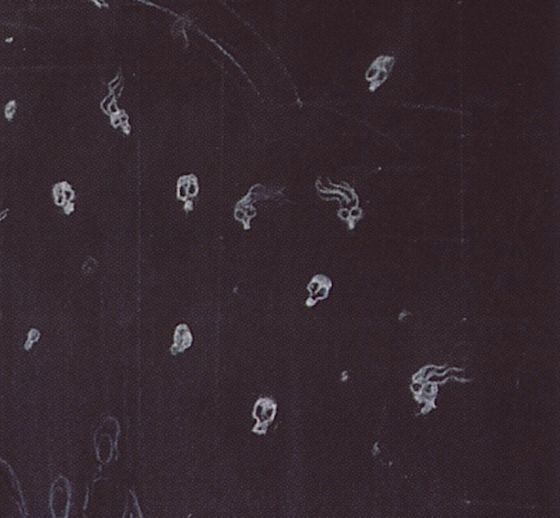
Three of the new/old works previously unknown are from the "Father of the Haunted Mansion," Ken Anderson, and date to 1957-58, when he was busy at work on the fledgling attraction. Though they are Ken's concepts, the paintings were done by Duane Alt.) This first one shows a floating head in the air:
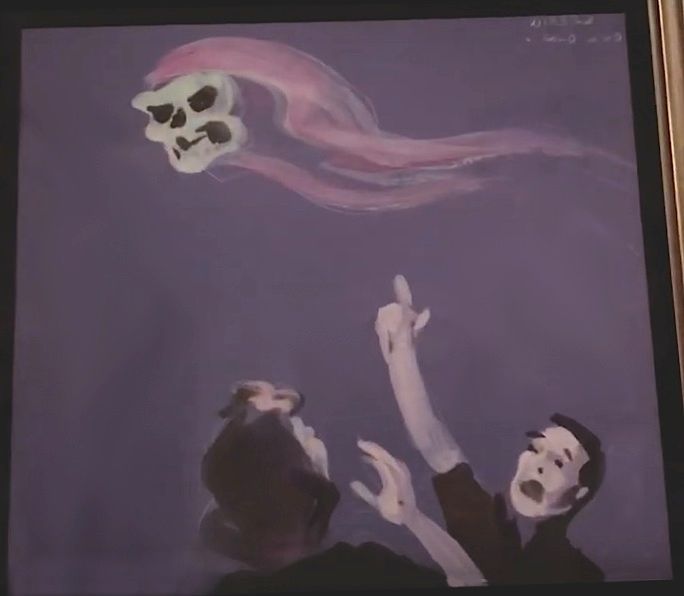

"Whistle . Cold Wind" it says in the corner. It's not hard to see in this important work the ultimate prototype of such things as the organ banshees and the blast-up heads. One Mansion Imagineer duly impressed with Ken's idea was Claude Coats, as can be seen in his ballroom concept art (also on display at the exhibit, incidentally).
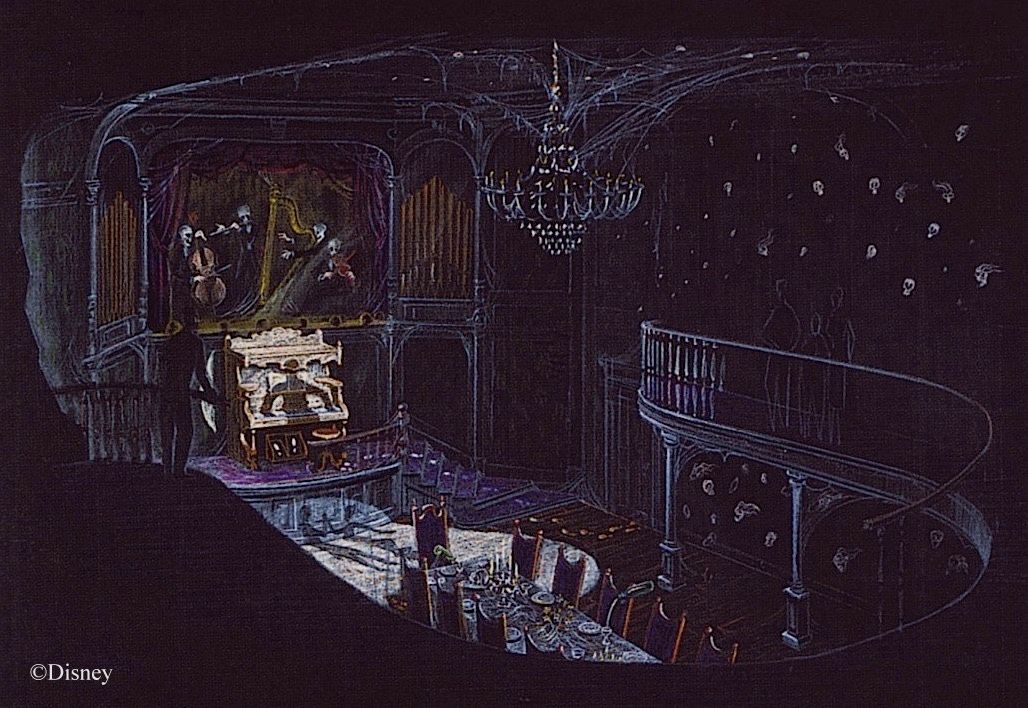
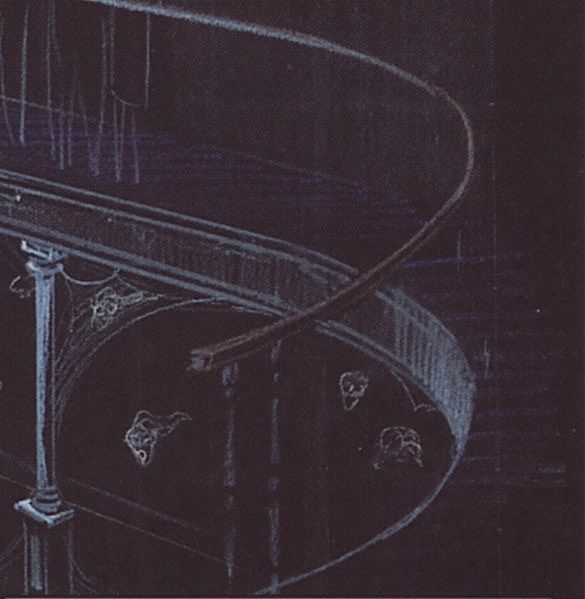

Another Imagineer much impressed with Anderson's concept
was X Atencio, as we shall presently see. On to the next...
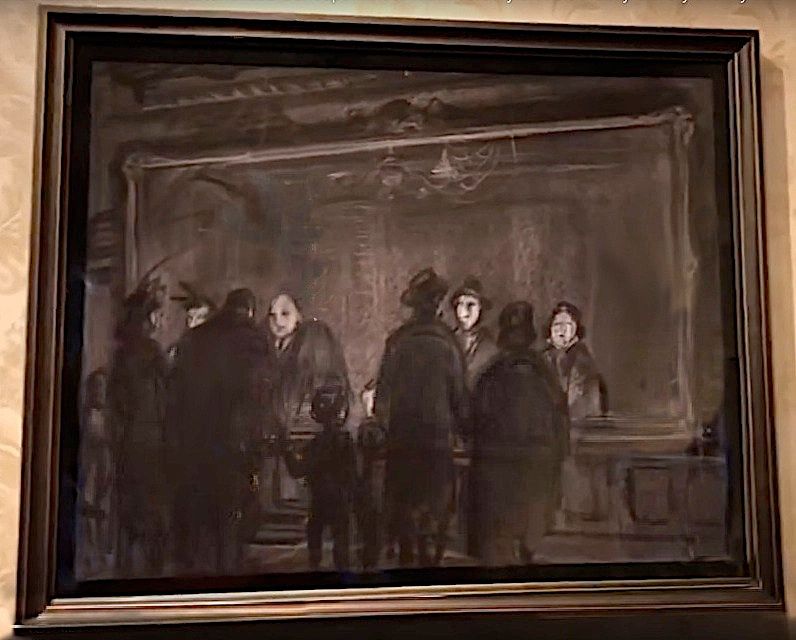

You owe me big time for this one, folks. Its placement high on a wall made it all but impossible to photograph without reflected light fixtures all over the place. I used shots from lots of different angles and patched them together to form a single image. (This one, I think, comes from Anderson's hand, not Alt's.)

What I think is going on is that people see their own reflections in a large mirror and are presumably horrified at how pale and ghostly they look. Anderson is here going all the way back to a nineteenth century trick used in the Cabaret du Néant. At one point the guests there saw their own reflection in a mirror in a coffin and were shocked by their appearance. The effect is easy to do. Just make sure the lighting is a sickly greenish-yellow color and people look appallingly cadaverous. They of course don't know that they look this way until they see a mirror.

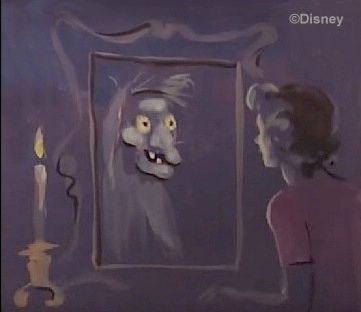
Speaking of mirrors, Anderson knew all about two-way mirrors and their potential for ghostly effects. Here, the onlooker (inlooker?) is surprised to see her reflection overtaken by the visage of an old witch, accompanied by "Hysterical Laughter."
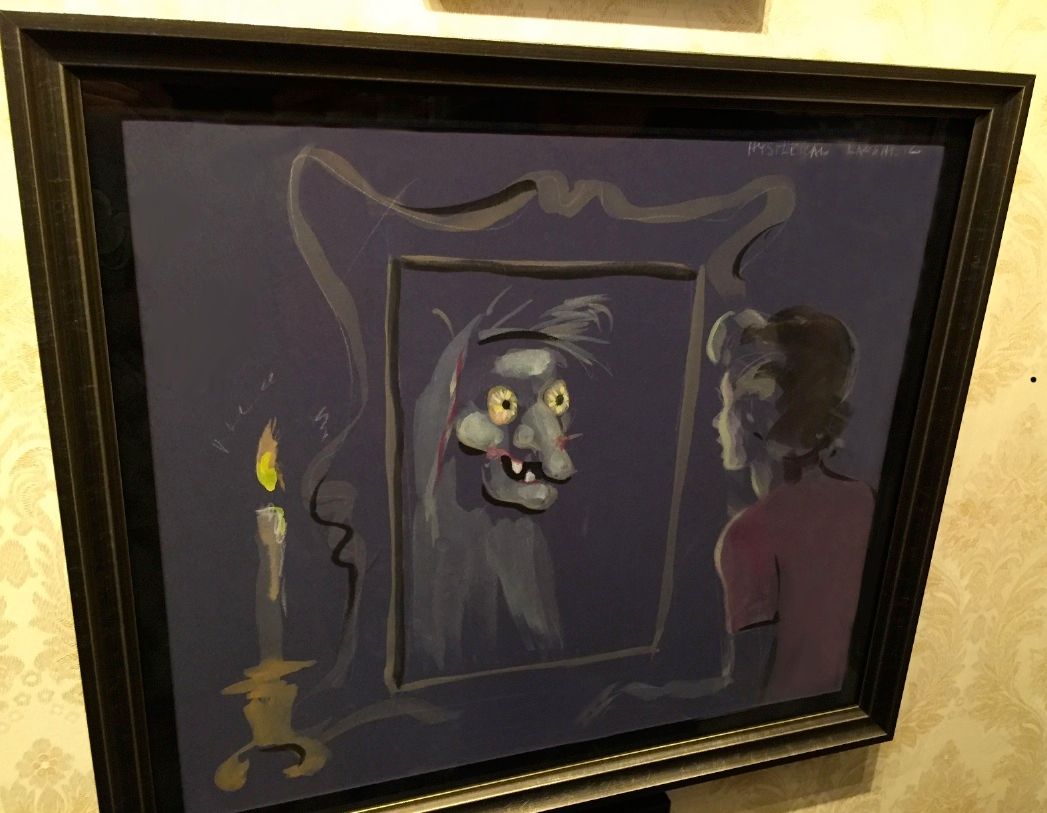

Here's a version you can add to your Anderson-Alt HM artwork collection:

Three From X

Four sketches from X Atencio's "one-eyed black cat" concept artwork are at the exhibit. You can bone up on this chapter of Mansion history HERE. Suffice it to say that a mysterious eye appears, then a sparkle and an eye together, and then a cat's face, revealing that the eye is his and the sparkle is from his empty eye socket. This morphs into the visage of a rotting, screaming skull. The cat face sketch was published long ago, but the screaming skull sketch, I'm proud to say, was first published here at LF. However, the coloration was way off (not my fault; it came to me that way). The sparkle & eye sketch has now been seen for the first time in the Main Street display, plus an additional sketch of the screaming skull.
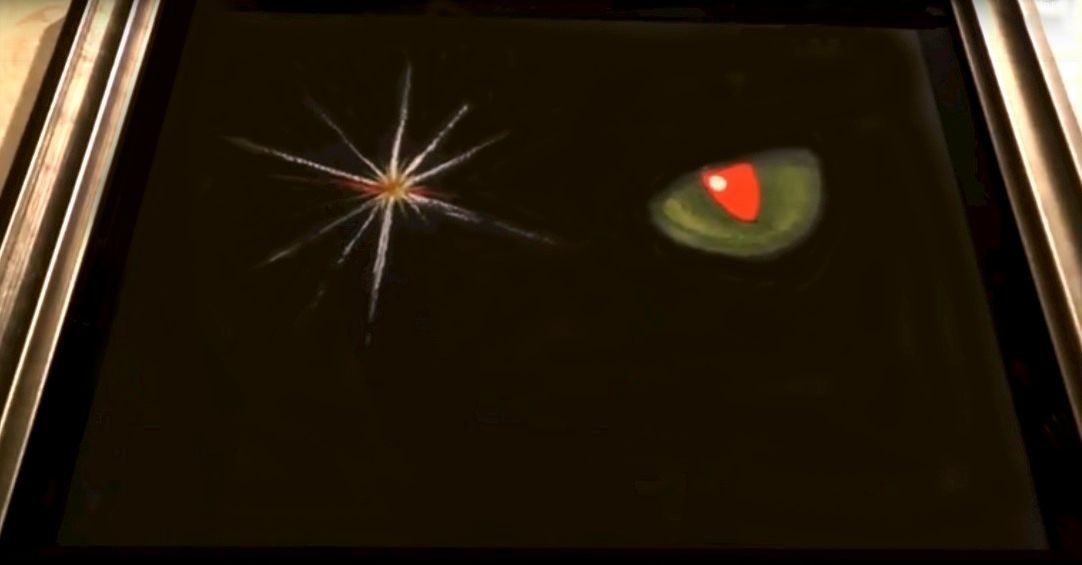

Here's the screaming skull sketch first seen here at Long-Forgotten:
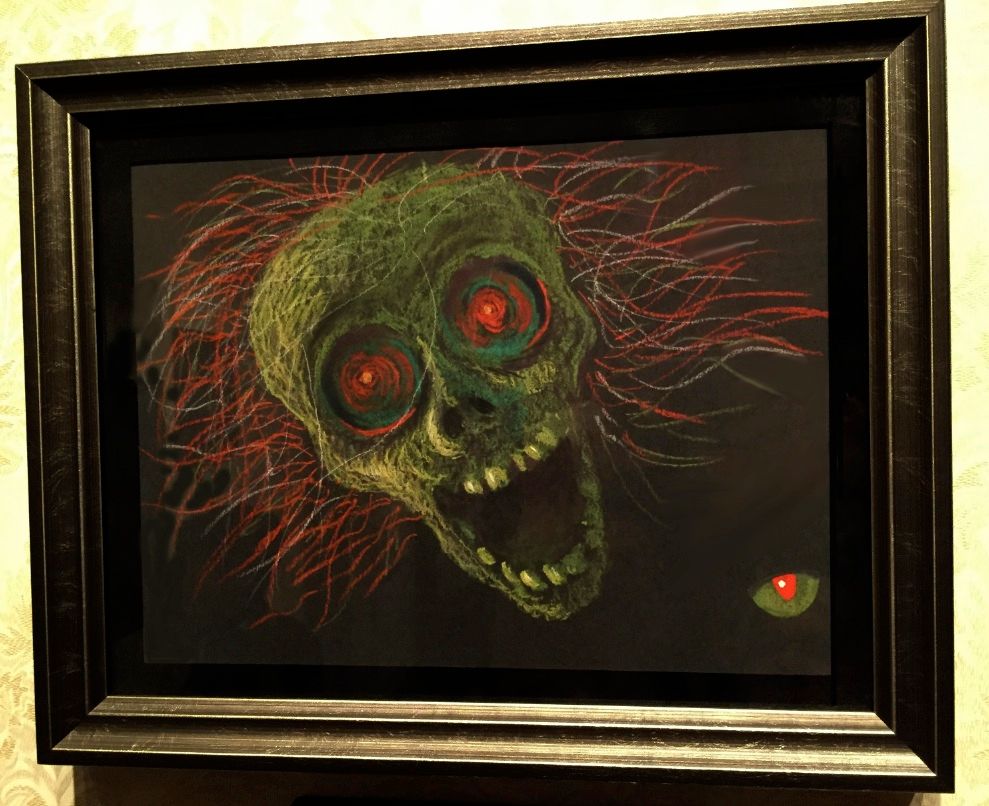

Except that our version looked like this:


Curiously, there are quite a number of X Atencio and Ken Anderson artworks out and about and published in books and magazines over the years that are very, very blue, but when you see the originals the blue is actually light brown. Don't know why that is, unless the person who originally released them distorted the color intentionally so as to be able to prove that this or that reproduction is actually his, published without crediting him or getting his permission. That's a guess.

Here's the second screaming skull sketch, to my knowledge never seen before anywhere:
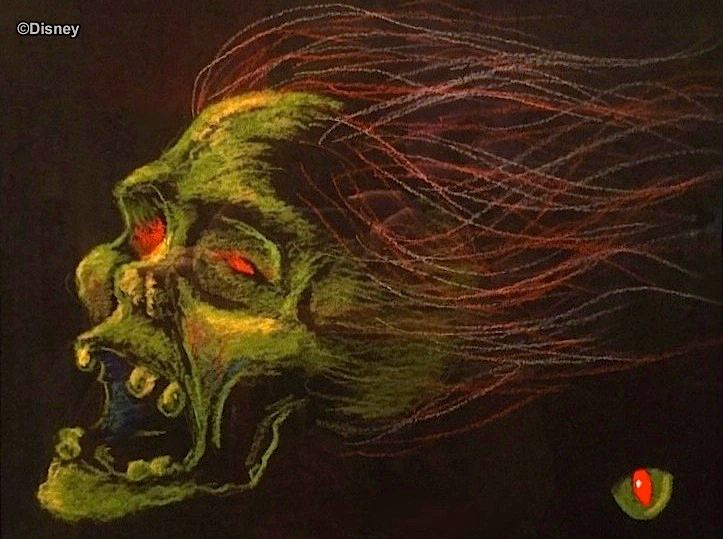

Yeah, that one came out good.

I thought it looked familiar, and sure enough, it turns out X is copying verbatim
a rotting skull prop created by Yale Gracey, which we've looked at before:

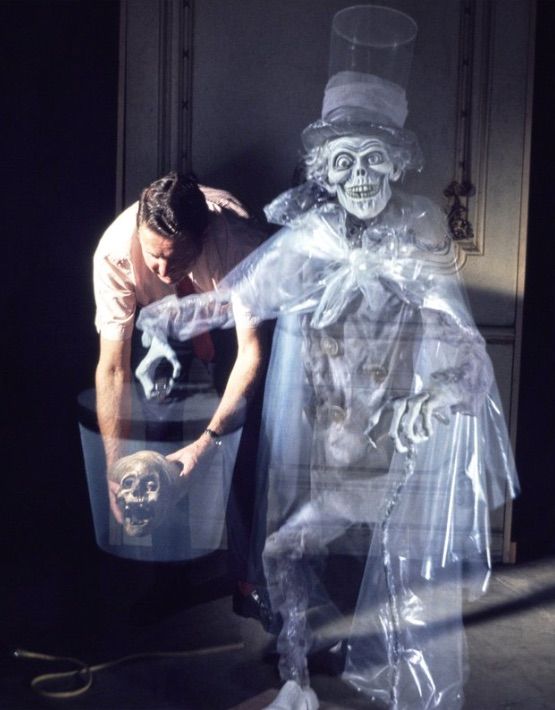


In 2017 it was discovered to everyone's astonishment that Yale's sons had actually saved this prop in a
box which labelled it as a Hatbox Ghost prototype. Jeff Baham actually got to handle it, the lucky bum.
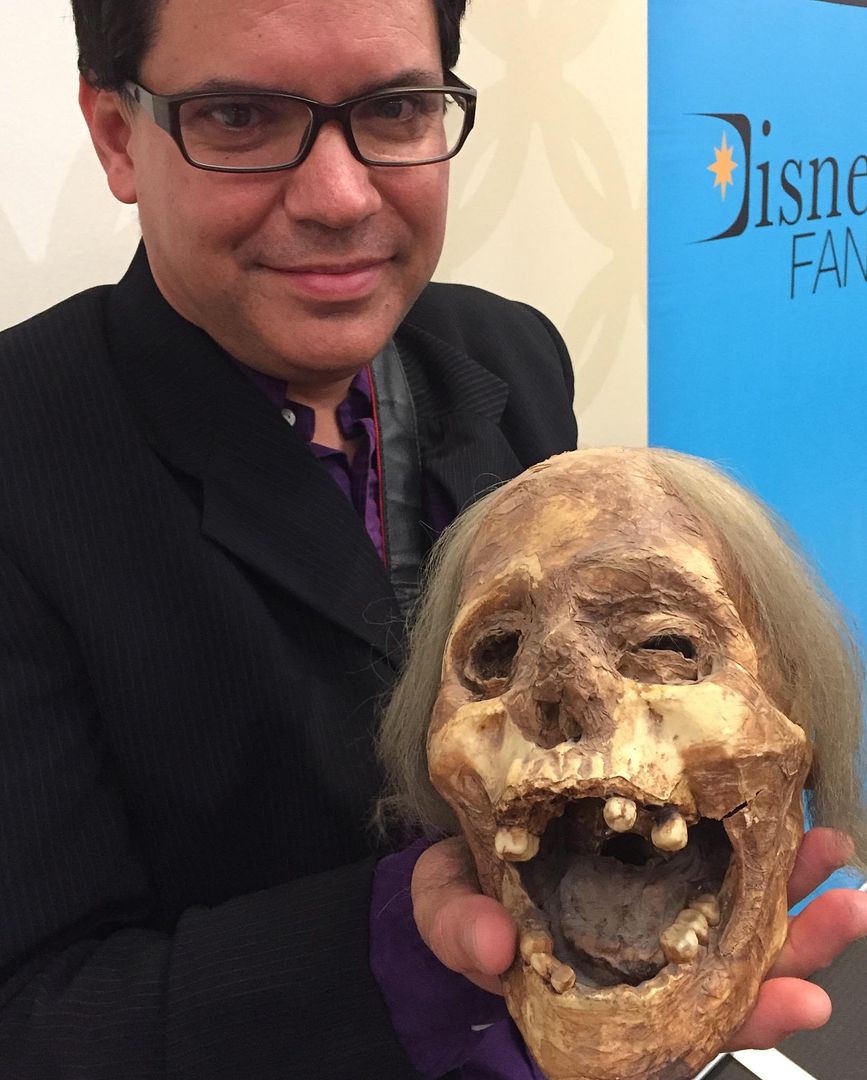

It was on display at the Doombuggies "Sóiree" event held on August 9th of this
year, now kept safe from the unclean hands of us mortals in a plexiglass case:
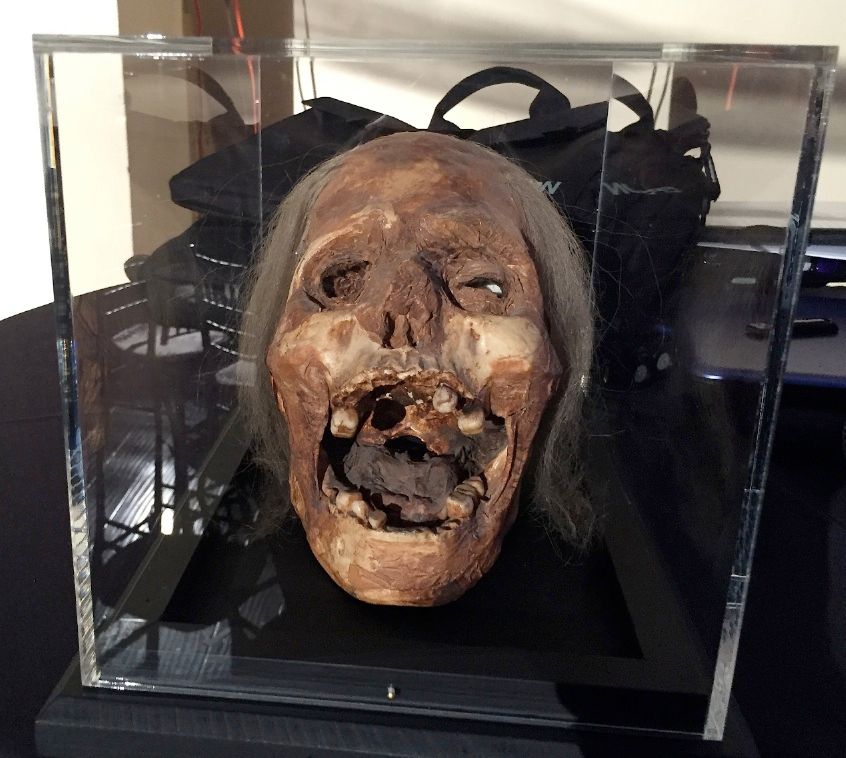

Anyway, compare the eye sockets and especially the teeth with X's sketch:

I said X's SKETCH, you mundane noodle.
I swear, Siri hates me.
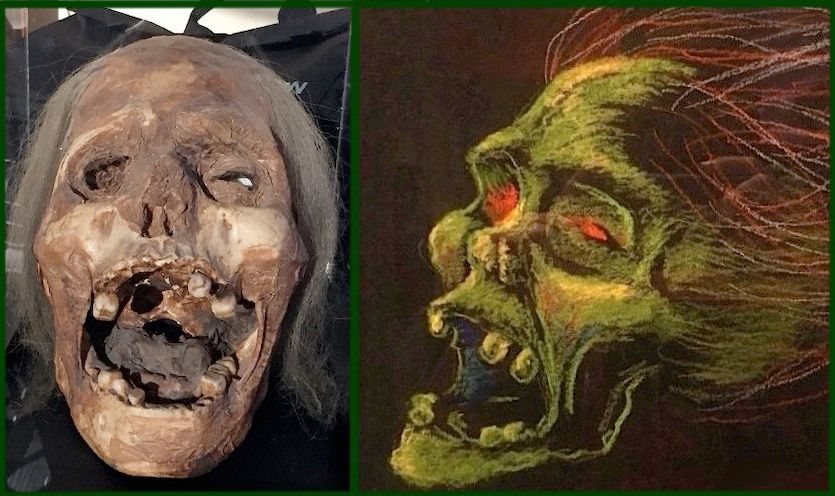

I don't think there's any question but that he directly copied Yale's prop. Incidentally, it's obvious to me that it's a real skull. They had no qualms about using real human bones back then. I'm sure that many of you know that they used real skeletons (eventually replaced with fake ones) when they built Pirates of the Caribbean. It's not an urban legend. [Edit: It occurs to me that the whole thing could be paper mâché, and also, it does look a little small, but... I don't know... those teeth....]

So, what does this mean? Did X envision using this prop when he developed his "one-eyed black cat" story idea? Was it going to float about like the head in the old Ken Anderson sketch we just looked at? Whatever the truth is, yet another layer of intrigue now surrounds this sacred relic.

Our last piece of previously unknown artwork is an X Atencio sketch of a miniature man in a bottle:
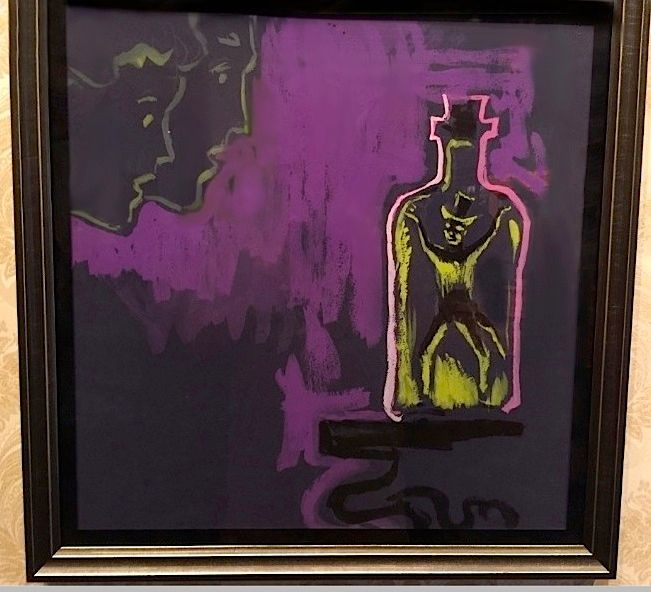

As it happens, this sketch from MDIHOW proves that this is another example of X taking an idea from Yale Gracey. Atencio was inspired
by a drawing found in one of Yale's sketchbooks. If there's any doubt in your minds about that claim, look at the shape of the bottle:
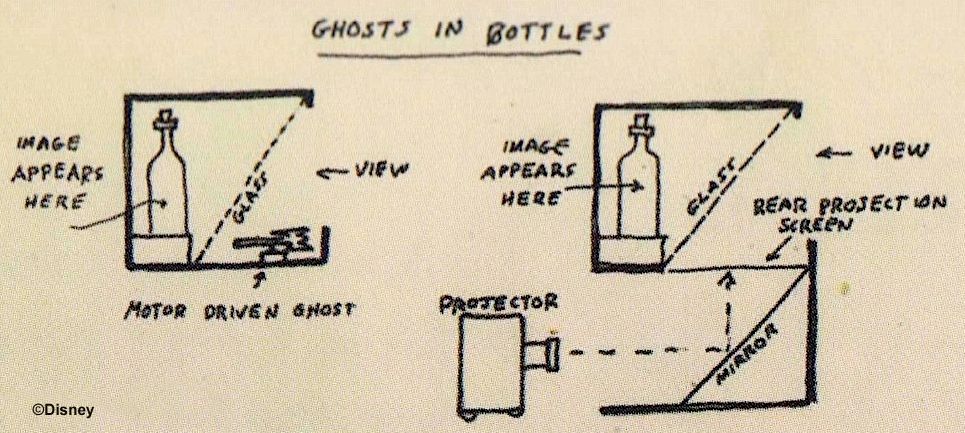
MDIHOW 421

Yep, it's the old Pepper's Ghost illusion. This would have looked pretty cool, huh?

****************

 More is coming, so it's very much "watch this space" at Long-Forgotten once again.


Friday, August 27, 2010

A Postscript on Changing Portraits at the Cabaret du Néant

.
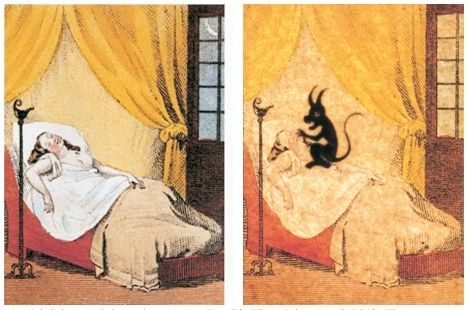
In discussing the changing paintings in the first room of the Cabaret, I've mentioned twice now that Albert Hopkins, in his 1901 book, Magic: Stage Illusions and Scientific Diversions, explains the effect as a thin cloth painted on both sides, with the back scene visible only when the painting is lit from behind.  Well, it's possible that Hopkins offered this explanation because such a gimmick actually existed, proving that it could be done that way.  I recently came across this interesting item:


It's a Parisian lithograph from about 1830 featuring a scene based on Henry Fuseli's 1781 painting, The Nightmare.  The little devil is visible only when the lithograph is lit from behind.  Notice also the night/day transition.  I still don't think this can fully account for the effect used at the Cabaret du Néant, but could this have been what Hopkins had in mind?  Regardless, it's an interesting example of a 19th c. changing portrait trick with a horror theme.
.

Tuesday, August 24, 2010

Death is a Cabaret, Old Chum...

.

Time to get our noses out of the Ancient Near East and back into the Victorian era, where we find more direct sources of inspiration for the Haunted Mansion.  Back HERE I discussed briefly the Cabaret du Néant, with a link HERE to Cory's treatment of the subject, which is largely given over to quoting a lengthy passage from Bohemian Paris of To-day (J.B. Lippincott, 1900).  It was written by W. C. Morrow from notes by Edouard Cucuel (the book also includes Cucuel's sketches).  It's very good, very interesting, and a valuable source, but buyer beware; it's a second-hand account, and in places it's inaccurate.  However, there are descriptions of the C du N published in other sources too, plus a lot of photos.

There is little doubt in my mind that the Cabaret du Néant was a direct source of inspiration for the Haunted Mansion.  My reasons for thinking so will emerge with a fresh description of the Néant experience, drawn from several sources, as well as a closer look at the special effects used in the Néant show.  I do not think these tricks have ever been explained accurately, so if you think you know the Cabaret well enough already—think again.
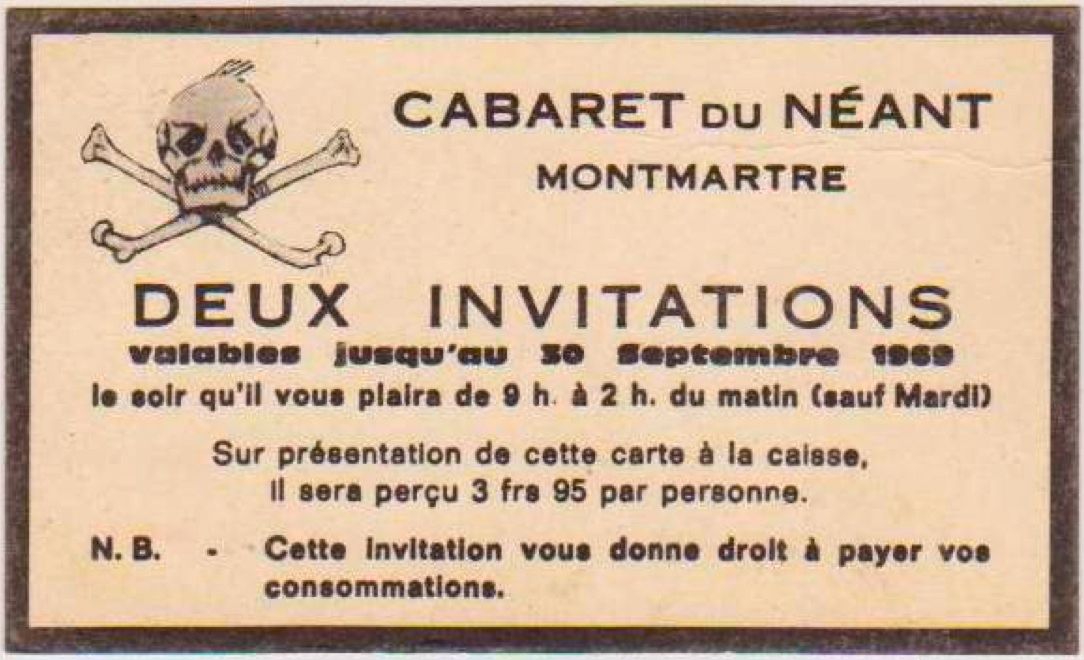
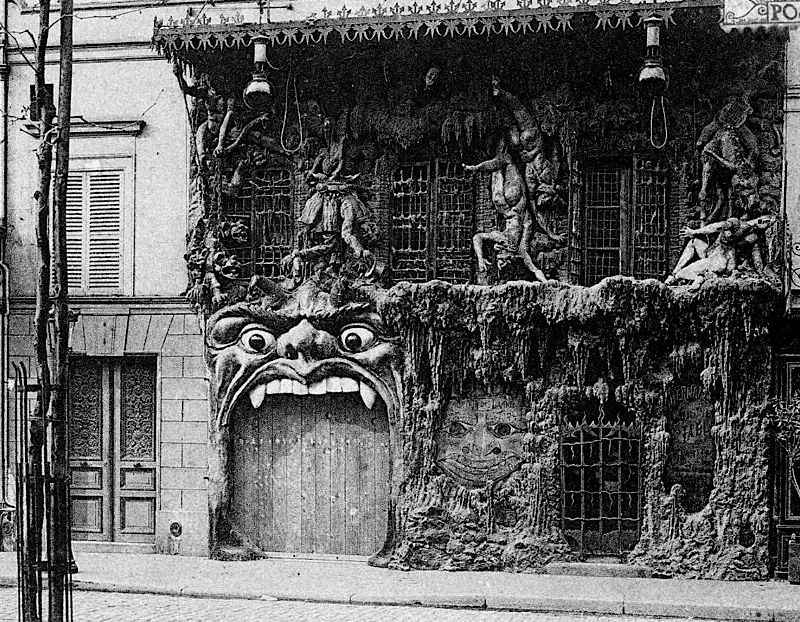
A bit of background.  The pub originally opened in Brussels in 1892 as the "Cabaret de la Mort" (i.e. the Cabaret of Death), but it soon moved to the Montmartre district of Paris, where it was renamed the "Cabaret du Néant" ("néant" = nonexistence, obliteration, nothingness, death).  The Montmartre district was THE place to be if you were an artiste in the second half of the 19th c.  It seems like all of the important Impressionist painters lived there or hung out there.  In the 1890's, it was bursting at the seams with cabarets and theaters, including fully-themed nightclubs.  Practically across the street from the Cabaret du Néant, for example, were the "Cabaret of Heaven" and the "Cabaret of Hell," side by side.  The waiters dressed as angels in the former and devils in the latter.  Guess which one this is:


The famous Moulin Rouge cabaret is still there, but otherwise these pubs and theaters are all gone.

. . . Come to the Cabaret.

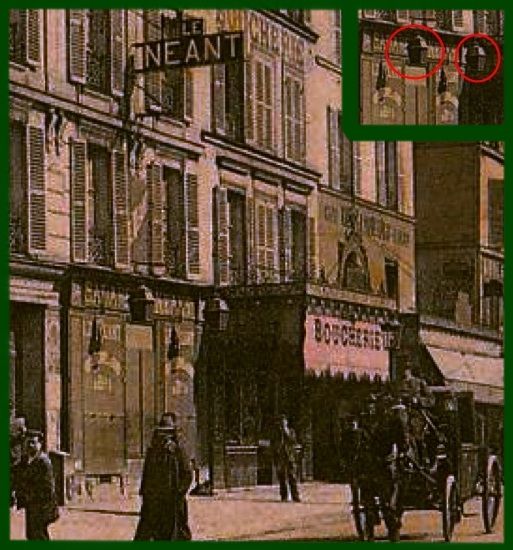
Shall we pay a visit?  Oh, do let's.  The street façade of the CdN is like a house dressed for mourning in traditional French fashion, with austere black and white coverings, although there is a skull and crossbones on the front door.  There are two large, iron, torch-like lamps throwing yellowish-green light down on all who pass by.  That kind of colored light makes people look shockingly sick and corpse-like, so we're already getting in the mood.


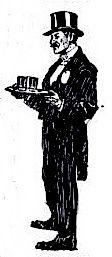
The unsmiling doorman is dressed exactly like a croquet-mort; that is, a professional
pall-bearer or undertaker's assistant.  The same is true for the waiters inside.


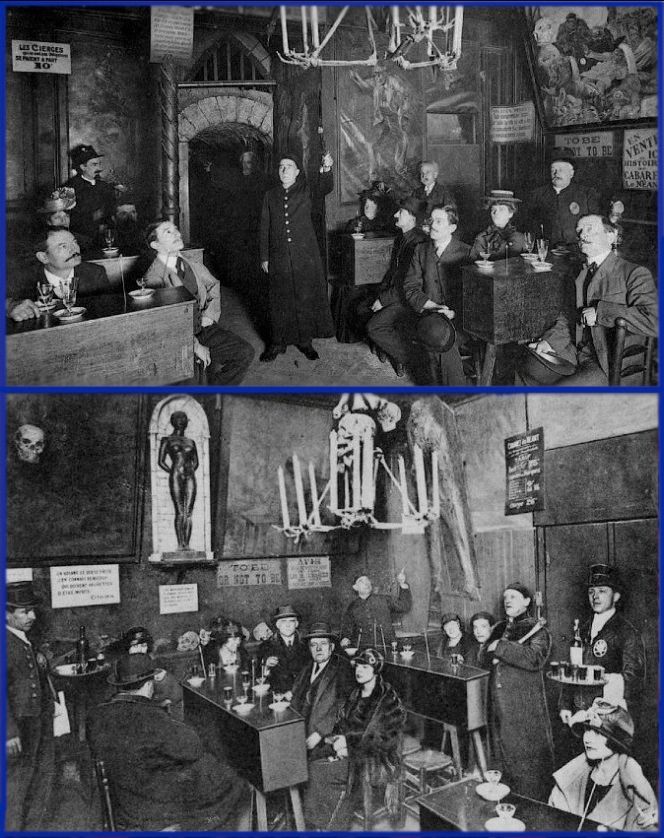
The doorman leads you through the low, narrow front door and down a short, dark corridor.  He opens some black drapes, allowing you to enter the first room.  It's dark, lit only by candles.  A chandelier in the center of the room is constructed of (real) human bones and nicknamed "Robert Macaire's chandelier," Macaire being a sort of all-purpose villain and bogeyman in France.  Upturned coffins serve as tables, with small thin candles available for illumination.

.                         


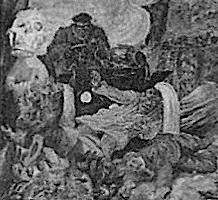
The walls are decorated with skulls (which serve as dim lamps), sculpture, and posters with grim slogans such as "Life is a folly which Death corrects," "To be or not to be," and "Requiescat in Pace," as well as No Smoking signs, price lists, and notices that candles are available for 10 cents.  More importantly, there are paintings all over the walls depicting death and carnage.  Battle scenes, a guillotine in action, and in later times, a painting of an automobile with a demonic driver, running people down—at least I think that's what this is:


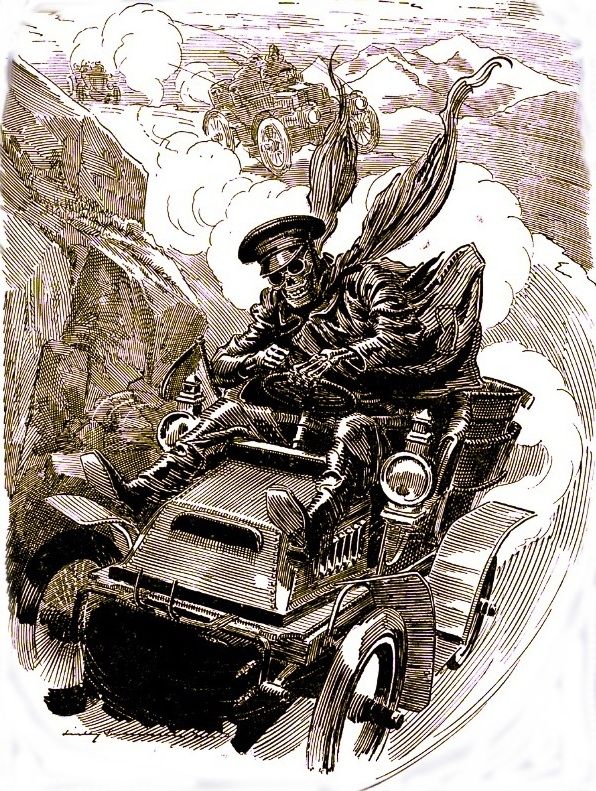
It's similar to a cartoon that appeared in Punch, in 1903:

(hat tip to Craig Conley)

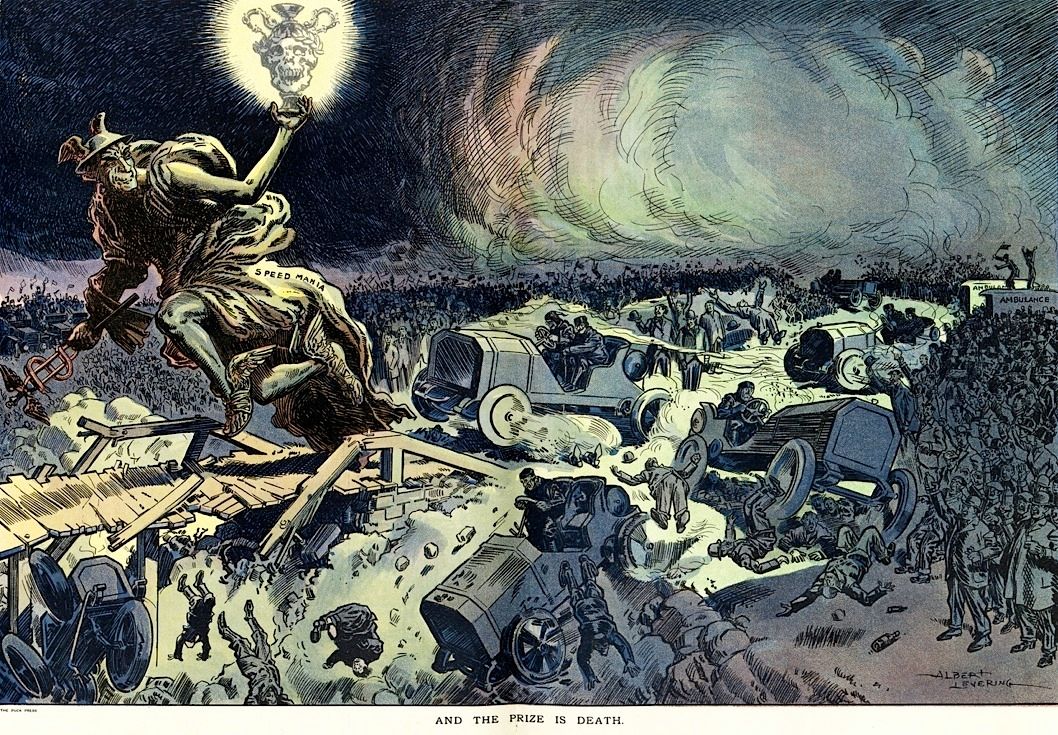
By the way, this was actually a common theme among cynics and satirists in those days. These new-fangled automobiles were extremely dangerous, to the point that they betrayed a contemptible indifference to human (and other) life. They were depicted as instruments of death, glamorous only to the foolish and the callous. Here's a wonderful example from Puck. Behold the demon, "Speed Mania":

Puck 68/1756, Oct 26, 1910

Anyway, back to the Cabaret. Upon entering the room, you are met with "Welcome, moribunds," or "Welcome, weary wanderer, to the kingdom of Death," or "Enter, mortals of this sinful world, enter into the mists and shadows of eternity," or some other greeting striking the same tone as "Welcome, foolish mortals."   Better get used to it.  You and your friends will be continually addressed as "mortals," "coffin worms" (asticots de cercueil), and "Maccabees," the latter term being a slang expression for anonymous cadavers found floating in the river.  In an account from 1931, it says that the staff at that time received guests by chanting a mass for the dead.  The staff are all instructed not to smile or do anything else to break the solemn atmosphere, much like HM butlers and maids.  That includes the waiter, who seems to mean it when he says "Name your poison."  The mixed drinks and the beer are all renamed after deadly microbes and bacteria of various diseases.  The waiter will plop them down before you, saying something like, "Drink, coffin worms.  Drink these loathsome poisons filled with the deadliest germs."

A man in clerical garb eventually enters and gives a lengthy speech in morbid detail about the horrors of death, progressing from the variety of gruesome and agonizing ends awaiting individuals to the miserable fates of mankind in general.

Here the place gets interesting.

As he commences this portion of the lecture, the speaker points to a painting depicting a battle scene.  According to Morrow, it begins to glow, making its details clear (remember, it's pretty dark in there).  Then the glow fades away, and the painting has changed.  The human figures in it are now all skeletons.  The same thing happens with a painting of a guillotine chopping away.  When the glow fades, the figures are now skeletons.  Another painting shows a festive ball.  Glow and fade.  Now the dancers are all skeletons.

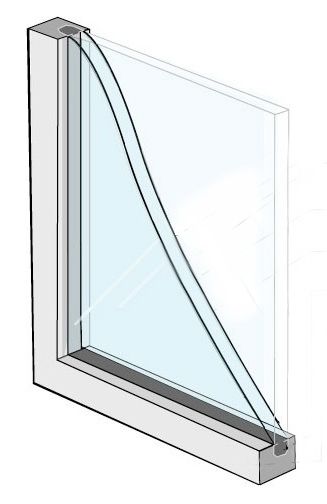
In my earlier treatment I quoted without objection Albert Hopkins' explanation of this effect (written in 1901).  He suggests that the paintings are transparencies with one scene painted on one side and another on the other, the second one becoming visible when illumined from the rear.  I now think that explanation is inadequate.  It doesn't really account for the effect as described by Morrow.  The paintings light up and then fade back down, revealing a skeletonized version of the same scene.  How would you do that with a single, two-sided cloth?  The effect could be produced, however, by having two paintings layered very close to each other, much like the panes in a double-pane window.

The skeleton one is in front, painted on a thin cloth or on theatrical scrim.  The "normal" one is in back.  The paintings are already moderately illumined from the back when folks come in, showing the back painting through the transparent front one.  The lighting is further turned up during the lecture, at the appropriate time, and then faded down and extinguished, leaving the front painting visible for the first time.  This would be perfectly do-able in the 1890's (the CdN was fully electrified).

In that earlier post, I drew a parallel between the CdN changing-painting effect and the attic wedding pictures and portrait hall paintings of the HM.  If the above explanation is acceptable as a more satisfactory accounting for the effect as described, then the parallel between the Cabaret du Néant and the current Disney versions is extremely close indeed.

If you bought a drink while in the first room, you got a ticket entitling you to enter the Chambre de la Mort.  You now take your puny candle and follow a man in Capuchin monk's garb single file through an arched doorway (painted to look like stone), down a narrow flight of steps, with green and yellow lighting once again, making everyone look cadaverous.


At the end of the steps is an antechamber where you wait your turn.  The show repeats about every half hour, and only 15 or 20 are admitted at a time.  To amuse yourself while you wait, you can look through holes or niches in the brickwork at gruesome tableaux, "studies of cholera patients, of persons buried alive, and similar cheerful subjects" (NYT Apr 9, 1894).  Morrow (Cucuel) speaks of "bones, skulls, and fragments of human bodies."  At last a cowled figure with only his eyes visible comes in and produces a large iron key, unlocking the spiked iron gate at one end of the room and opening it with a harsh grating sound.  The monks mournfully announce that you have arrived at the Gates of Death, and in you go.  There is an item inside, near the entrance:  "By a clever arrangement of mirrors one sees one's self on entering reflected lying in a coffin" (NYT '94), which seems like a good idea since you can then see for the first time what you yourself look like under greenish-yellow lighting.

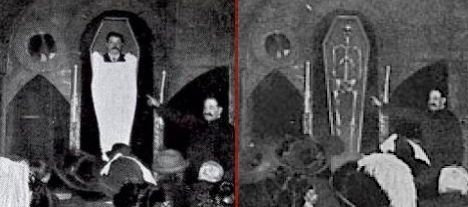
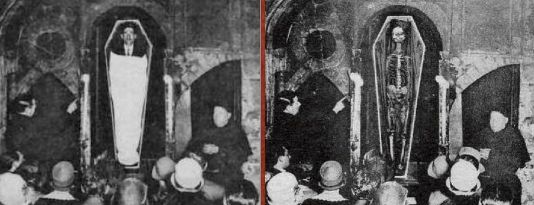
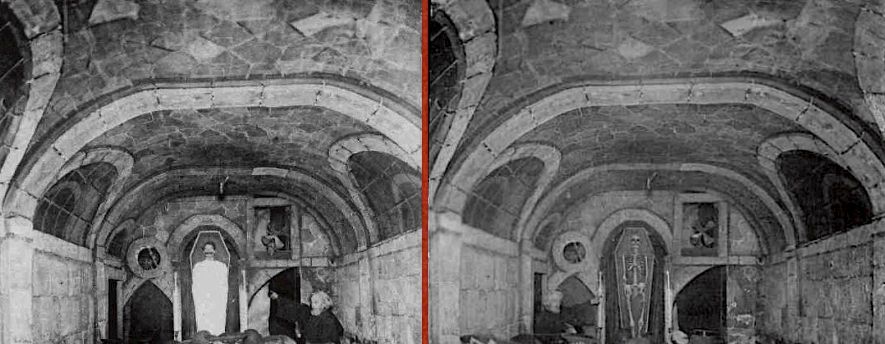
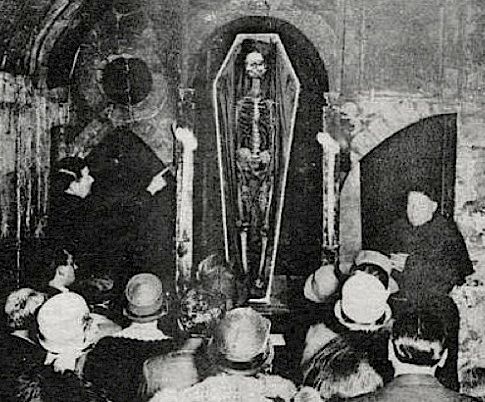
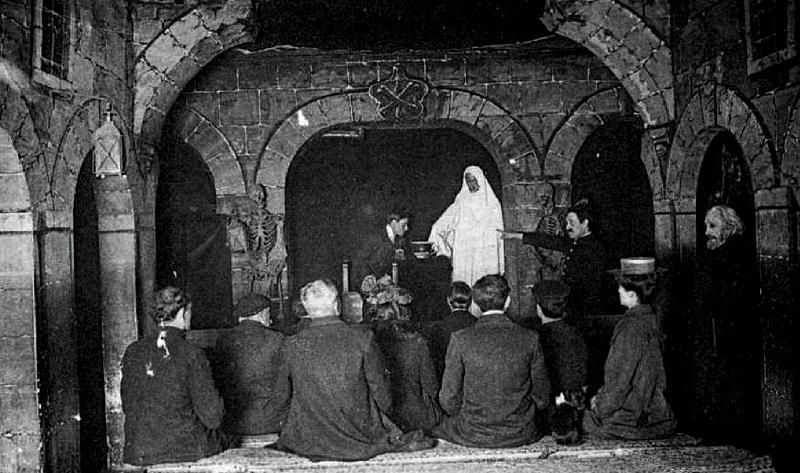
This part of the Cabaret du Néant show is justly famous.  An upright coffin is visible in a narrow doorway at the far end of the room, which was hung in black in early years but later on left exposed, having been painted to look like stone vaulting.  Also in early years, a pretty young lady was already in the upright coffin when you came in. She would smile and wink and then grow silent.  While the monk guide kept up his groaning soliloquy about death and decay, she turned into a decaying corpse and finally a skeleton, right before your eyes.  The process was then reversed, but instead of the young lady a fat old man returned.  He would leave the coffin, and the monks would ask for a volunteer from the audience who would like to experience death.  In later times they went straight to this phase and skipped the earlier stunt.  Not missing a single detail, the Cabaret folks have a harmonium and an iron bell offstage somewhere, providing dirge music and solemn tolls at appropriate times.

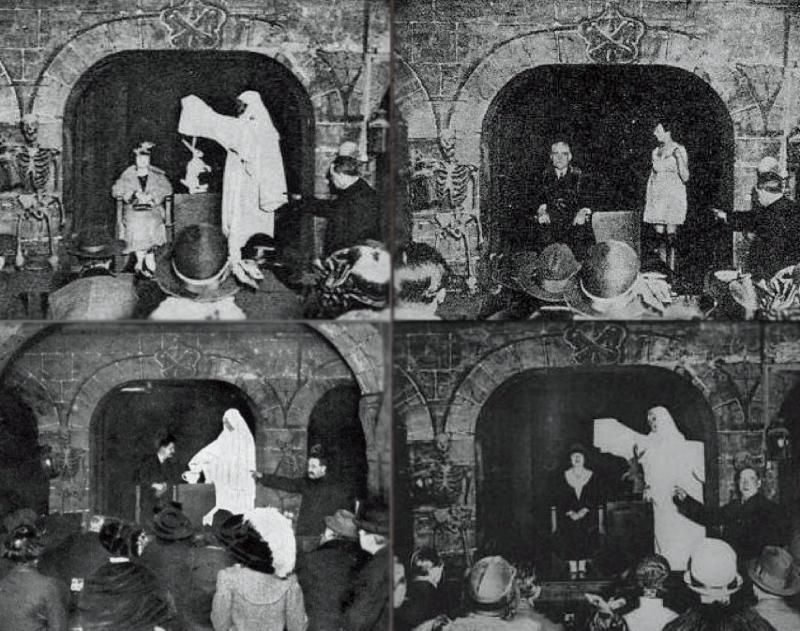
There are a lot of pictures of this trick.


I especially like this last set because it really shows the excellent trompe l'oeil work in this chamber, transforming blank wall into convincing arches and stonework through skillful use of the paintbrush.


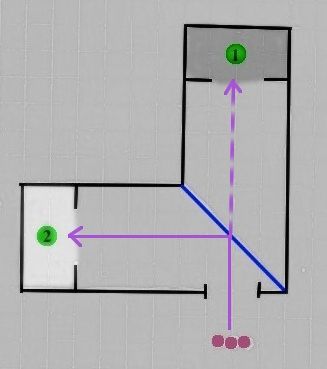
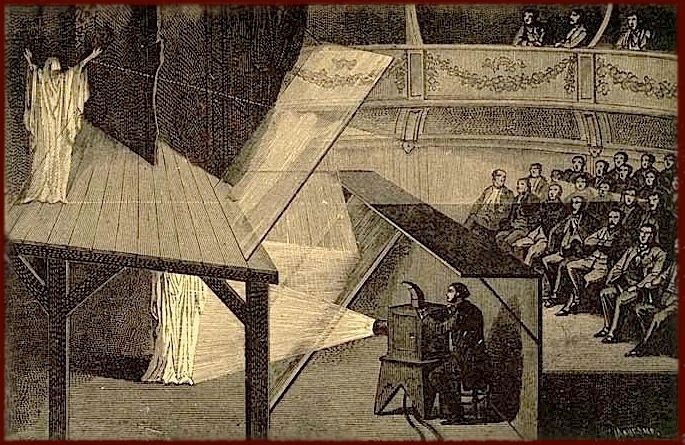
The trick is done, of course, using the Pepper's Ghost illusion, which requires only a big sheet of glass and careful manipulation of the lighting.  But here again, I think Albert Hopkins' explanation is inadequate.  He's got a simple two-chamber set up, turning the coffin occupant into a skeleton and back again.  With this arrangement, the sense of gradual transformation would be enhanced through the use of colored light.  The light on the volunteer goes from normal to greenish-yellow before fading down, while the skeleton is gradually lit up.

Below is a simplified pair of diagrams.  When the coffin-with-occupant (#1) is illumined and the coffin-with-skeleton (#2) is dark, the audience sees only the first.  When coffin 1 goes dark and coffin 2 is lit up, you see only the second, but it looks like it's in the place of the first.  This is simple, rudimentary Pepper's Ghost illusioneering.


The problem with the Hopkins arrangement is that it does not account for the descriptions of the effect.  Morrow describes a slow dissolving of the face into a corrupt state of decomposition before finally becoming a dried skull:

Her face slowly became white and rigid; her eyes sank; her lips tightened across her teeth; her cheeks took on the hollowness of death,—she was dead.  But it did not end with that.  From white the face slowly grew livid...then purplish black.... The eyes visibly shrank into their greenish-yellow sockets. ...Slowly the hair fell away....The nose melted away into a purple putrid spot.  The whole face became a semi-liquid mass of corruption.  Presently all this had disappeared, and a gleaming skull shone where so recently had been the handsome face of a woman.

Well, Morrow is giving a flowery, second-hand description based on Cucuel's notes, so maybe this is all exaggerated.  But the 1894 New York Times account also describes a three-stage process, although the stages are different: man, skeleton, vacant.  The shroud on the volunteer "by some trick gradually melted away, so did the flesh, or rather the man in the coffin, and a skeleton appeared in his stead.  There remained another experiment to be witnessed, namely, the crumbling away to dust of the bones."

There may even be a photograph of the intermediate, rotted-corpse stage as described by Morrow:


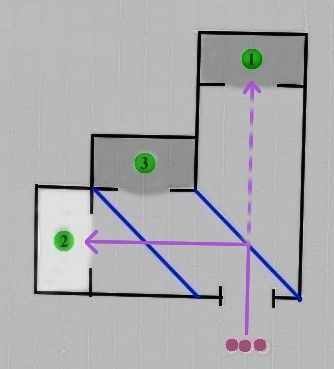
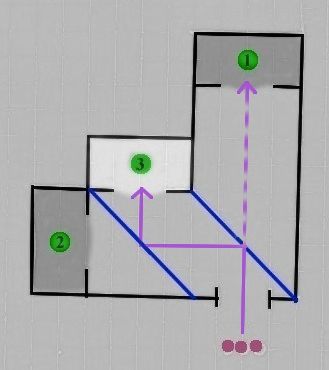
The CdN gang may have had a much more sophisticated set-up than Hopkins describes. One possible
way to add a step to the transformation is with two sheets of glass and a third, intermediate coffin.

.                      


.                      


.                      

For an alternate method, still using only a single glass, see the remarks by "John b" in the Comments (Aug 4, 2013). It involves rotating, back-to-back coffins. The only problem I see with it is that it would be hard to use genuine audience volunteers that way. You'd probably need stooges.

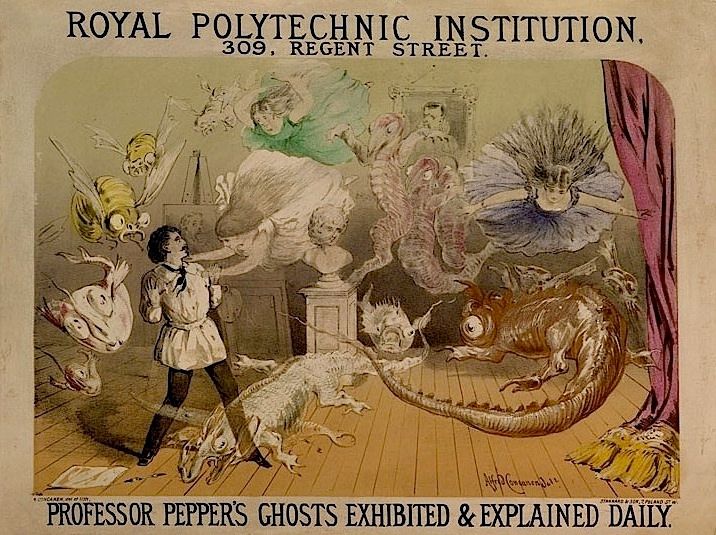
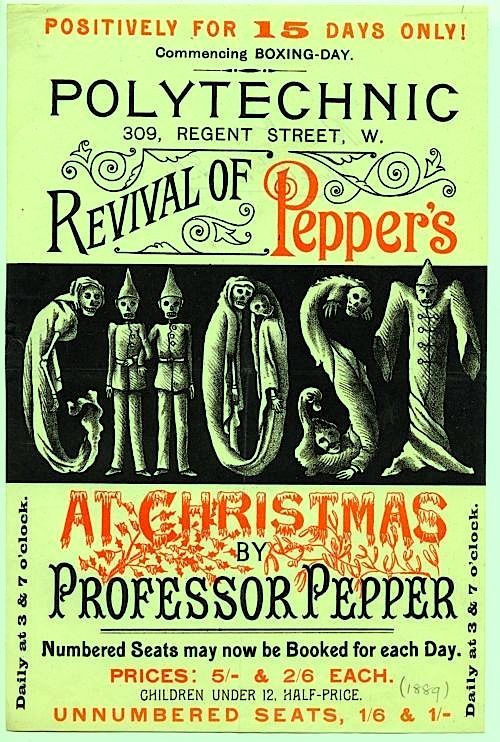
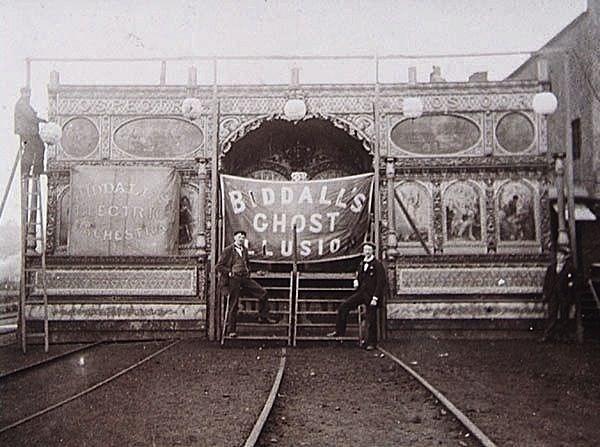
Why so fancy?  By the 1890's, Pepper's Ghost trickery had been in use for thirty years.  The Cabarets of Heaven and Hell, across the street from the CdN, used it in their floor shows.  Various traveling ghost show exhibits and theaters made heavy use of it, and Professor Pepper himself kept flogging it at the Royal Polytechnic Institute where he worked.


.                  


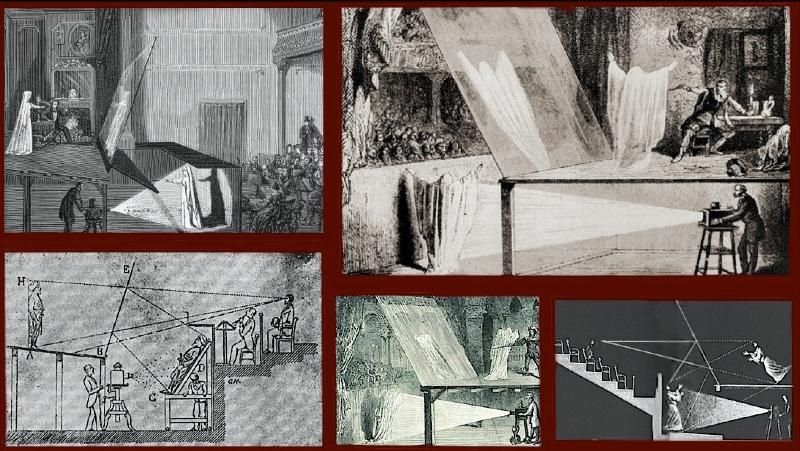
Furthermore, there was no shortage of Victorian spoil-sports eager to inform the public how the illusion was done:


It stands to reason that showmen would be searching for clever new ways to use what was now an old-hat illusion, something to bring back the "how do they do that?" element.  The CdN boys seem just the kind who would tackle such a problem.  Besides, two-sheet Pepper's Ghost illusions were known, even if this illustration doesn't show them making any particularly good use of it.


Originally, the coffin gag was the end of the show at the CdN, but in 1900 or 1901 they added a whole third room, set up like a small theater, with another Pepper's Ghost illusion onstage.


This one was played strictly for farce, to judge by descriptions and photos.  The poor volunteer could not see what the audience saw:  ghosts moving around, mocking, doing stupid bunny tricks, acting in a lewd and lascivious manner (this is Paris, after all).  "[T]he solemnity which the lecturers invoke is of a most mock sort, and the audiences are continuously convulsed with laughter" (NYT 1896).  Time to go.


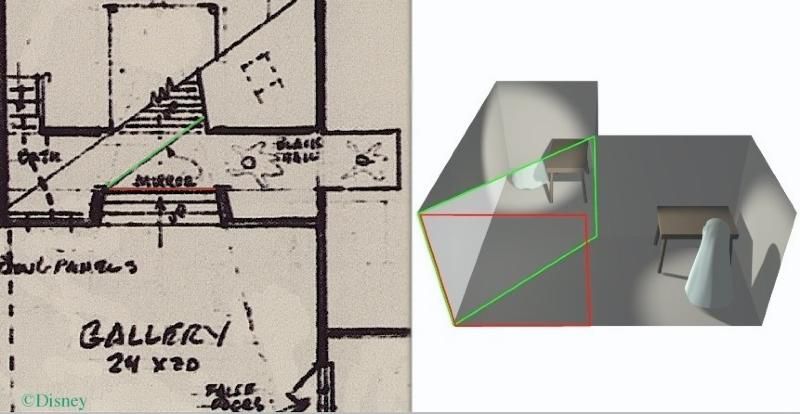
Rolly Crump and Yale Gracey were professional magicians, as noted in an earlier post, and they did research into things like the history of Pepper's Ghost.  There can hardly be any doubt that they knew about the Cabaret du Néant, which is mentioned in any decent survey of Pepper's.  Earlier, Ken Anderson had incorporated a Pepper's Ghost illusion in his proposed haunted house walk-thru, using a 45º angled glass pane, much like CdN:


Eventually, this horizontal version of Pepper's would be used in Phantom Manor to make Melanie appear in the Endless Hallway.  By the way, the CdN coffin gag was reproduced very closely, except it wasn't at Disneyland but at Knotts Berry Farm:


Besides the technical gimmicks, the CdN used a winning recipe of horror + stage magic + laughs, essentially the formula used for the Haunted Mansion.

Some time in the 1930s the Cabaret moved to a different location on the same street (#64 instead of #34) and continued to operate there for a long time. In November of 2012 we made a major discovery: The Cabaret du Néant was still open in September of 1969, in other words, still operating when the Haunted Mansion opened.


As a postscript, I should mention the apparent discrepancy between the photos of the coffin gag, in which the coffin looks like it's standing right in the doorway, and the actual set-up, which had it much further back.  It's simple:  these are staged photos, intended for post cards and publicity.  They moved the coffins up for the photo shoots.
.